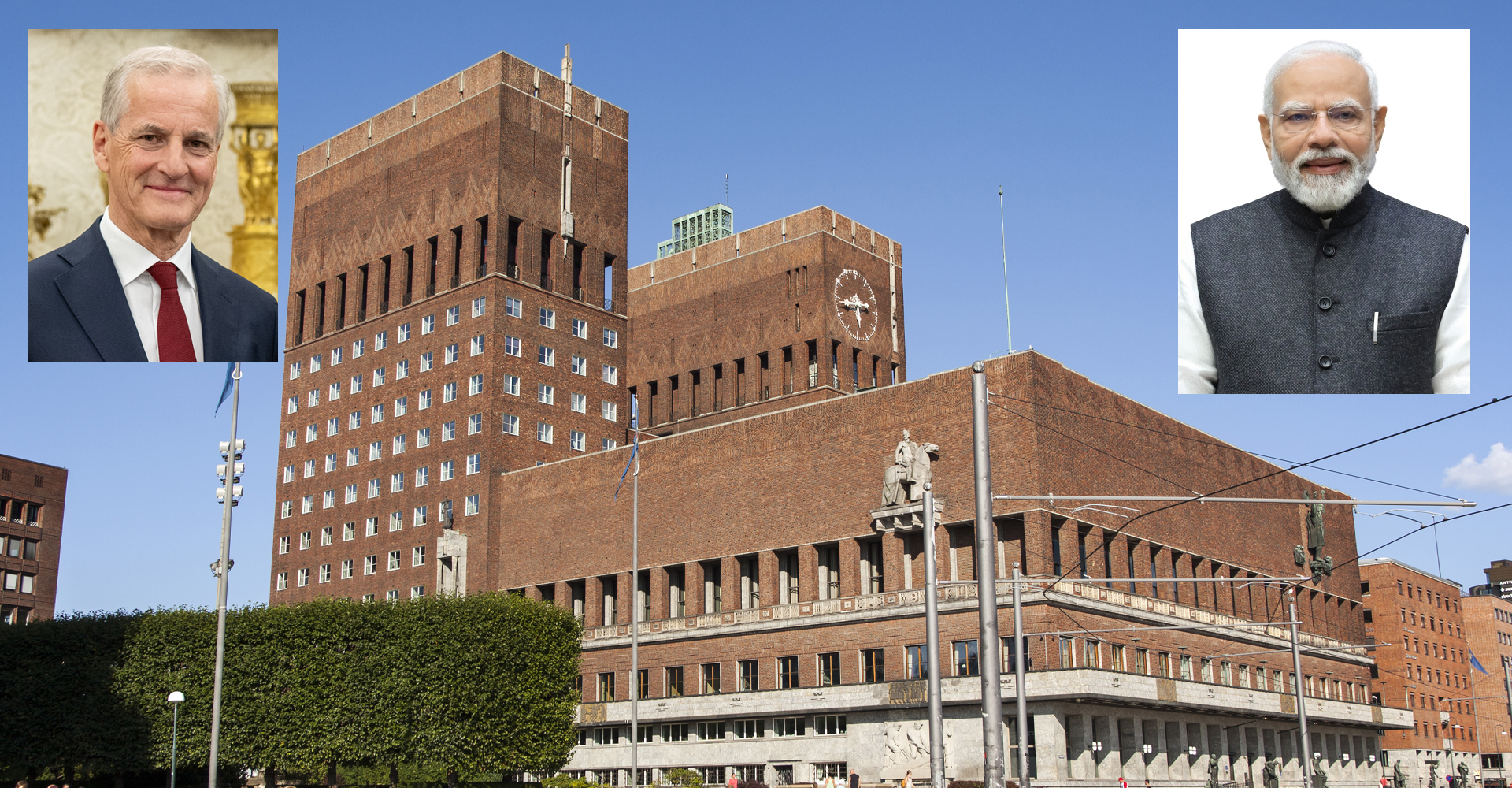
After the bloodlust of recent years, with cuts to Russian energy and a zeal to topple the despot Putin, it was cringeworthy to watch Støre fawn over Putin's friend Modi.
TopPhoto: Andreas Haldorsen/CC BY-SA 4.0 Prime Minister's Office (GODL-India), GODL-India/theContrapart
Text: Jesper Enerstvedt
Date: 20 May 2026
Translated from Norwegian with the help of AI · Read the original
India cooperates closely with Russia on finance, development banks, trade in local currencies and, not least, geopolitical coordination. The world's most populous country buys almost forty per cent of its energy from Russia.
Embarrassing
The affair is nothing short of scandalous. It was painful to watch the fawning from Norway's prime minister as he received India's prime minister Modi. It was just as painful to see that no journalists dared to ask Støre critical questions. A few reporters ventured onto the old track about child labour and why the Indian prime minister will not give interviews, but the truly critical questions never reached the Norwegian prime minister's table. The reason is that, instead of practising critical journalism, European journalists in recent years have operated as microphone stands for those in power.
Not honest
Sooner or later, journalists in Norway too must come clean. They must realise that we will soon be buying Russian energy from India at double the price, and that the whole war adventure has brought Europe to its knees. It might not have happened if journalists had done their job as thoroughly as German industrial leaders. Journalists should have been honest from day 1 that Europe would not be able to manage without energy and cheap raw materials. Permanently expensive energy is the death of companies exposed to competition.
Fiasco
The West has not succeeded in drying up the Kremlin's primary sources of income, after exports of crude oil and natural gas were redirected from the European market to Asian great powers. Many think this is only about China, but that is not true. It is perhaps to an even greater extent about Norway's new partner, India, which buys 30–40 per cent of its oil from Russia. That is 3–4 times as much as India buys from Saudi Arabia. And it is no secret that India sells refined petroleum products.
Serious
In a series of editorials, motparten predicted that exactly this would happen. In recent years we have even run caricature drawings showing the bleak scenario in a humorous way. In some twenty articles we have shown how things would go for the EU when it waged war on all fronts at once. Europe itself helped cut Nord Stream. At the same time, countries such as Germany gave in to small green parties that demanded the shutdown of nuclear power plants. On top of it all, the EU helped a disloyal USA wage a trade war against China.
Bloodlust
It was bound to go badly with a press that acted in a bloodlust, and a press that was only concerned with crushing Russia. When an entire continent robs itself to such a degree of everything that matters for industry and business, it cannot end well. This newspaper has had a strong focus on this since 2022, but unfortunately for everyone, our words fell on deaf ears. Unlike the USA, which profits from every single war it starts, Europe loses on everything it does. The USA got exactly the oil it needed after the operation in Venezuela. Europe got energy four times as expensive after the operation in Ukraine, because it buys expensive LNG gas from the USA. The fact that the USA at the same time became an unstable and selfish partner meant that countries in the West eventually had to face the truth. This could no longer go on.
Main pageMade an 18-degree turn
Canada had the least reason to panic, but was nevertheless the first to realise that only a big trade deal with China would ensure stability and economic progress. Britain followed. Prime Minister Starmer boarded the plane to Beijing and came home with a gigantic trade deal. The war hawks in the EU understood that they could not go on paying four times the price for gas to a USA that both bullied them over tariffs and forced them to boycott the Chinese. The EU chose to go to India. They came home with what they called "the mother of all trade deals".
Trailing behind
And so only little Norway was left. For years it has followed what it believed was the safe track: trailing behind the USA. But with the British in China and the EU in India, Norway in the end had no choice either. With pomp and ceremony, Prime Minister Jonas Gahr Støre invited India's prime minister Modi to a trade celebration in Oslo. It became one of the most embarrassing occasions the editorial team at motparten has ever witnessed.
The world's freest
A faintly mumbling and sheepish Støre had to answer journalists' questions about what he thought of the fact that the Indian prime minister would not speak to journalists in what they themselves call "the country with the world's freest press". But the smartest of the journalists understood that they were themselves in the same boat as the prime minister. Nobody talked about BRICS. Nobody talked about Russia. That is hardly surprising, because India cooperates more than closely with Russia – and, to make matters worse, with China too. BRICS stands for Brazil, Russia, India, China and South Africa, because these were the ones that founded the economic cooperation.
97 per cent
Nor were the journalists present from the EU countries Denmark and Sweden particularly keen to ask the really critical questions, even though deep down everyone knows what it is all about. India, the world's most populous country, buys 97 per cent of its energy. Saudi Arabia supplies only 13 per cent. Russia supplies between 30 and 40 per cent of the oil India imports. And refined petroleum products can now be sold to the EU at far lower prices than the Americans offer. The LNG gas shipped across the pond from the USA is four times as expensive as the gas that came through Nord Stream.
Industrial flight
In a series of articles we have written about industrial flight from Europe. In Germany, the giant BASF decided to build a factory costing 10 billion kroner in China. Energy had become too expensive in Germany. Already early in the war in Ukraine, BASF's owners understood that, because of a barbarian policy from Brussels, energy was going to be permanently expensive. They could not live with that. Another giant, Siemens, also abandoned the sinking ship. They chose the USA, which has secured Russian uranium for itself and can therefore sell sky-high-priced gas to Europe.
Game over
When all is said and done, much of the petroleum products now pouring into India will find their way to Europe. And no one needs to wonder where it comes from. It is Russian energy. It must be deeply embarrassing for journalists and politicians in Norway and Europe that, after all the big words about despots who were supposed to fall, and about a bankrupt and isolated Russia, they now have to trade with Russia's enormous partner India. There is hardly a better way to help Russia.
MOTPARTEN
The other side of the story. An independent newspaper from Norway.