Could lose billions in the Barents Sea
Costly quarrel for Norway Inc.
Over 60 per cent of Norway's undiscovered oil and gas lies in the Barents Sea. But much of the potential may stay untouched because Norway has permanently soured relations with its neighbour Russia.
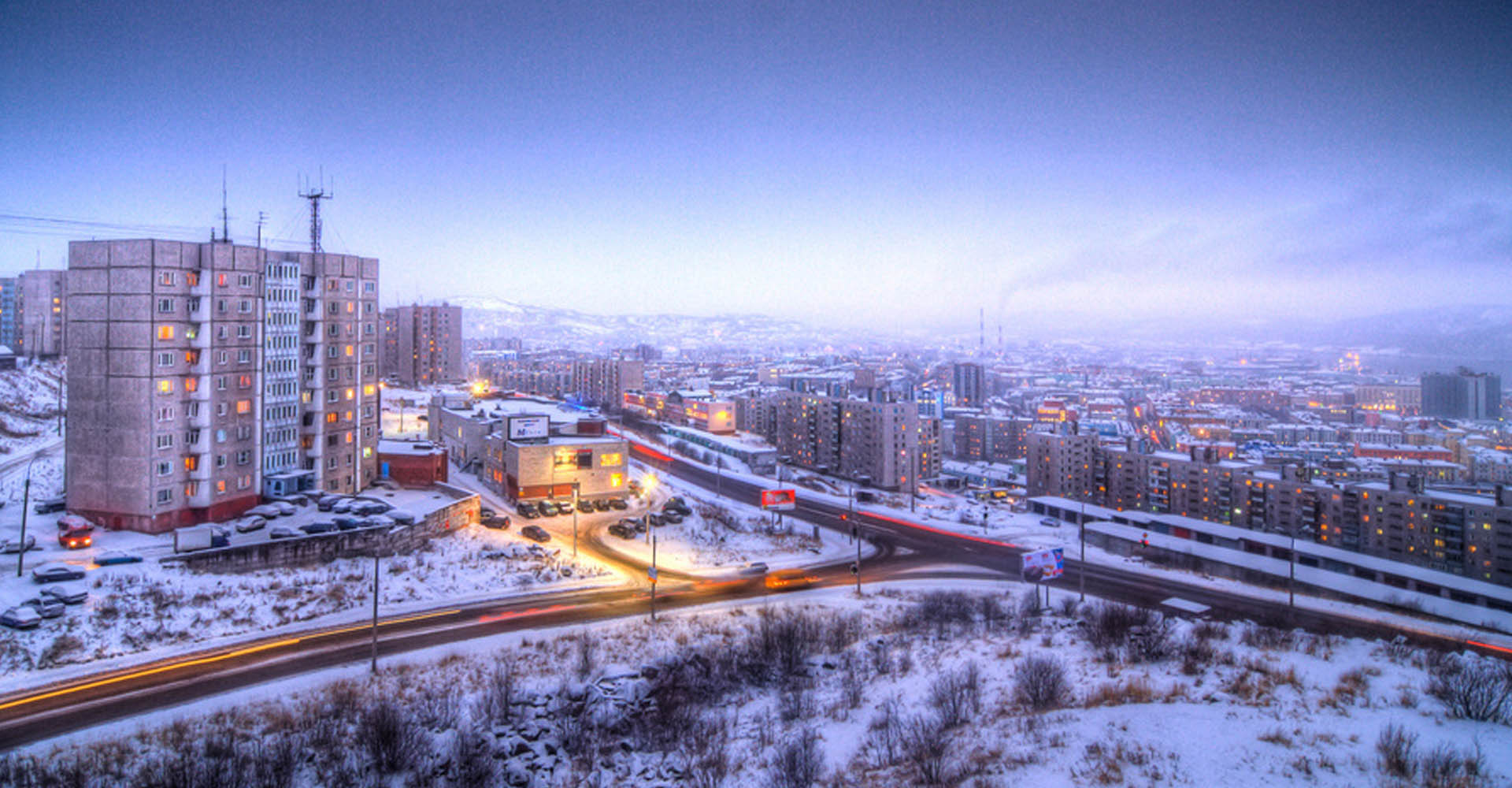
Not far from the Norwegian border lies Murmansk, Russia's answer to Stavanger. A lack of cooperation is halting growth and development on the Norwegian side.
TopPhoto: Tom Thiel/CC BY 2.0/motparten
Text: Atle David Torkildsen
Date: 12 October 2026
Translated from Norwegian with the help of AI · Read the original
According to the latest resource report from the Norwegian Offshore Directorate (Sokkeldirektoratet), around 63 per cent of the undiscovered petroleum resources on the Norwegian continental shelf are in the Barents Sea. That corresponds to nearly 14 billion barrels of oil equivalent. It is by far the largest remaining potential Norway has.
A sour relationship
The chilly relationship with Russia makes work in the Barents Sea harder, and uncertainty about the future is great. There is little political will for industrial cooperation for the foreseeable future. The result is that Northern Norway is missing out on jobs and spin-off benefits that more activity could have brought. The Barents Sea is not lost, but the potential on the Norwegian shelf may lie untouched for decades – if it is still the Norwegian shelf in the future. In today's climate, it is not inconceivable that the Russians will deem the agreement reached in 2010 invalid.
Big numbers
According to the Norwegian Offshore Directorate's resource report published on 31 December 2025, the undiscovered recoverable petroleum resources in the Barents Sea are estimated at 2,190 million standard cubic metres of oil equivalent (Sm³). This corresponds to roughly 13.8 billion barrels of oil equivalent, based on the usual conversion factor of 1 Sm³ ≈ 6.29 barrels. For those of our readers who find this all Greek to them, we can explain that Sm³ stands for "standard cubic metre" and is a unit of measurement used in the oil and gas industry to state volume under standardised conditions.
Enormous values
Of all this bounty, 1,100 million standard cubic metres are expected to be liquid and 1,090 billion standard cubic metres to be gas. About 63 per cent of all undiscovered resources on the Norwegian shelf are in the Barents Sea, and around 54 per cent of the resources in this sea area are located in areas not opened for petroleum activity, mainly in the northern Barents Sea. The figures are taken directly from the Norwegian Offshore Directorate's 2025 resource report and are also confirmed at norskpetroleum.no.
Støre on the road
When Foreign Ministers Jonas Gahr Støre and Sergey Lavrov signed the maritime delimitation agreement between Norway and Russia in Murmansk on 15 September 2010, Prime Minister Jens Stoltenberg and President Dmitry Medvedev were present. Norway and Russia agreed on the maritime border in the Barents Sea and the Arctic Ocean. It was finally settled after 40 years of negotiations. The agreement entered into force on 7 July 2011. It divided the formerly disputed area of about 175,000 km² into two roughly equal parts. It also contains provisions on transboundary petroleum deposits. If a deposit extends across the delimitation line, the parties must, at the request of either party, enter into a so-called unitisation agreement on joint exploitation and allocation. Joint mapping of the deposits that actually cross the border was planned.
Disputed
For the formerly disputed area that became Norwegian, namely the south-eastern Barents Sea, the Norwegian Petroleum Directorate (Oljedirektoratet) estimated, in connection with the opening process, expected recoverable resources of around 300 million Sm³ of oil equivalent. The uncertainty was great. It ranged from about 55 to 565 million Sm³. When the area was opened in 2013, the Norwegian authorities worked with an equally wide spread in possible revenues. People spoke of net values in the order of NOK 50–280 billion, depending on the scenario. That there is big money to be made is beyond doubt in any scenario.
Home pageEveryone knows that cooperating with the Russians brings economies of scale. The city of Murmansk has several hundred thousand inhabitants. If Norway is to do everything alone, the costs will mount. Despite this, there is still big money to be made in the Barents Sea – for those who dare. With today's security situation, this also drags down investment. It can quickly become expensive in conflict zones. There are therefore likely to be many lean years with little development in Northern Norway.
Melkøya
The biggest barrier to realising more of the gas potential in the Barents Sea is the lack of export capacity. Hammerfest LNG on Melkøya is currently the only export option for gas from the Norwegian part of the Barents Sea, with a capacity of around 6.5 billion Sm³ a year. The plant is fully used by gas from the Snøhvit area, and based on proven resources it is expected to be filled up towards 2040–2050 (the Snøhvit Future project, with onshore compression and electrification, is to extend its lifetime towards 2050).
Everything is expensive
Gassco has assessed options for increased export capacity in several studies. A 2023 update estimated that a new dew point plant on Melkøya combined with a gas pipeline south to existing infrastructure in the Norwegian Sea could be a solution, but it would not be cheap. The so-called Polarled or Åsgard Transport would cost in the order of NOK 53 billion. An older estimate from 2020 was lower, between NOK 17 and 35.5 billion depending on the solution. An expansion of LNG capacity has also been considered, but the pipeline option was regarded as the most flexible solution.
Cheaper in the south
It is documented that development costs and break-even prices are generally higher in the Barents Sea than in the North Sea and the Norwegian Sea. This is primarily due to the long distance to existing infrastructure and Arctic weather and ice conditions. This results in limited emergency-response capacity, and discoveries must be developed as stand-alone projects rather than tied into established hubs. Analyses from Rystad Energy and WWF, based on Rystad data, show that average break-even levels for new discoveries and undiscovered resources in the Barents Sea are much higher than further south, and that cost overruns have historically been larger here.
In the long run, it may prove a big mistake that Norway supported Ukraine with bombs and shells instead of humanitarian and diplomatic aid. Helping rebuild destroyed infrastructure would also have counted in Norway's favour with Russia. Norway will share a border with Russia after this war is over. Whoever holds power in Russia in the coming years, they will certainly not look kindly on Norway.
Full-on crash
In any case, petroleum activity in the Barents Sea has already created important local spin-off benefits, particularly in the Hammerfest area, linked to Snøhvit/Hammerfest LNG, Goliat and now Johan Castberg. According to the Levert report produced by Kunnskapsparken in Bodø, petroleum-related employment in Northern Norway has been around 4,500–7,600 person-years in recent years. That includes employees, suppliers and indirect effects. Hammerfest alone accounts for a large share of this, with around 1,450–1,900 person-years linked to Melkøya and associated activity. These are the kinds of jobs that will be lost if relations with Russia turn so sour that projects that would otherwise have been developed have to be shelved for security reasons. Nobody wants to fish or pump oil right next to the den of a grumpy Russian bear. This is the result of Norwegian foreign policy towards Russia going from a pragmatic balancing act to a full-on crash.
MOTPARTEN
The other side of the story. An independent newspaper from Norway.
Contact
- Newsroomredaksjon@motparten.no
- Advertisingannonser@motparten.no
- General enquiriespost@motparten.no
Address
Motparten.noElevine Heedes vei 2
4839 Arendal
Norway Editor-in-chiefJesper Enerstvedt