Western leaders head to China to learn about

Red Five-Year Plans

It is not many years since people laughed at the communists' five-year plans. They would never be able to compete with a superior capitalist system – or so we thought. Today the tune has changed. Many Western leaders are going on courses in China to find out what it is they have understood that we have not. Unfortunately, it is quite a lot.

It is not many decades since Western leaders laughed at the communists' five-year plans. Now they are making pilgrimages to China to learn.
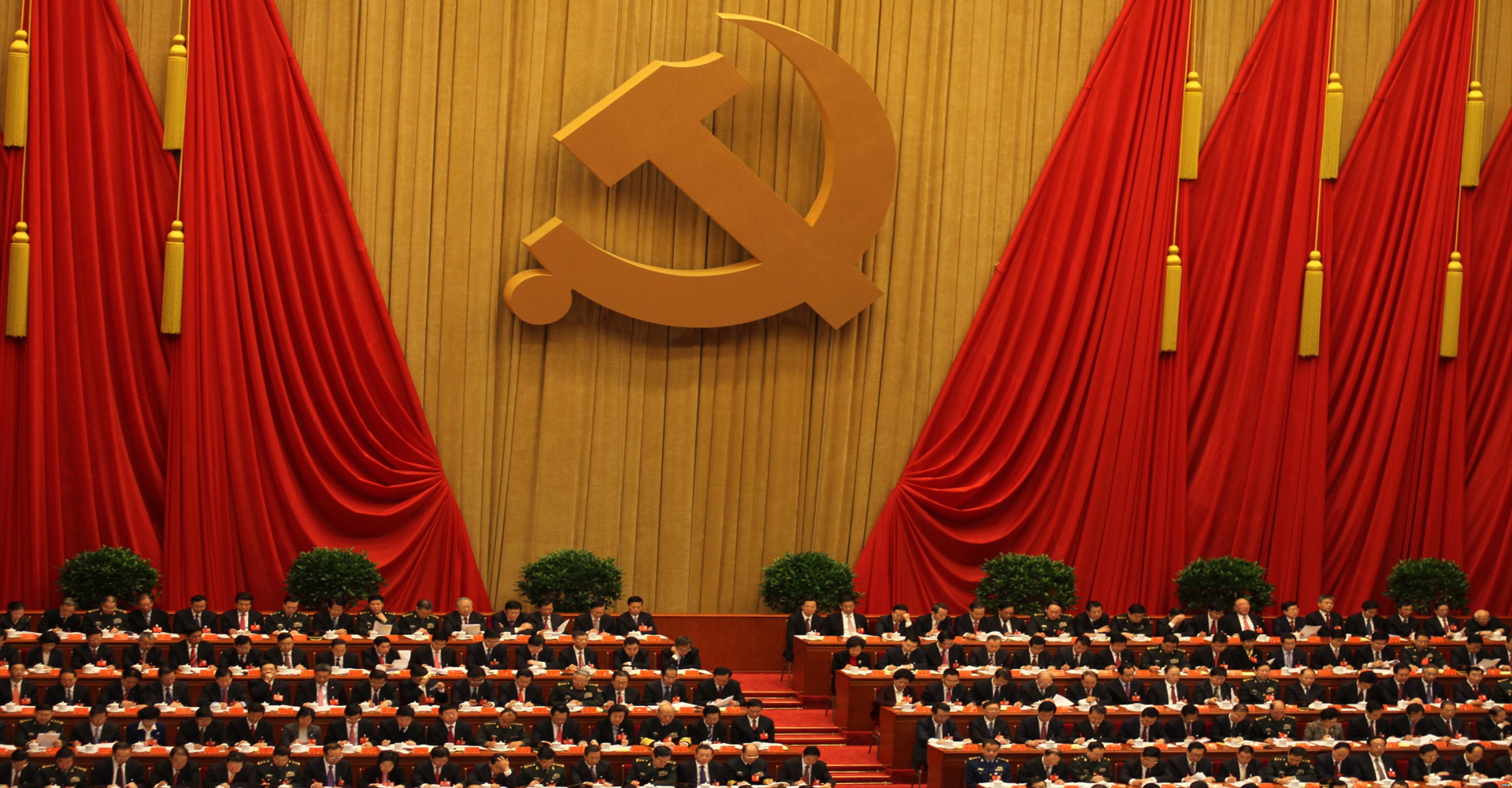
Photo: Don Fang/theContrapart
Text: Rune Ollestad
Date: 23 March 2026
Translated from Norwegian with the help of AI · Read the original

A good example of how five-year plans can outcompete a Western system is electric cars and batteries. Only twenty years ago, China had just 1.5 per cent of the global market share. Today it produces more than three quarters of the world's lithium batteries. Now many industry leaders in the West are scratching their heads, wondering what went wrong. They look on in shock and disbelief as China is now home to six of the world's ten largest battery manufacturers.

The master plan

As China's national legislators and political advisers now gather in Beijing for the annual Two Sessions, one document will receive extra attention, including from Western business people and politicians. It is the draft of the 15th five-year plan. Believe it or not, this is the plan that will guide the world's largest economy from 2026 to 2030.

Against the current

One country that has done the exact opposite of the US and Europe is China. With its 1.5 billion people, it makes up a large part of the continent known as Asia. Five-year plans have always been central to how China steers its development, but because of the enormous success, the coming plan will be watched with eagle eyes. Many are also going back to look at old plans to see what the Chinese got so right. How they could see the future so precisely and put their efforts exactly where they should.

Asleep at the wheel

In 2003, the Beijing New Materials Development Centre was commissioned by the Chinese Communist Party's Politburo to analyse China's lithium battery industry. At that time, China's lithium battery industry was very small, with only two producers of electric car batteries. The state research institute made sure that the first conference for the lithium battery industry was held in 2005. There were only around 200 participants. The US and Europe were fast asleep and never turned up. We all know how that went. While projects came and went in the West, China invested broadly and with determination.

Between the lines

This time too, the plan has been adopted by the Central Committee of the Chinese Communist Party. That happened in October 2025. The plan is designed to be in line with the long-term vision of achieving major progress by 2035 in economic strength, technological capacity, national defence and global influence, while raising living standards to the level of large, strong developed economies. But nobody can make sense of such political waffle. So people are reading feverishly between the lines to find out what the cunning communists are up to this time. One of the things they are betting on is, strangely enough, humanoid robots that are to serve as servants.

Qualified help

The communist leaders themselves claim they are far from alone in hatching the cunning plans. They even point to a specific form of popular democracy in which they ask for input. One example is last year's online session, which generated more than three million contributions. The authorities claim they take the voice of the people seriously and have looked at people's opinions to the best of their ability. Perhaps something we should try in Norway too? Listening to ordinary people instead of just pouring out billions on reckless warfare and other more or less stupid environmental projects.

Long experience

China's first five-year plan came as early as the 1950s. At that time the country was far from industrialised. As China now rolls out its 15th plan, it is interesting to note that the central goal is the same. They say they want to build a modern socialist country with secure jobs, mass participation sport and a good, free health service. To achieve this, China has built one of the world's most complete industrial systems, eliminated absolute poverty, and grown into an economy of an incredible twenty trillion US dollars. China is the most important trading partner for more than 150 countries and regions. Peace is important for continuity and efficiency. Predictability is important for business.

Top

How the Chinese manage to get it so right on what is worth investing in for the future has until now been a well-kept secret. Now curious Western leaders are making pilgrimages to China to learn.


Megatrends

Although the five-year plans arose in the era of the planned economy, they have developed into an effective instrument that uses the roles of both the market and the government for sound macroeconomic management. In practice the market plays a decisive role, but it is the government that is responsible. In the book "China's Megatrends", the American academic John Naisbitt described how the plans set broad national priorities while giving individual sectors and companies the freedom to develop in their own ways. As in capitalism.

A large middle class

These dynamics show that China is able to gather resources behind key national priorities. This is especially important for a country like China because it has considerable regional differences, where local authorities and ministries may pursue competing goals. The five-year plans provide a common road map. Without it, it becomes impossible to make investments and decisions across sectors and regions. China's campaign to end poverty is a concrete example of how national coordination works. The 13th five-year plan, from 2016–2020, set a clear, time-bound goal. It was that all rural residents were to be lifted out of poverty and straight into the future.

Centralised

Incredibly, most Western analysts today agree that such large-scale coordinated action would have been impossible without centralised political leadership. In any case, the system requires foresight. In many countries, long-term issues, such as an ageing population, the energy transition and industrial upgrading, are often pushed aside by election-driven politics and short-term economic pressure. Norway is a prime example of joyful madness and total chaos, but here we just call it democracy.

Local democracy

China's five-year plans, and even its long-term plans, are designed to counter this short-term development. In the view of Chinese leaders, it is important to start with a well-defined plan and clear goals. In Norway, for example, you cannot even lay a big, thick power line between north and south to even out prices for ordinary people. There is too much local democracy and too many environmental requirements in the way, so the new power line route does not even get out of the capital before it is stopped by a bog where a very special ant lives that cannot be moved. There is no point in laying the route in a curve either, because there the heritage society is waiting with a house worth preserving.

Culture

The British scholar Martin Jacques points out that the five-year plan is a political culture that thinks far ahead rather than about short-term gain. Another example is China's investment in artificial intelligence (AI). The development of AI was incorporated into national planning as early as the 13th five-year plan. That is actually a decade ago. China's DeepSeek came as no surprise to the analysts who had been paying attention in class.

Peaceful

In a world of global uncertainty, China's five-year plans offer a rare form of strategic continuity. More than just plans for development, they serve as a distinctive tool of governance. They come from a country that does not have bases in 180 countries, but only in one country outside China. They come from a country that has not invaded another country in more than forty years.

Predictability

Since the first plan in the 1950s, China has followed the enduring goal of becoming a modern country. Policy has evolved in step with circumstances, but the overall strategy has remained remarkably consistent. For businesses and investors, this predictability is important.
Front page

MOTPARTEN

The other side of the story. An independent newspaper from Norway.

Contact

Address

Motparten.no
Elevine Heedes vei 2
4839 Arendal
Norway
Editor-in-chiefJesper Enerstvedt

About

Follow

© Motparten.no · All rights reserved. Independent since 2021 · Published in Arendal, Norway