Photo: Pixabay/theContrapart
Text: Christer Andre Mæland
Date: 26 June 2026
Translated from Norwegian with the help of AI · Read the original
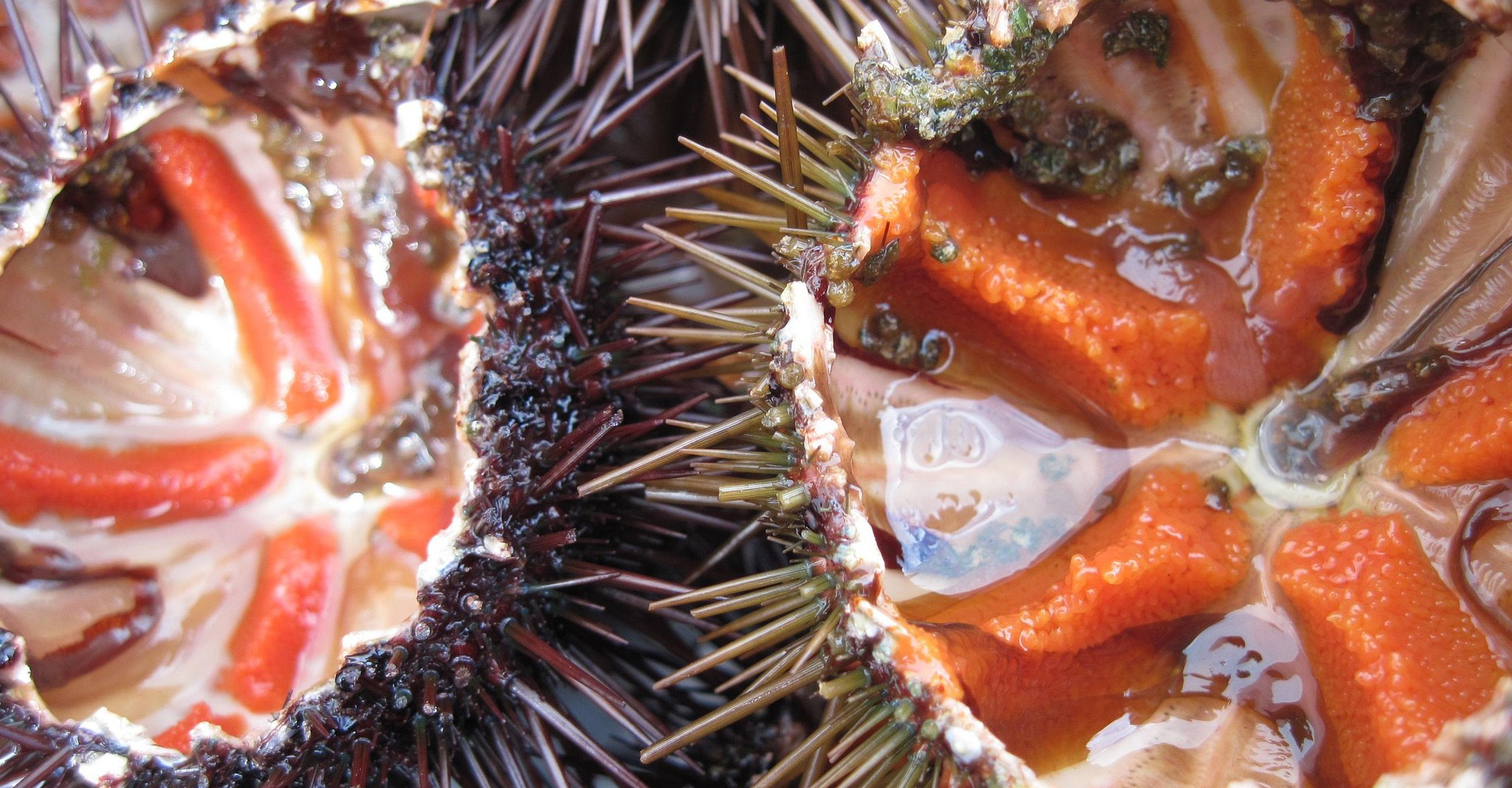
The export value on the seafood market in Tokyo shows that demand for sea urchin roe, known locally as "uni", has reached historic highs. Price statistics from Tokyo's central wholesale market, Toyosu, document that lots of live sea urchins of the highest quality sell for up to 100,000 Japanese yen per box. That corresponds to seven thousand Norwegian kroner per kilo for the most exclusive varieties.
Enormous opportunities
The food research institute Nofima in Tromsø has spent several years mapping the commercial potential of this resource in Norway. Senior researcher Philip James at Nofima confirms that the economic opportunities are considerable, provided logistics and quality remain consistently high. James is a trained marine biologist and has for many years been one of the Nordic region's foremost experts on sea urchins specifically, including their catching, logistics and feeding.
The sea urchin roe can be sold to hungry Japanese for 7,000 kroner a kilo. With billions of them on the seabed off Norway, we are talking big money.
Untapped resource
In a report, James points out that the sea urchins along the Norwegian coast represent enormous untapped value, but the challenge has been that the wild sea urchins in the kelp zone often lack the roe content needed to satisfy the discerning Japanese market. According to the researcher, the solution is controlled feeding in captivity. Lean sea urchins are to be brought up from the seabed and fed with specially developed feed.
Billions of sea urchins
In its monitoring reports, the Institute of Marine Research estimates that there are billions of sea urchins along the coast of Central and Northern Norway. Harvesting them could prove to be a win-win situation for people and the climate, because the sea urchins graze down large areas of kelp forest. Too many sea urchins with no natural enemies create something close to a desert. The Ministry of Trade, Industry and Fisheries therefore points out that commercial exploitation of sea urchins could combine two socio-economic benefits: generating export revenue while at the same time restoring the productive kelp forests.
Extreme density
The company Urchinomics takes sea urchins from overgrazed areas and refines them into a high-value luxury product for the global market. Managing director Brian Tsuyoshi Takeda has, in an industry statement to Fiskeribladet, explained the natural conditions along the Norwegian coast. He says that Norway has an extreme density of sea urchins because too much of the fish that normally feeds on sea urchins has been caught. Takeda in fact calls sea urchins an environmental problem. He too therefore believes it would be a win-win situation to turn a problem into the world's most sought-after seafood product: sea urchin roe.
Norway is on the threshold of a new seafood bonanza.
Unsaturated market
According to Takeda, the market in Asia is so far unsaturated when it comes to supplies of fresh roe with the right flavour profile and consistency. He believes Norwegian logistics make it possible to transport live biomass quickly to international hubs. That is why Innovation Norway has contributed funding to several regional pilot projects investigating automated catching technology for sea urchins.
Strict requirements
Market analyses published by the Norwegian Seafood Council confirm that exporting specialities such as sea urchin roe to Asia requires strict quality control throughout transport. The cold chain must be kept unbroken from the moment of catch in the fjords of Northern Norway until the product is delivered to wholesalers in Tokyo or Osaka, if the raw material is to achieve maximum market prices.
Top
If the sea urchins can be harvested sustainably, without destroying the seabed, the future will look bright for this industry. And if the feeding facilities are land-based, they will not pollute the sea either, as is familiar from the fishing industry. Now it is a matter of playing the cards right.
Good prerequisites
In Norway, considerable progress has already been made in developing precisely the product that will bring in the most cold hard cash. For example, the research institute Møreforsking, in collaboration with commercial players, has carried out tests of roe from farmed sea urchins. The results show that the composition of the feed affects the sweetish taste and the golden colour that the Japanese buyers pay millions for at the annual auctions.
Carbon capture
There is also another aspect that could make Norway's new gold even more popular. Sea urchins play a bigger role for the health of the ocean than many people realise. Together with starfish and krill, they account for carbon capture equivalent to the emissions from 85 million fossil-fuelled cars. A recent study published on WWF's website shows that the sea urchins, together with a few select friends, do an enormous job for nature on planet Earth. In fact, this group manages to capture a hundred million tonnes of carbon every year. That corresponds to the emissions from 85 million petrol-driven cars.
The sea urchins prevent algal blooms. They ensure that more sunlight reaches seagrass and other plants. The sea urchins and their friends improve water quality and create clearer water.
Storing greenhouse gases
Usually it is big, gentle whales or fearsome sharks that grab the biggest headlines and get environmentalists to chain themselves together as protesters. But in the depths beneath the environmentalists live the sea urchins. Together with starfish and krill, they are the backbone of the ocean. They are essential to the whole ecosystem. Together, the species are an enormously important part of the ocean's food web. They store large amounts of greenhouse gases. Without them, the entire food chain, both above and below water, would collapse. That is why sea urchins should not be hauled up from the sea uncritically.
Binding incredible amounts
Sea urchins interact closely with krill. Many people know that the small crustaceans are food for hungry whales. But krill are also important for the process by which the ocean absorbs and stores more greenhouse gases from the atmosphere than it releases. Although whales eat krill, few people know what the krill themselves eat. It is not much different from cows eating grass. Krill eat phytoplankton. Krill's food absorbs carbon dioxide and releases oxygen. Researchers have calculated that phytoplankton bind an incredible fifty billion tonnes of carbon every year! This corresponds to the greenhouse gases from more than forty billion petrol-driven cars. Krill live off these organisms. Krill therefore transfer the captured carbon to the next level of the food chain.
The sea urchins lend a hand
Krill faeces, which are rich in carbon and nutrients, sink into the depths of the ocean and thereby carry carbon away from the surface. Far down on the ocean floor, it works as fertiliser. It contributes to the growth of new phytoplankton. Sea urchins are one of the creatures that make good use of krill's activities. They convert the waste in a way that prevents algal blooms. The sea urchins ensure that more sunlight reaches seagrass and other plants. The sea urchins and their friends improve water quality and create clearer water. Together with the starfish, the sea urchins act as the ocean's vacuum cleaners.
Tread carefully
In other words, sea urchins actively contribute to carbon storage. They do this by building calcium carbonate skeletons from carbon dissolved in seawater. When the sea urchins die, their skeletons break down and become part of the seabed, and the carbon remains bound indefinitely. The vast majority of marine biologists agree that all creatures are equally important in the great network. That is why sea urchin licences must be carefully assessed in consultation with researchers and marine biologists.
Home page