Wanted to research cosmic radiation
Danish researcher sacked
Danish researcher Henrik Svensmark's theory that cosmic radiation may help to form clouds did not go down well with his bosses. The case has attracted international attention because Svensmark points to something other than CO₂.
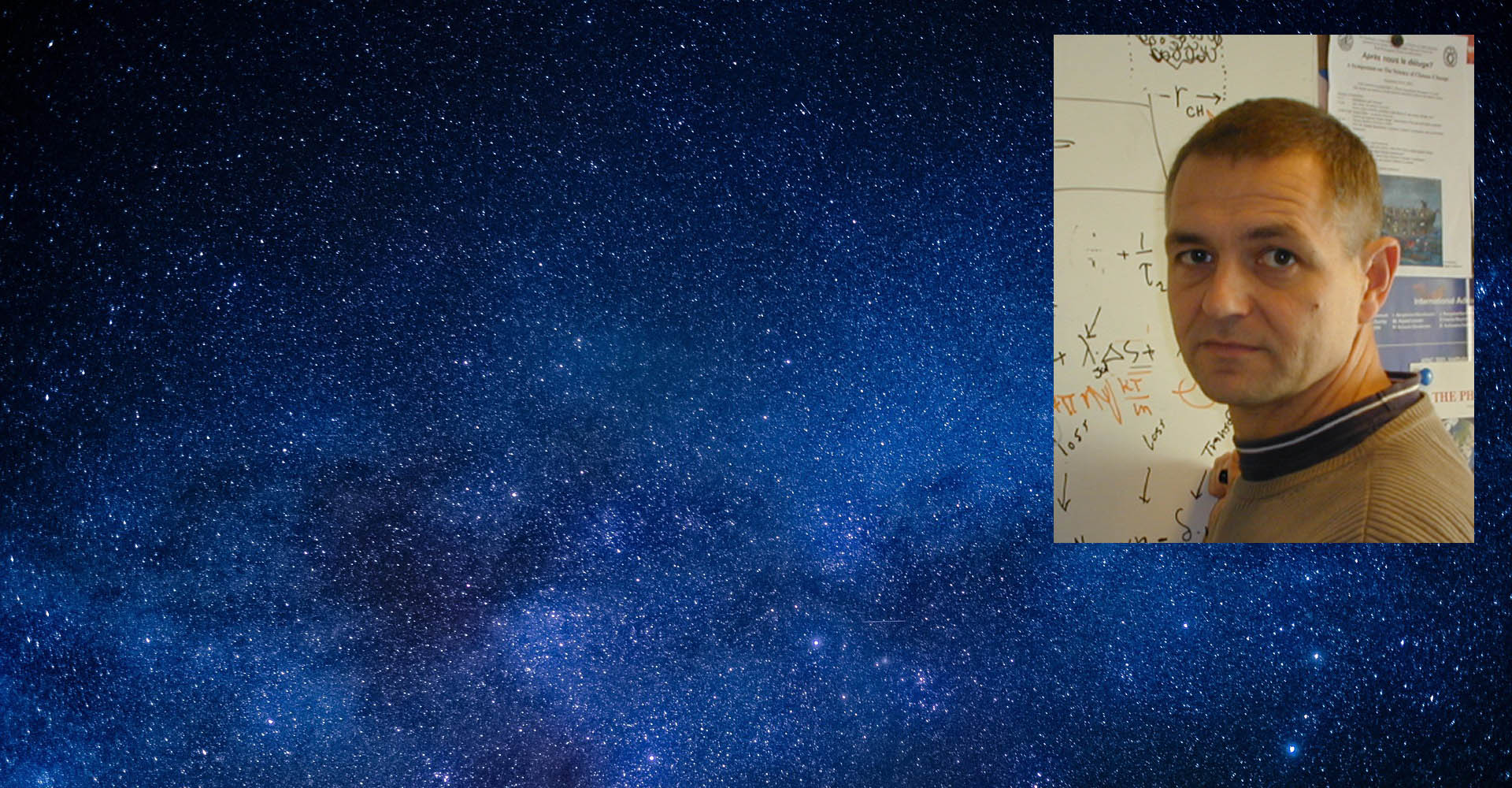
Svensmark wanted to research something other than CO₂. It cost him his job. Now the cosmic rays will have to manage without the experienced Danish researcher.
TopPhoto: Henrik Svensmark/CC BY-SA 3.0/motparten
Text: Christer Andre Mæland
Date: 6 October 2026
Translated from Norwegian with the help of AI · Read the original
Both the Danish trade magazine Ingeniøren and other media have reported that the Technical University of Denmark (DTU) has dismissed Svensmark. DTU justifies this by citing strategic prioritisation and calls it a personnel matter. Svensmark himself suspects that the controversy played a part, but that is his interpretation. He also says that a professorship in 2016 was blocked by a new rector, and that DTU tried to dismiss him as early as 2021.
Afraid to say anything
The climate debate today has such entrenched fronts that exploring explanations other than CO₂ easily gets you branded an extremist. It is therefore likely that this played a part, even if nobody says so out loud. Despite the fact that Svensmark is an internationally recognised researcher, he has lost his position, and the research field has now been downgraded at DTU.
Cosmic
Svensmark's basic idea concerns cosmic radiation from space. It is known today that the earth is constantly bombarded by these rays. They create electrically charged particles in the atmosphere that help tiny airborne particles to grow. Svensmark believes he has shown that water vapour can condense around them, so that these particles can develop into cloud condensation nuclei. He therefore believes they can act as a kind of seed that helps clouds to form.
Svensmark is one of several serious researchers who say it is hard to sustain budgets and research funding if you do not research what pays best for those who foot the bill.
Clouds
Clouds are important because they affect the earth's temperature in several ways. They can reflect incoming sunlight back into space, while also trapping heat that would otherwise escape. At the same time, solar activity can affect the amount of cosmic radiation that reaches the atmosphere. This creates a plausible physical chain linking solar activity, cosmic radiation, cloud formation and, ultimately, the earth's temperature.
Svensmark has spent thirty years working on this interesting hypothesis within climate science. Svensmark says that the management, a few months before he was sacked, had told him that the research was important and would continue. Now other researchers and organisations must make sure that this important research continues. Work is under way to fund equipment and to establish a new scientific environment elsewhere.
Should be tested better
Svensmark has not worked out how much solar activity and cosmic radiation contribute to modern temperature changes. Svensmark's supporters argue that a hypothesis that remains physically plausible and empirically testable should not be abandoned just because it is inconvenient or unfashionable. Several links in that chain have been demonstrated through experiments and observations. The big unresolved question is how strong the total effect is in the real atmosphere.
Front pageSvensmark has never criticised those who research CO2. He does not deny that CO2 plays a major role in the earth's climate, but he insists that other things must be researched too. Not everyone can play football. Some have to play tennis and the violin as well. Unfortunately for Svensmark, he now has to play second fiddle. Perhaps a day will come when people will regret that.
Some disagree with him
Svensmark is not the only one who has researched precisely this field, but he is one of those who have come furthest and done the most research. So there are researchers who believe that Svensmark's cosmic radiation has little significance for the climate. Pierce and Adams' work from 2009 and Gordon's from 2017 are examples of this. They conclude that changes in cloud nuclei from cosmic radiation over a solar cycle are two orders of magnitude too small to explain observed changes in clouds. Gordon's estimate was higher than that of Pierce and Adams, but the conclusion is the same. The question now is whether the research is done, and why funding for the subject, already small, is being cut.
The Svensmark mechanism
If the hypothesis is proven and fixed values for the Svensmark mechanism can be implemented in a global climate model, it will be an important contribution to understanding the climate of the planet we live on. Conversely, if Svensmark himself, or other researchers, prove that cosmic radiation has little climatic significance, something important will also have been learnt. The range of explanations for natural climate variability can then be narrowed. If it turns out that the effect is significant, we will have to rethink how we present and respond to climate change.
Uncertain
Most people know that climate and energy policy involve enormous sums of money. What the researchers find affects energy prices, investment decisions and the competitiveness of companies and countries. It therefore has consequences for the employment and living standards of ordinary people like you and me. If it turns out that Svensmark's cosmic rays matter more than assumed, it could have a positive or negative impact on the forces that have invested enormous sums in, for example, offshore wind and other types of so-called renewable energy.
A relevant researcher
Svensmark is no clown who printed out his exam papers at home in the garage. On the contrary, Svensmark's publications and academic work have international impact. There is still great interest in the articles he has written. He is, it is safe to say, a relevant researcher. He has written articles on supernovae and the burial of organic carbon, presented in Geophysical Research Letters. Another article examines the relationship between supernovae and biodiversity on earth in Ecology and Evolution.
Should be tested better
To sum it up simply, a proper test of Svensmark's mechanism could either show that its climatic significance is small, thereby settling an important scientific question, or reveal that his cosmic rays are more important than is reflected in today's climate assessments.
MOTPARTEN
The other side of the story. An independent newspaper from Norway.
Contact
- Newsroomredaksjon@motparten.no
- Advertisingannonser@motparten.no
- General enquiriespost@motparten.no
Address
Motparten.noElevine Heedes vei 2
4839 Arendal
Norway Editor-in-chiefJesper Enerstvedt