Financiers, economists and researchers agree
The gas power plants are coming
France doesn't sell grapes with a recipe. It sells champagne. Norway can do the same with its gas. Even under the EU's environmental regime, it will pay to turn gas into electricity. Without the EU's environmental levies, we are talking astronomical profits.
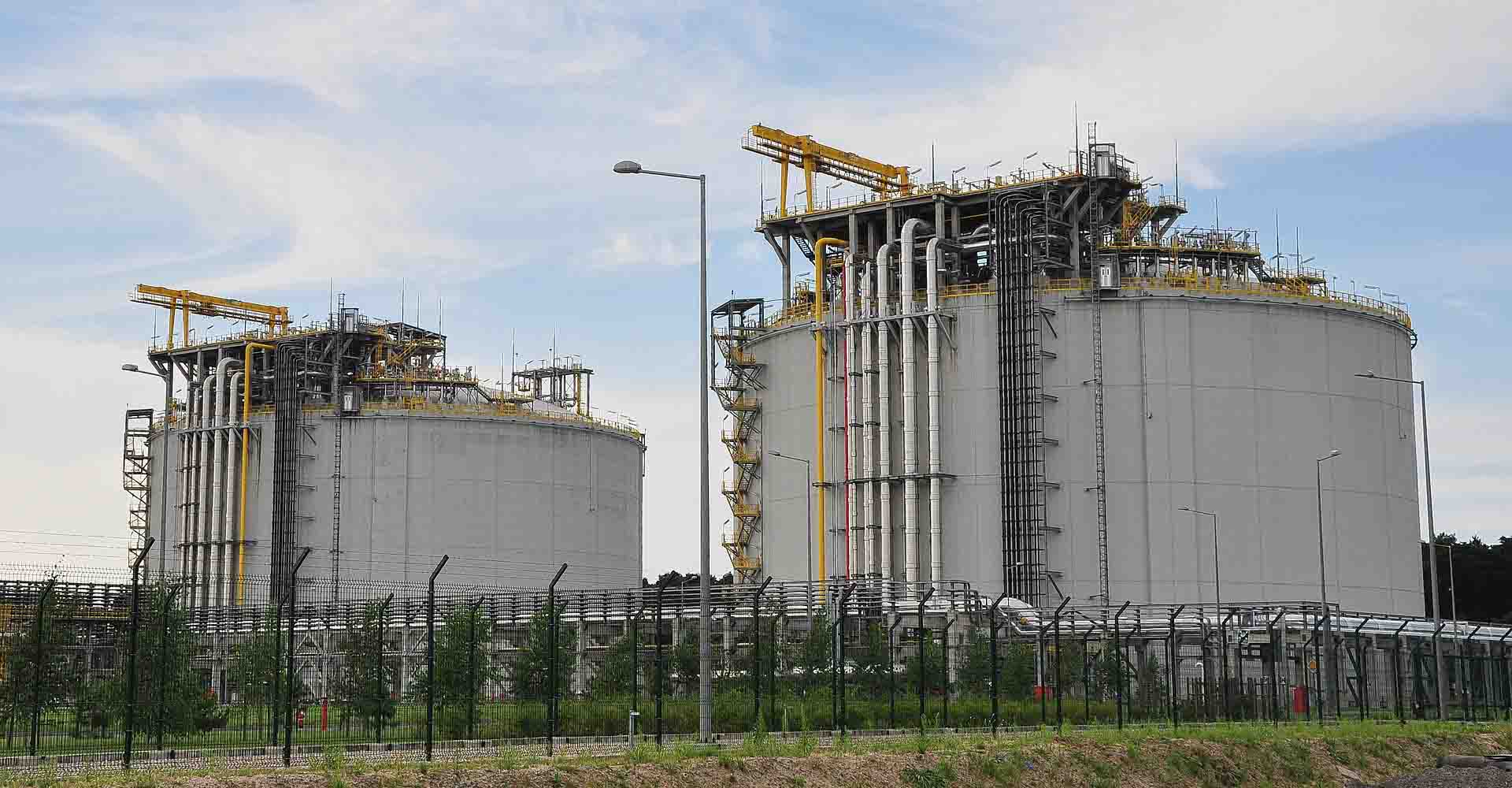
Modern Norwegian gas power plants will cut Europe's emissions, they will prevent imports of coal-fired power, and they will give Norway an enormous boost in income, unless the EU chokes the power plants with levies.
TopPhoto: Pixabay/motparten
Text: Stein Olav Krosby
Date: 28 September 2026
Translated from Norwegian with the help of AI · Read the original
Official export statistics document annual Norwegian gas exports of 115–120 billion standard cubic metres, equivalent to 1,100 TWh of clean energy. The European gas power plants that receive Norwegian gas are old-fashioned. They pollute. Many are therefore arguing that Norway should build more modern, high-efficiency combined-cycle gas turbine (CCGT) power plants. This type of power plant can produce backup power at 20–30 øre per kWh, completely independent of the EU's auction exchanges.
A moronic decision
When Statnett established Statnett Marked in 1993, the aim was to optimise an entirely Norwegian, regulable hydropower system for the benefit of the community and the competitiveness of Norwegian industry. When Statnett and the Nordic grid owners sold 66 per cent of the shares in Nord Pool to the Franco-Dutch exchange group Euronext in 2019, it marked the final shift from a national steering tool to international financialisation. The exchange was turned into a commercial platform for derivatives and spot markets, completely detached from actual Norwegian production costs.
King of the hill
In classical trade theory and realpolitik, the party that controls the scarce commodity is the one that dictates the terms. Europe is in chronic energy deficit after closing down nuclear power and losing Russian pipeline gas. Norwegian gas keeps European industrial parks and district heating networks running. Yet the Norwegian authorities have accepted a market architecture in which the buyer decides the price of our own electricity. Through the ACER framework and coupled auction algorithms (CACM), Norway imports the marginal production costs of the European deficit market directly into Norwegian spot prices.
Researchers, economists and some politicians say the situation in Europe forces Norwegian gas power plants on us. We must take responsibility ourselves and not wait for others to do it.
Soon no longer self-sufficient
At a time when Norway was self-sufficient in electricity, this was idiotic, but with today's enormous consumption of electricity and no more electricity being produced in Norway, that will soon change. Perhaps Norway will no longer be self-sufficient in hydropower as early as 2030. It is therefore important to get the gas power plants built quickly, before the country is completely locked into expensive European market prices.
Green terror
The politicians let a tiny little green party ensure that such crazy decisions are made that foreign journalists struggle to believe what they read. Books are even being written about Norwegian climate hypocrisy.
Home pageThe EU makes electricity from Norwegian gas with large emissions. Norway could have built modern power plants with low emissions. The EU sells dirty cable power to Norway. Norway could have exported cleaner gas-fired power. That is the essence of it. Instead, the politicians let a tiny little green party ensure that utterly crazy decisions are made. After 2029, the EU will probably collapse when Germany leaves the EU. Then the environmental threats will go out the window too.
Anxious Croesus
State Secretary Andreas Bjelland Eriksen at the Ministry of Petroleum and Energy has defended the current model by saying that a cable cut would threaten Norway's own security of supply in dry years. This argument falls apart when confronted with data from leading energy analysts and European grid organisations. But the fact that a man who sells 1,100 TWh to the continent is afraid for security of supply says something about how people think in his circles.
Dunkelflaute
Reports from the European Network of Transmission System Operators for Electricity (ENTSO-E) and Germany's Fraunhofer Institute show that periods of calm and cold weather (Dunkelflaute) occur regularly across Northern Europe. Analyses from the Norwegian Water Resources and Energy Directorate (NVE) and Thema Consulting confirm that on such days the price is set by coal and gas with a CO₂ quota surcharge. Europe therefore has no cheap surplus power to spare in strained periods. The return power is inevitably a continental crisis price.
Create our own exchange
Many of the angry experts point out that Nord Pool and Euronext own the servers and algorithms, but NVE's ownership register shows that more than 90 per cent of Norwegian hydropower production is owned by the Norwegian state, counties and municipalities. If the state and the owner municipalities set up a new, entirely Norwegian power exchange and instruct the public utilities to sell their physical production there, Nord Pool loses all liquidity and price-setting power in Norway overnight.
A simple and effective solution
Physical electricity for households, hospitals, schools and industry is matched to the national production cost of between 10 and 20 øre per kilowatt, plus a fixed operating margin, as the labour movement and Industriaksjonen have long demanded as the foundation for a two-price system. Genuine surplus power, once domestic needs and reservoir filling are secured, can be auctioned off across the cables at the market price on the continent without this marginal price spilling back onto Norwegian consumers.
Time to roll up our sleeves
Consumption in Norway is increasing dramatically without electricity production doing the same. All dreams of a Norwegian power exchange will soon be just old dreams unless Norwegian gas power plants are built. Soon Norway may become inextricably tied to imports of expensive European electricity. The only realistic way to get out of the situation is to build Norwegian gas power plants.
MOTPARTEN
The other side of the story. An independent newspaper from Norway.
Contact
- Newsroomredaksjon@motparten.no
- Advertisingannonser@motparten.no
- General enquiriespost@motparten.no
Address
Motparten.noElevine Heedes vei 2
4839 Arendal
Norway Editor-in-chiefJesper Enerstvedt