Recognised by the UN climate panel
Serious climate critic
The Italian physicist and researcher Nicola Scafetta believes the climate panel overstates the consequences of CO₂ emissions. He thinks too little weight is given to solar activity and astronomical factors.
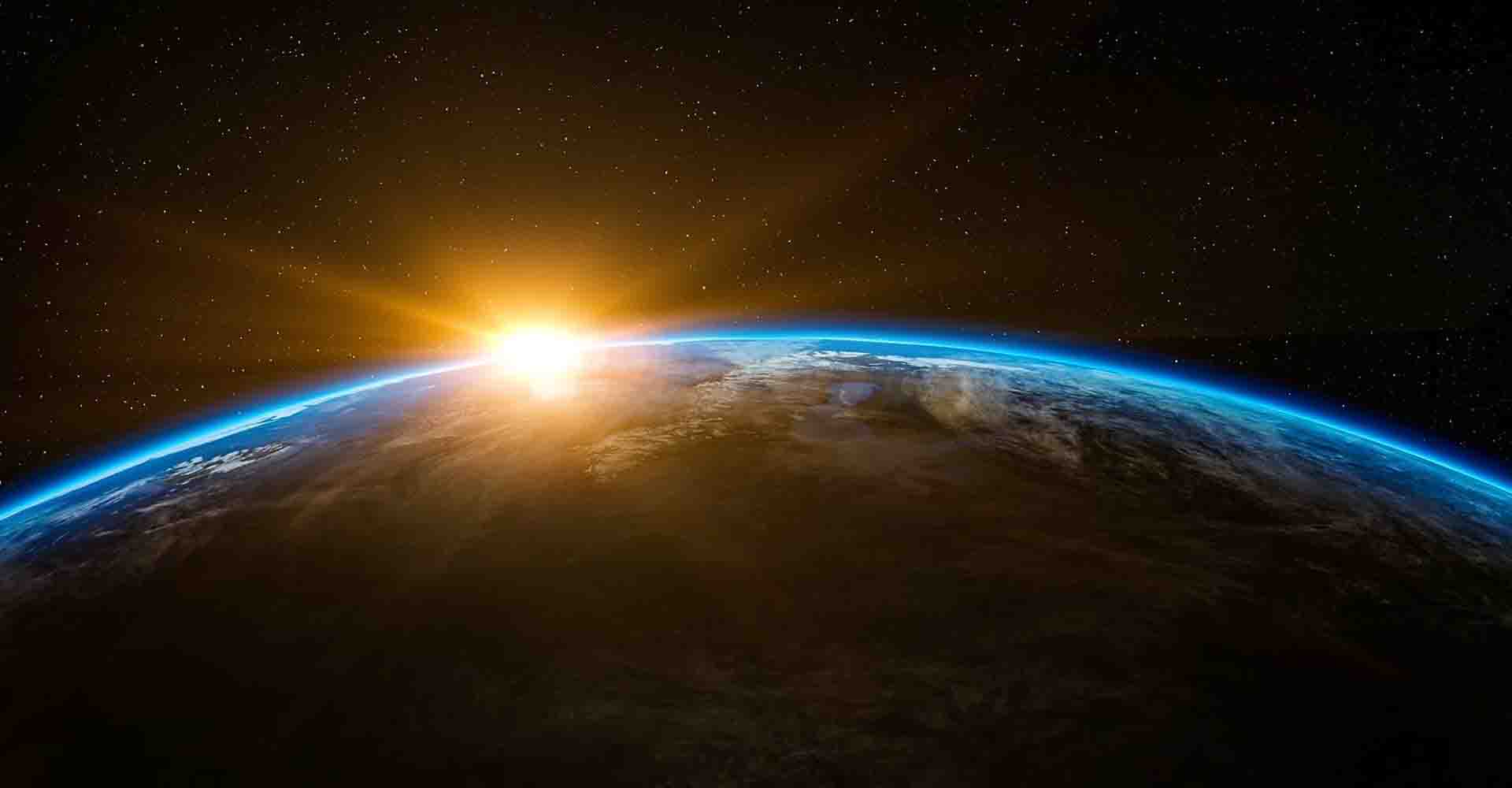
Scafetta believes the sun is the most important factor for the climate on Earth. The solar system moves within the galaxy. This affects the sun – and the Earth.
TopPhoto: Pixabay/motparten
Text: Christer Andre Mæland
Date: 23 September 2026
Translated from Norwegian with the help of AI · Read the original
Everyone knows that the phases of the moon can affect both people and animals. Even so, you would not accept your children blaming their poor results on the full moon. You would say the cause was a lack of homework. In the same way, researchers such as Scafetta believe that people may have overestimated the influence of CO₂.
The sun
In several articles, including some published in the Journal of Atmospheric and Solar-Terrestrial Physics, Scafetta has argued that part of the warming since 1850 can be attributed to natural cycles linked to solar activity and astronomical factors, and that, in his view, the UN climate panel (IPCC) underestimates these natural contributions in its models. He has claimed that the climate sensitivity to CO₂ may be lower than the IPCC assumes, because the models do not capture multidecadal natural cycles well enough.
A different emphasis
A similar view is found in an article published in the journal Sci, issued by MDPI in 2025, in which the authors argue that what they call an “Antarctic Oscillation” governs climate rhythms on a millennial scale, and that human-made CO₂ emissions matter less for climate change than is often assumed, although they also warn of CO₂ as a threat to marine biodiversity through acidification. That means these researchers are not opposed to those who worry about the CO₂ issue, but that they may have found factors that could matter much more.
Needs documentation
Even so, doubting the wisdom of the intense focus on CO₂ is like swearing in church, yet serious peer-reviewed research shows that there has very often been far more CO₂ in the atmosphere than there is now. It is important to understand what drives these swings in order to predict when the next ones will come, and to make vital decisions.
Too little
It sounds completely bonkers. Could there be too little CO₂? Actually, yes. If the level falls below 150 ppm, photosynthesis, for example, cannot survive. Then all life on Earth dies. Today humans are at a level of around 420 ppm carbon dioxide per million. Motparten has taken a closer look at which levels are normal on the globe. The Earth is billions of years old. Many researchers are concerned with what is, to them, recent times on an Earth scale – namely the last fifty million years.
If the level falls below 150 ppm, all life on Earth dies.
Much is normal
To reveal it straight away: there is often far more CO₂ than there is now, but there has often been less too. It goes steadily up and down all by itself. During all the ice ages there is very little CO₂. This is an existential problem for all life on Earth. If it falls below 150, we are in trouble. Then all life dies out.
- Early Eocene (about 50 million years ago): The CO₂ level stayed at around 1,600 ppm for a long time before it began to decline.
- Miocene (about 15 million years ago): CO₂ levels were higher than today, around 500 ppm, but plunged again after this period.
- Pliocene (about 5 million years ago): The CO₂ level was typically 420 ppm, roughly the same as today. After this period too, CO₂ levels fell again.
- NOTE: In the Pliocene, sea level was 15 metres higher than today. The temperature was 3 °C warmer.
Round and round
Researchers today know that it is the Earth's rotation and its interplay with the sun that govern these periods. The solar system rotates within the galaxy. That affects the climate on Earth, and warm and cold periods with little and much CO₂ will come whether we humans like it or not. That is not to say that what we humans are doing now has no significance. On this the learned disagree – a little. For they actually agree on a lot too. What is most uncertain is how much CO₂ matters compared with other factors.
Home pageResearchers such as Scafetta are not met with sour criticism by the UN climate panel. On the contrary, the researchers on the climate panel follow closely what Scafetta finds out. Perhaps humans must also take other measures than merely limiting their own emissions. That could, for example, mean preparing for a sudden shift to a warmer or colder climate. Together, researchers can help humanity be better equipped to face Mother Nature.
Emigration
Researchers such as Scafetta are often met with criticism to the effect that nothing can be done about the sun and the universe, whereas it is entirely possible to do something about human-made emissions. Scafetta believes that one should nevertheless know more about what nature has decided to do. If the Earth decides to get much warmer, for example, a migration to Siberia or Alaska is something people should prepare for. Scafetta therefore believes it is possible for humans to take action on Earth based on facts about the universe.
Steered research
In research circles, the list of CO₂ levels in this article does not mean much. Instead there is an intense focus on the period from 800,000 years ago to the present. This is the period that those who pay for research on CO₂ levels want researchers to concentrate on. If you study this period in isolation, it looks as though the CO₂ level is dangerously high, even though that is just nonsense.
Close to extinction
Central parts of Europe have a vested interest in imposing charges on CO₂ emissions, because they want to subsidise wind turbines. These forces have an economic interest in researching precisely this period. It is perfectly logical from their own economic standpoint. For in precisely this period the planet reached a CO₂ low of 180 ppm. After that, fortunately, it went up again. It has done so every time before as well – exactly as shown in the table further up in this article. But for the greens, who focus only on this specific period, it looks as if the Earth has had just one period – in which the CO₂ level has risen.
Doubters exist
If the level had only ever gone up, or only ever gone down, one could have drawn firmer conclusions. Unfortunately, that is not how it is. The level has gone up and down a great deal. Not all researchers therefore agree on how much weight human-made CO₂ should have in explaining modern warming. Unfortunately, many climate sceptics struggle with credibility, but there are also highly capable and respected critics. These are people who are still in good standing, even with today's CO₂ dynasty.
Time frame
Today's number crunchers operate with a time frame that suits those who pay for the research. These are the forces in Europe that have no sources of fossil energy of their own. They are the ones who most strongly want charges on fossil energy and thereby defend subsidies for wind power, so that the price gap between their own energy and that of others will be evened out. It is not because they are so kind or so worried about flooding in Berlin or Paris. Those cities lie quite safely up high. So does Madrid – a full 600 metres above sea level.
The period being researched is less than one thousandth of a second in Earth terms. For those who look only at this period, it seems that right now is the greatest build-up of CO₂ of all time, even though the exact opposite is the case.
Low level
Whatever is right and wrong, it is important to be clear that those who call for high climate taxes on fossil energy are the same ones who have no fossil energy. It is important to note that much of the research money earmarked for research on the period in question, a million years, comes from countries that have no fossil energy of their own. It is good for people in Norway to know that the period being researched is less than one thousandth of a second in Earth terms. Even so, people are fixated on this microsecond. The Earth is billions of years old. But even if you look only at the last fifty million years, for example, you see that today's CO₂ level is not very high – but very low.
MOTPARTEN
The other side of the story. An independent newspaper from Norway.
Contact
- Newsroomredaksjon@motparten.no
- Advertisingannonser@motparten.no
- General enquiriespost@motparten.no
Address
Motparten.noElevine Heedes vei 2
4839 Arendal
Norway Editor-in-chiefJesper Enerstvedt