The man who made the famous calendar
The Einstein of Maya culture
Countless films and books are based on the ancient Maya calendar, created by an ancient people in South America, with no one understanding how they managed it. Until now. Perhaps the Einstein of his day has been found - Sak Tahn Waax.
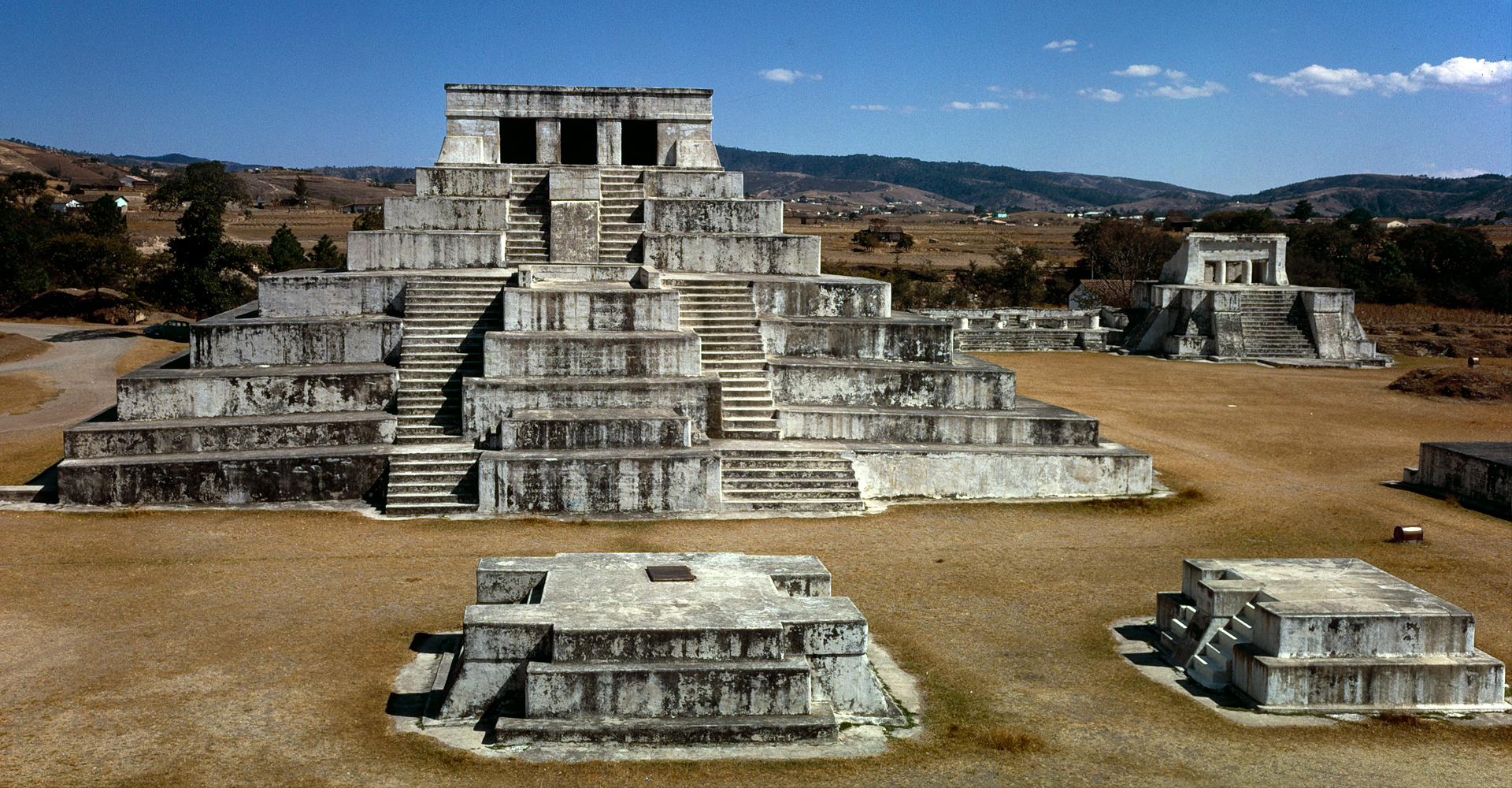
Hidden inside pyramids, researchers have found signed calendars. It is clear that the creator wanted credit for the extensive and brilliant work.
TopPhoto: PhilippN CC BY-SA 3.0/HJPD/Stuardo Herrera CC BY 2.0//theContrapart
Text: Christer Andre Mæland
Date: 8 August 2026
Translated from Norwegian with the help of AI · Read the original
Most of us know the film "2012" well. It is based on the popular myth that the Maya Long Count calendar predicted the end of the world in December 2012. In reality, the Maya calendar did not say that the world would end. It merely marked the end of a long period of time and the start of a new cycle. The notion of doomsday arose from a mixture of New Age interpretations, speculation in books and documentaries, and media attention in the 2000s.
Apocalypto
Somewhat older film lovers know a number of films with the same theme well. Director Mel Gibson portrays the Maya civilisation just before the Spanish conquest in the film Apocalypto. The film is visually impressive, but historians believe it mixes different eras and exaggerates the level of violence.
The Fountain
In the film "The Fountain", Maya mythology and ideas about the tree of life and immortality are an important part of the plot. The Maya calendar is clearly suited to absolutely every category of film. For example, "The Ruins" is a horror film in which an ancient Maya ruin and a supernatural force are central. Even Indiana Jones could not stay away from the Maya calendar. In the film "The Kingdom of the Crystal Skull" there is plenty of inspiration drawn from the Mayas' calendar.
The end of the world
According to reports in Science, the wall notes show astronomical cycles stretching 7,000 years into the future. This disproves earlier assumptions that the Maya operated with a final date for the end of the world, and instead confirms that the system was designed to calculate cosmic patterns over an infinite span of time.
Waax
Epigraphers who have analysed the inscriptions state that Sak Tahn Waax was not merely an administrative scribe, but a chief mathematician at the royal court. The signed blocks mark a historic shift in the understanding of pre-Columbian science, as it was previously believed that the works were exclusively collective or anonymous.
Home pageResearchers are struggling to understand how Sak Tahn Wax managed to make such a precise calendar without modern aids. He was without doubt the Einstein of his day.
An incredible feat
What recurs in most films and books about the Maya calendar is that this people did not really have the prerequisites to make such a precise calendar. They had neither computers nor any other aids that would suggest it was possible. Yet they managed it. Speculation that aliens or other supernatural causes must have been behind the creation of the calendar has spawned countless conspiracy theories. Now, however, it turns out that the reason is the same as why people today have suddenly leapt into the computer age. We have had our Albert Einstein. The Maya had Sak Tahn Waax.
Fox
The name Sak Tahn Waax was discovered at Xultun, an archaeological excavation site near Guatemala's border with Mexico and Belize. Here the calendar has been found on a number of stone blocks signed by Sak Tahn Waax. Archaeologists believe it is beyond doubt that he claimed, or in modern terms was credited for, the work. At last the Maya mathematician above all others has been found. Sak Tahn Waax - which means "The Fox with the White Chest".
Calculation room
Archaeological reports from the excavations in the Petén region document that Sak Tahn Waax worked in a writing and calculation room that functioned as an administrative academy for the elite. Epigraphic analyses published by the Foundation for the Advancement of Mesoamerican Studies confirm that the title «The Fox with the White Chest» was an honorific linked to high intellectual status in the Maya hierarchy.
Carbon-dated
Carbon dating carried out at the University of Heidelberg places the murals and the signed tables at the beginning of the 9th century AD, a period marked by intensive astronomical mapping. International expert groups state that the discovery at Xultun definitively debunks claims that the calendar calculations required extraterrestrial knowledge or modern computer technology.
MOTPARTEN
The other side of the story. An independent newspaper from Norway.
Contact
- Newsroomredaksjon@motparten.no
- Advertisingannonser@motparten.no
- General enquiriespost@motparten.no
Address
Motparten.noElevine Heedes vei 2
4839 Arendal
Norway Editor-in-chiefJesper Enerstvedt