Figures from Australia and the US offer little hope

Fensfeltet – a loss-making project

Even on the most optimistic estimates, the companies controlling the Fensfeltet deposit will be worth only around a hundred billion after a stock market listing. That is half of what the four biggest salmon producers are worth.

It helps little to have 5,000 billion in the ground when a company will be valued at only 100 billion – and will probably never deliver either a profit or a dividend.
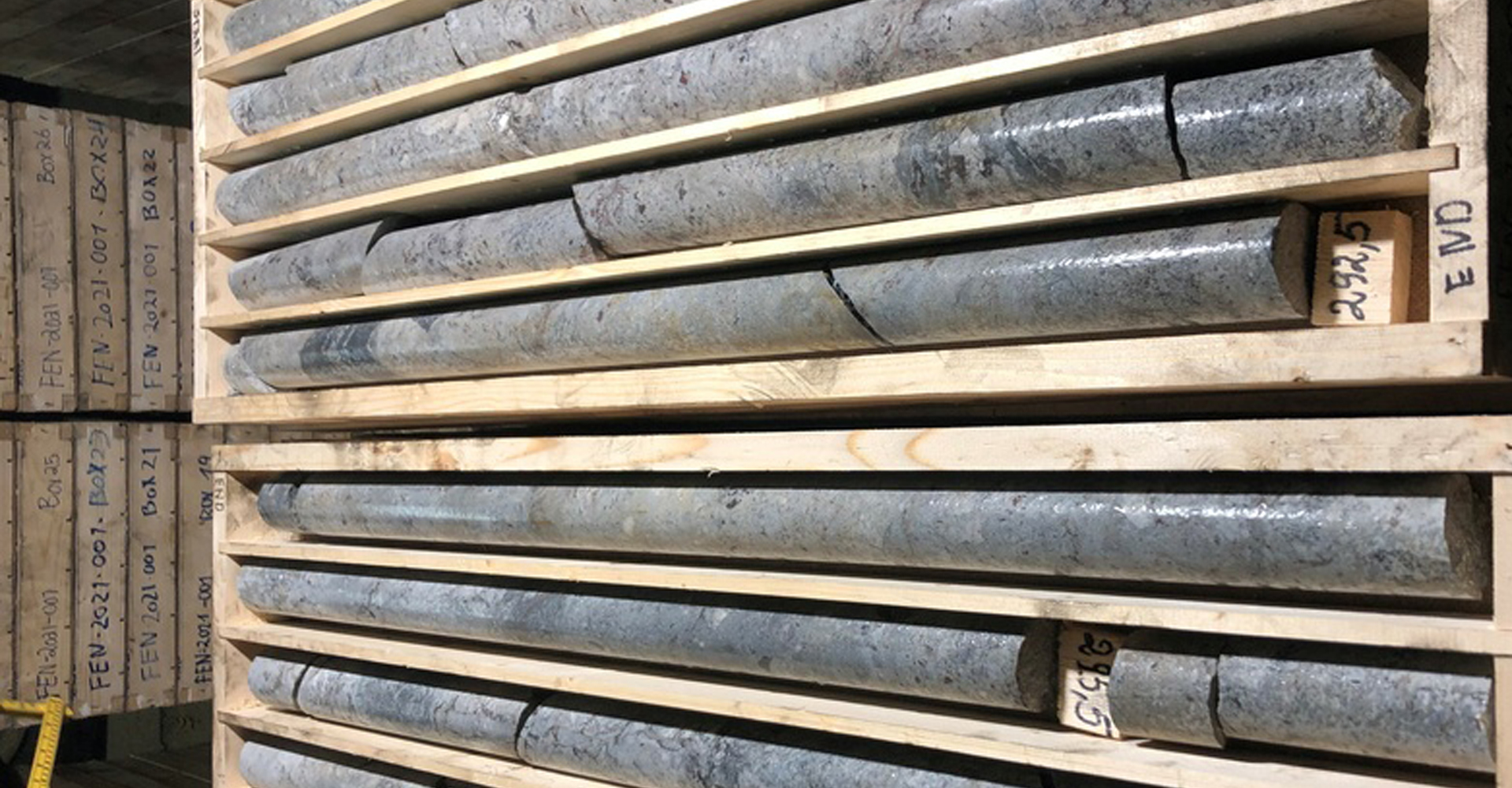
Photo: Rare Earths Norway AS/theContrapart
Text: Ludvig Storn
Date: 31 July 2026
Translated from Norwegian with the help of AI · Read the original

To be brutally honest. The latest optimistic estimates for Fensfeltet are 15.9 million tonnes. That makes it natural to compare with the two largest producers outside China. We are talking about Australia's Lynas Rare Earths and America's MP Materials. Both have a value hovering around a hundred billion kroner. It helps little, then, that the value beneath the ground is put at 5,000 billion kroner.

War and politics

By comparison, the four biggest salmon farming companies are worth much more. Mowi 106 billion, SalMar 70, Bakkafrost 30 and Lerøy Seafood Group 25 billion kroner. Together the four companies are worth around 230 billion kroner. That is twice what one imagines one or more companies owning Fensfeltet will be worth after a stock market listing. Yet one notices a completely different level of interest in Fensfeltet. Here war and politics are simmering beneath the surface.

Poor prospects

Fensfeltet faces other and much bigger problems. We have looked at what comparable companies outside China actually earn. Lynas Rare Earths in Australia has a market capitalisation hovering around 10.61 billion US dollars. In the 2025 financial year Lynas's revenue was 556.51 million AUD (Australian..), up 20.12% on the year before, while the result was 7.99 million AUD, down 90.55%. In other words, much higher income, but almost nothing left on the bottom line. Lynas has not paid a dividend in the past 25 years. All profit goes into reinvestment.


Unless the Third World War breaks out, it is doubtful whether Fensfeltet will turn a profit.


Zero dividend

MP Materials in the US has not much more to boast about. Its market value is roughly the same, around 10.86 billion US dollars. You will find the plant at the Mountain Pass mine in California. The 2025 annual results show revenue of 275.5 million USD, up 35% from 2024, but with a net loss of 85.9 million USD. That is a loss that grew by 31% from the year before. This company does not pay a dividend either.

Bombs and shells

Like it or not, and no matter how fond one is of bombs and shells. The relevant lesson is that pure market prices for rare earths have historically given weak or negative profitability for producers outside China. In other words, it looks pitch black for Fensfeltet, unless there is a world war and China halts all sales. Then it is nice to have a mine to yourself, but that is not where the debate is today. Nobody admits that what they are really arguing about is war preparations. Everyone talks about fabulous profits. Motparten can guarantee that will not happen.

Top

The West would like to be self-sufficient in the important metals found in the ground, but few governments are willing to subsidise. Similar companies in Australia and the US run at a loss and have not paid a dividend in 25 years. Even if they disappeared, Norwegian production would fare no better than Morrow did in Arendal.


The figures speak for themselves

If the share of the most sought-after magnet metals, neodymium and praseodymium (NdPr), is 19 per cent of the total content, that gives about 3 million tonnes of NdPr oxide. According to Mining Weekly, the price of NdPr has been highly changeable (volatile) in 2026. NdPr alloy stood at 133 dollars per kilo on 1 July 2026, up 21.4% from 109 in June, and some spot prices reached almost 100,000 dollars per tonne in January 2026. With the most optimistic scenario possible, of 150,000 dollars per tonne, we arrive at 3 million tonnes of NdPr oxide being worth 4,600 billion kroner, just for the magnet metals, in theory. This fact, however, helps very little once the realities of the extraction process and competition with China are factored in. Then Fensfeltet is in for a lot of hassle, pollution and ZERO dividend for shareholders.

Salmon and tax

If the state instead lets the optimists forge ahead, a completely different revenue picture may emerge. Then the state can actually make money. Unlike oil and hydropower, for example, the state owns no important positions in the salmon industry. (even though it should have) The state has instead chosen to raise revenue through taxation. That can be done with Fensfeltet too.

Making money

For Norwegian salmon farming the money comes from a number of sources. The farming companies pay resource rent tax for sea area. The companies also pay a production fee to the municipalities of 96.5 øre per kilo of salmon produced. The money goes through the Aquaculture Fund (Havbruksfondet) to municipalities and county authorities. In 2025 municipalities and county authorities received 1.4 billion kroner through the Aquaculture Fund. 143 municipalities and eight county authorities received money.

A thousand and one taxes

In 2024 and 2025 a total of over 6.1 billion kroner was paid out through the fund. When the state sells new farming licences, 55 per cent of the revenue goes to the Aquaculture Fund. Then come all the ordinary tax revenues such as corporation tax, employers' national insurance contributions, tax and national insurance contributions from employees, tax on dividends, VAT on purchases, tax from the supplier industry, tax from transport, slaughterhouses, service vessels, equipment manufacturers and whatever else we at Motparten don't know about.

Cod and saithe – landed in a jiffy

Norway's salmon tax bonanza brings jingling coins into the coffers. That said. Unlike rare earths, which will probably never yield a dividend, state ownership in the salmon industry would have produced fabulous profits. How hard can it really be to feed a fish? It is much harder to dig in the ground for something that billions of Chinese tear up with their bare hands before breakfast.
Front page

MOTPARTEN

The other side of the story. An independent newspaper from Norway.

Contact

Address

Motparten.no
Elevine Heedes vei 2
4839 Arendal
Norway
Editor-in-chiefJesper Enerstvedt

About

Follow

© Motparten.no · All rights reserved. Independent since 2021 · Published in Arendal, Norway