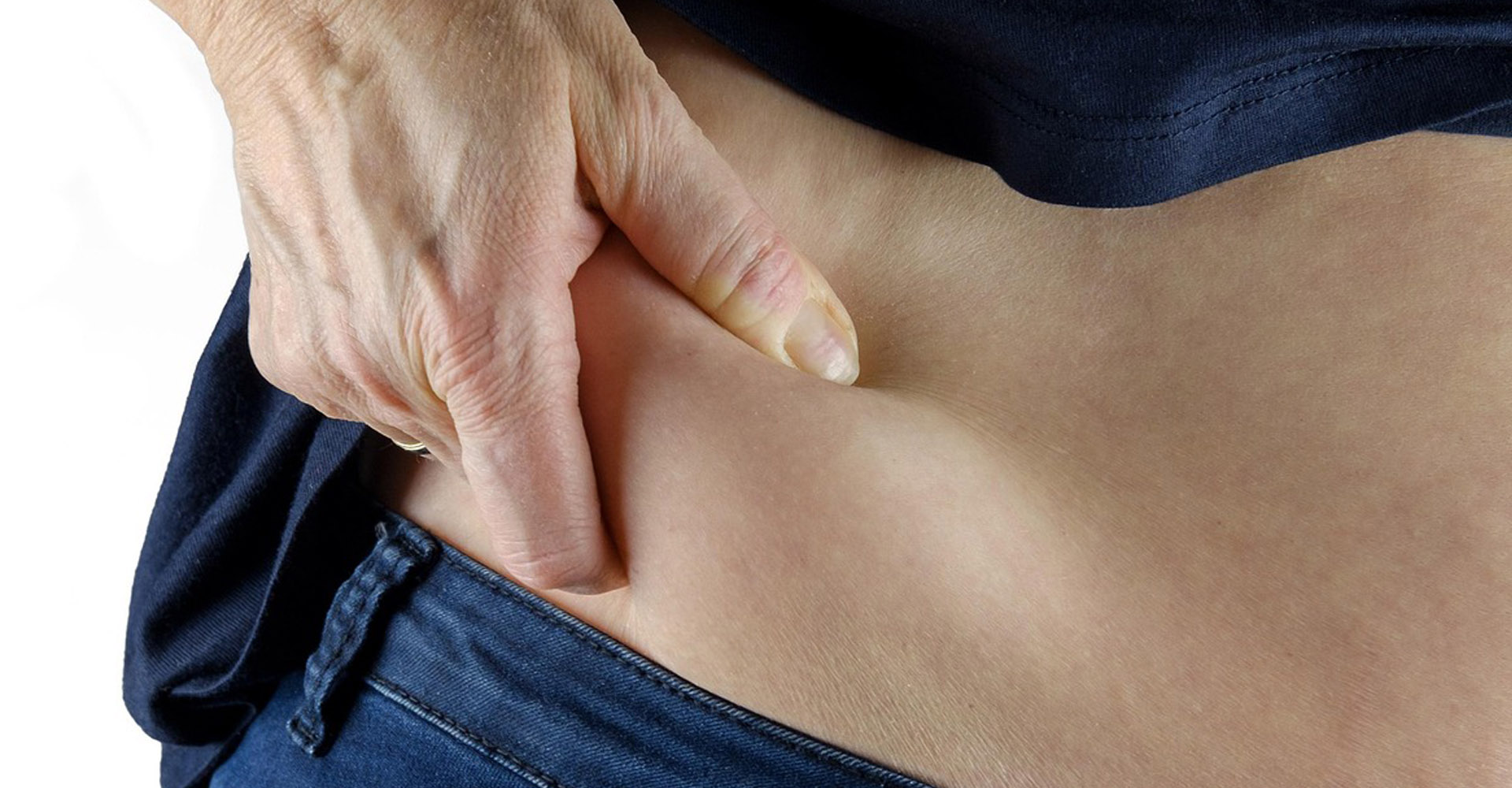
Christmas is approaching – put a little fat on your body!
Fat is healthy – all year round
Fat plays many roles in our bodies. It helps release hormones and maintain body temperature. It supports the mind and a sense of calm, and it is necessary for wounds to heal and inflammation to subside.
A little fat is much better than no fat at all. Fat contains vital hormones that repair damage, and it also helps your brain work as well as possible.
In our day and age, with its heavy unnatural pressure to have an ideal body, fat has almost been demonised. An unhealthy diet culture tells everyone they must get rid of their fat, but that is a dangerous mistake. Fat is considered an organ. You can't manage without it.
An important hormone
An article in Metabolism titled "Leptin physiology and pathophysiology in energy homeostasis, immune function, neuroendocrine regulation and bone health" summarises thirty years of research on leptin. That is the hormone found in fatty tissue. The conclusion is unmistakable. Fat affects, among other things, the immune system, reproduction and the skeleton. It is very important for humans to have fat, as long as it doesn't become excessive.
Christmas is getting close, folks!
Serious
It is therefore serious that people have started eating low-fat products that are fundamentally entirely wrong for our species, Homo sapiens. It is all about having as little body fat as possible. Social media is flooded with dangerous advice on how to get rid of that healthy fat in no time. Fortunately, not everyone is fooled. Fat in the right portions is very healthy.
An unhealthy trend
In some periods things go completely overboard. Unhealthy trends that breed skeleton-thin, stick-like people go completely overboard. Being super-thin is something no doctor would recommend. It is therefore worrying that people get hold of slimming pills or go on outright starvation diets. It takes a heavy toll on health. It is dangerous for the brain, the heart and the organs alike.
Super battery
But even though too much fat causes health problems and can lead to obesity, too little is not good for us either. Remember that body fat is nature's ingenious way of storing energy you don't need right now. It is like a high-tech battery. When you eat, the fat is broken down into simple building blocks your body can use as fuel. That is why it is important to get enough through a healthy menu of carbohydrates and proteins.
Hunger is dangerous
People who go hungry, or who don't get the daily calories the body requires under normal conditions, also risk a range of other ailments, even psychological ones. The worst of it, though, is that the body's ability to heal, for example, wounds no longer works optimally. The study The Biology of Human Starvation from the University of Minnesota showed that 36 healthy men who went through half a year of semi-starvation were severely diminished. The result was physical deterioration and major psychological changes..
Merry (well-fed) Christmas
We at motparten hope this is a real boost and proper encouragement for everyone looking forward to lots of fatty, delicious Christmas food. Here you can simply step on it. Tuck in with a clear conscience!
On Christmas Eve everyone is to be well, as the Mouse Song goes. Now research shows that everyone can be well before and after Christmas Eve too. Just slurp up the pork rib fat and kransekake and go for the big gold medal. But remember that not everything you read in the papers is true. Do feel free to have a little fibre, fish and fruit now and then :-D
The number is constant
Put simply, carbohydrates turn into glucose and proteins turn into amino acids. Fat first turns into fatty acids. If you eat more calories than you burn, the fat cells store the extra nutrients as what nutrition scientists call lipids. The fat cells expand in size. A Nature study shows that the number of fat cells is constant in adults. This applies to both slim and overweight people. The number of fat cells is set in childhood and adolescence. The cells are nevertheless constantly renewed, by about 10 per cent a year, so an old cell is replaced by a new one. When people lose weight, the cells get smaller, but the number does not change.
Panic
A big problem for those who diet is that fat tells the brain it can relax. If the brain thinks the ship is running out of goods and gold, it will go into a mild panic that stops you getting the calm you need. Only when the body gets its necessary daily intake of calories can it relax and concentrate on other important things.
Deprioritising
What many people don't realise is that body fat is also regarded as an active organ that regulates the body's functions. Fat is essential for you to function well. The body releases from its store only when necessary. The journal Brain, Behavior, and Immunity describes a threshold. When you fall below a certain amount of stored fat, the body interprets this as starvation. It then deprioritises the non-essential functions. This applies, for example, to reproduction and fighting infections. Without enough calories, the body starts to deprioritise important jobs. That can be anything from a small wound healing quickly to a larger inflammation, for example in a tooth.
Good in Norway
For people who live in cold countries with harsh winters, body fat is especially important. Fat helps keep you warm. It works both as a layer of insulation and by burning energy to produce heat, almost like a heater. Everyone knows that far too much fat can be dangerous, but few know that too little can be just as dangerous. Cutting calories too fast disrupts the organs and bodily functions.
Fat in illness
Several studies show that middle-aged and older people with a moderate amount of fat have a higher survival rate during critical illness. Haakon E. Meyer at the Norwegian Institute of Public Health took part in a Norwegian study of 22,000 middle-aged men in Finnmark, Sogn og Fjordane and Oppland. They were followed for 16 years, and the results were published in Medicine & Science in Sports & Exercise. It showed that it was best to have a "normal" amount of fat, and that having too little or too much was unfortunate. Other studies are even more fond of fat. In a study presented in the European Journal of Medical Research in July 2024, researchers found that among 1996 patients with long-term critical illness, the overweight and the outright fat had lower mortality.