MOTPARTEN EDITORIAL - The editorial is the newspaper's collective voice. It shows the newspaper's ideological tradition in its encounter with public debate.

Editorial - November 2026

SEE CARTOON The Cats

Norway could get paid for CO₂ emissions

...if it gets colder

With a climate subsidy for CO₂ emissions of 20 øre per kilowatt, Norwegians could get their electricity completely free. It sounds like a bad science fiction film, but it could easily become reality if Mother Earth decides so.

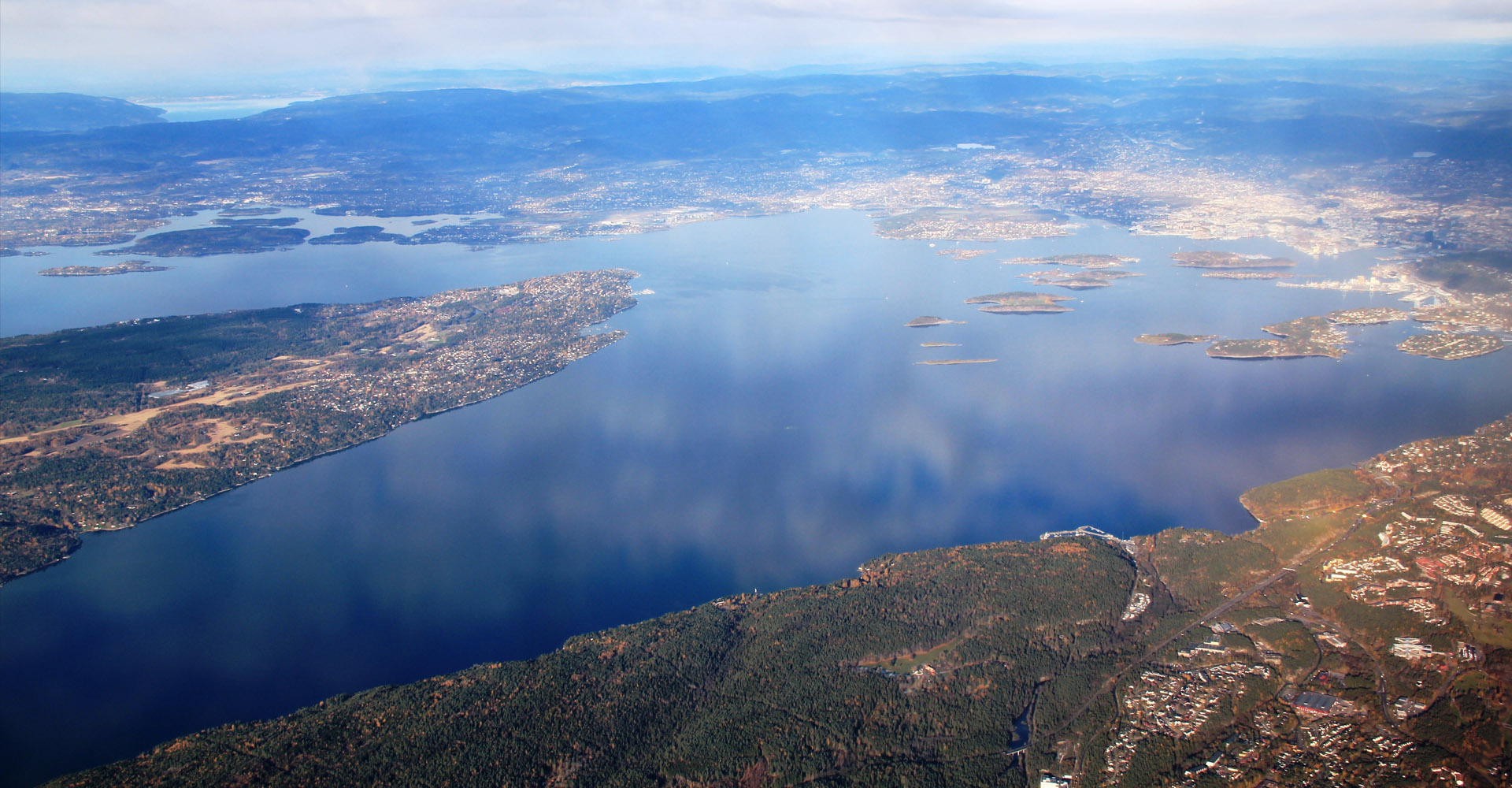
The Oslofjord could get metre-thick ice within a ten-year period. Even the UN climate panel acknowledges that the last ice age both arrived and ended within a few years.
Photo: Desken/motparten
Text: Jesper Enerstvedt
Date: 1 November 2026
Translated from Norwegian with the help of AI · Read the original

The physicist Nicola Scafetta is recognised by the UN climate panel. The scientist is neither controversial nor particularly contentious, despite having researched causes of changes in the Earth's temperatures other than CO₂. All scientists agree that without the sun we have no habitable blue planet. The sun, for its part, is at the mercy of the movements of the Milky Way galaxy. The question Scafetta asks is how quickly changes can happen with these factors, and whether there is anything at all we humans can do to defend ourselves against this kind of event.

Coming fast

Because it has been discovered that ice ages are more frequent and arrive much faster than previously thought, having a crisis plan at hand is becoming ever more relevant. The last ice age both arrived and vanished in as little as ten years. One way to slow such a cooling could be massive CO₂ emissions. Norway is one of the countries that could contribute the most.

Good reason

Without the climate taxes, Norway could have produced electricity at 20 øre per kilowatt hour. And with subsidies for emissions, people could eventually get their electricity for free. Today such thoughts are like swearing in church, but they could soon become reality. If the world faced a looming, natural decline in CO₂ towards levels dangerously low for plant life, it would give a logical reason to discuss whether CO₂ emissions should even be encouraged financially. If it suddenly got much colder, CO₂ subsidies would be an effective instrument, at least if one believes the UN climate panel, which says it is effective in preventing global warming.

Underestimating the sun and the universe

The Italian physicist Nicola Scafetta has argued in several articles, including ones published in the Journal of Atmospheric and Solar-Terrestrial Physics, that part of the warming since 1850 can be attributed to natural cycles linked to solar activity and astronomical conditions, and that, in his view, the UN climate panel (IPCC) underestimates these natural contributions in its models. He has claimed that climate sensitivity to CO₂ may be lower than the IPCC assumes, because the models do not capture multi-decadal natural cycles well enough.

...and the rotation

The sun is the most important factor for the climate on Earth, in combination with the Earth's rotation. Together they spin around in a solar system that also turns round and round. Astronomers call the big house a rotating galaxy. And they are quite right. Looking at the Milky Way, it is a beautiful collection of stars rotating in the same direction all the time, in a kind of fan shape with long arms stretching out from the centre. You live in one of the arms.

Not disputed

Nothing humans do can match the sun's energy input. Over millions of years the sun has created variations in the Earth's orbit and tilt. So-called Milankovitch cycles show how the sun triggers ice ages and interglacials. No serious climate scientist disputes this. It is in fact the basis of most of palaeoclimatology.

Solar activity

Sunspot observations exist from the 1600s. They are called the Maunder Minimum and the Dalton Minimum. Cosmogenic isotopes such as beryllium-10 and carbon-14 in ice and tree cores allow scientists to reconstruct solar activity tens of thousands of years back, because the solar wind shields the Earth from cosmic radiation, and more solar activity gives less of these isotopes in the archives, while less solar activity gives more. This is how we know that there were both a Maunder Minimum and a Medieval Maximum in solar activity long before any satellites existed.


WARNING: Even though all the scientists you read about in this article are accepted by the UN climate panel, and stand behind peer-reviewed, recognised research, it may be harmful to your reputation if you discuss it with others.


Abrupt end

Has the UN climate panel underestimated the influence of the sun compared with the influence of CO₂? Has more recent research made the work of the physicist Nicola Scafetta more relevant? For example, shockwaves went through the research community when it was discovered that the transition from the last ice age to our warm period did not take thousands of years, but as little as 10 years! Everyone asked whether it could happen again. Could an ice age arrive within ten years and cover Northern Europe in ice? In such a period it is not certain that all the world's CO₂ emissions can save us, but there is no harm in trying, and this is where countries like Norway may be able to contribute.

Interglacial

We live in what is called an interglacial. Transitions out of ice ages, so-called deglaciations, happen much faster than scientists used to think. Research on the Greenland ice has shown that the temperature jump at the end of the Younger Dryas 11,700 years ago happened in as little as a few decades, not millennia. Some scientists say it is fresh water and salinity, not the sun alone, that could upset this balance in weeks and decades, while others, such as Steffen M. Olsen of the Danish Meteorological Institute (DMI), believe something quite different from the gloomy predictions of the climate scientists.

Recognised Dane

Olsen claims to be able to prove that the current will not stop even if all the water on Greenland melted tomorrow. And he has obtained the evidence from research groups in completely different fields. Olsen is supported by American colleagues who say there are likewise no indications of a weakening of the Gulf Stream as it leaves the Gulf of Mexico. The latest measurements show that the currents in both areas have increased. This means that the sinking in the North Atlantic and in the Nordic seas has not weakened.

Top

When one knows both that ice ages come and go frequently, and that it happens fast every time Mother Earth changes cycle, it can seem very naive not to be prepared, and to have made neither countermeasures nor a realistic migration plan for the population. It would be entirely possible to survive a rapid climate shift, but only if people cooperate and are prepared.


Hairy goals

Researchers point out that the abrupt transition from the last ice age was due to a change in ocean circulation in the Gulf Stream/AMOC. There were no ships, aircraft or traffic to blame back then. Instead, the episode showed how universal forces rule the Earth's climate with an iron fist. As its enforcer, the universe has chosen the sun. The Earth simply has to put up with everything the sun does. That the human species has now introduced climate quotas is therefore very exciting. Never before in human history has anyone set out to fight the influence of the sun and the planet on the climate. There is no law against trying, but statistically the chance of success is pitifully small.

Heaven and hell

Anyone who believes one can cool down or slow warming by reducing CO₂ emissions will agree that one can warm the Earth by doing the opposite. This differs from the climate sceptics, who believe that neither is possible. It is a bit like the priest with heaven and hell, or night and day. These premises depend entirely on each other to exist. If one can cool down by reducing, one must be able to warm up by increasing. This is where more recent research comes in. Perhaps there will indeed be a need to increase. The question remains exactly the same as it is today: will it be enough?

Eemian

Whether people like it or not, abrupt climate change happens. For many scientists it is frightening that the second-to-last ice age also ended abruptly. It, too, ended with a period confusingly similar to the one we live in now. That interglacial is called the Eem or Eemian and lasted around 15,000 years. This happened about 120,000 years ago.

Holocene

The interglacial that you and I now live in is called the Holocene. It has now lasted 12,700 years. That means that if the Eem pattern is representative, we are roughly at the point in the cycle where an interglacial has historically been nearing its end. Much suggests that we are heading towards a new ice age. In such a perspective, humans as a species will be forced to look for solutions for survival. If nothing is done, billions of people could die – in just a few years. That would make today's forecasts of the consequences of warming look like a sunshine story.

Paying Norway

When a transition to an ice age comes in just 10 years, there is no time to build defences. Perhaps only stronger global warming can save us from the next ice age? If we are to warm the Earth ourselves, everyone must pull together. Just as we are trying to do today, but in the opposite direction. In such a scenario it would not be unrealistic to pay countries like Norway to emit extra CO₂ – that is, if scientists manage to prove that it actually warms the Earth as fast as they say. That is not certain either, if we are to believe scientists like the Italian Nicola Scafetta.

Migration

Today there are several alternative and original, but alas desperate, solutions for speeding up the warming of the Earth. If the planet were properly heated, a narrow belt around the equator would become uninhabitable, but in return enormous areas would open up in Alaska and Siberia. The problem would be getting the Russian and American authorities to agree to large-scale migration. But would it be enough to stop an ice age that starts because the Earth's rotation and the sun's influence have changed the ocean currents?

Evolution

From a purely logical and logistical perspective this should not be a problem. Today billions have clumped together in India and China, while enormous areas spanning many time zones are practically uninhabited, such as east of the Urals in Russia, where only around ten million people live, and gigantic, almost uninhabited Alaska, where almost nobody lives at all. Moving people there, and away from dangerous areas around the equator, and in this way spreading the masses, is from an evolutionary perspective only an advantage.

Permafrost and methane

Siberia east of the Urals and Alaska, which belongs to the USA, are not empty simply because nobody wants to move there. They are empty because they lie on permafrost. If a warmer globe thaws the permafrost, the land will not automatically become arable and stable. Quite the opposite. For a period it becomes marshland releasing enormous amounts of methane that amplify the warming further. That is a nice self-reinforcing effect if one both wants to warm the Earth and in time make the areas in Alaska and east of the Urals habitable.

The ice age is coming

Perhaps humans have got it completely wrong – again. That would be typical, wouldn't it? :-D Perhaps one has to turn absolutely everything on its head. With an ice age just around the corner and a world population that has clumped together, one should focus more on spreading people out and warming the Earth faster. CO₂ emissions could be an important contributor here. Countries like Norway could get 20 øre per kilowatt hour in support for emitting extra CO₂. Norwegian gas power plants can make electricity for 0 kroner for the Norwegian population. A cost price of 20 øre minus a climate subsidy of 20 øre makes zero øre.

Bad news

To steady the nerves of those who have taken the time to read this editorial. Most likely both today's plans to stop the heat by reducing CO₂ emissions and the thoughts of warming things up with more CO₂ emissions are futile dreams that humanity will later be ridiculed for. Against the universe's enormous forces, what we do amounts to less than pissing in the ocean. If the universe has decided to make a new ice age in ten years, it will probably come – whether we like it or not.
Main page

MOTPARTEN

The other side of the story. An independent newspaper from Norway.

Contact

Address

Motparten.no
Elevine Heedes vei 2
4839 Arendal
Norway
Editor-in-chiefJesper Enerstvedt

About

Follow

© Motparten.no · All rights reserved. Independent since 2021 · Published in Arendal, Norway