Crisis for Ukraine's metal industry
15 0000 000 tonnes gone
From being a European steel giant, Ukraine has crashed to a level comparable with Austria and Poland. The war has shaved off 15 million tonnes of steel.
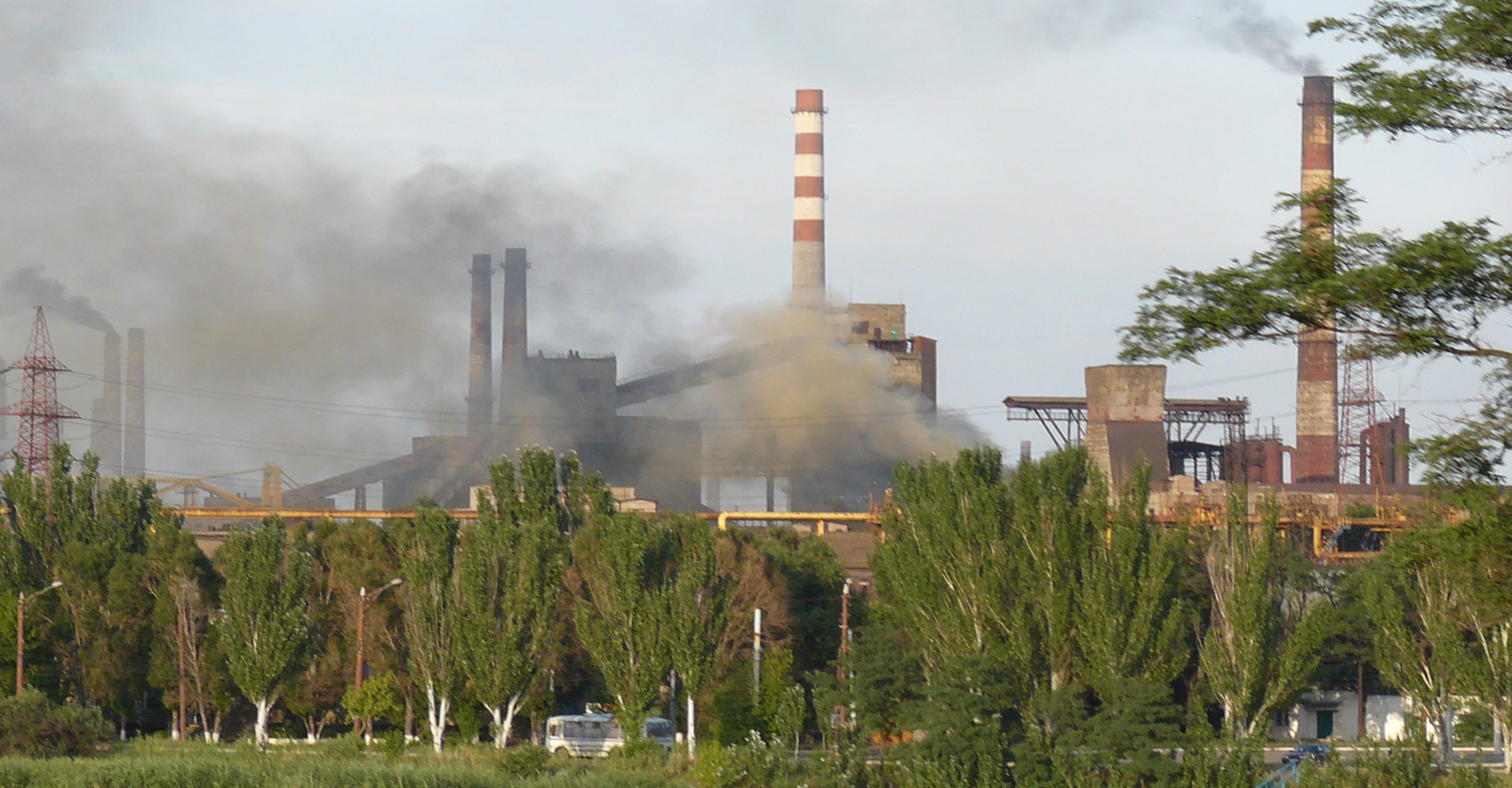
Azovstal, Mariupol.
TopPhoto: MOs810_CC BY-SA 3.0/motparten
Text: Stein Olav Krosby
Date: 20 October 2026
Translated from Norwegian with the help of AI · Read the original
Before 2022, Ukraine produced more than 21 million tonnes of steel a year. After the industrial giants Azovstal and Ilyich were destroyed and lost, national annual production fell to around 6–7 million tonnes. That is a level best compared with Austria, which holds steady at around 7.1 million tonnes, and Poland with 7.2 million tonnes.
Crisis
The figures from the Ukrainian metallurgy industry association, Ukrmetallurgprom, and the analysis centre GMK Center leave little doubt about the scale of the crisis. Since the two industrial giants in Mariupol were destroyed, Ukraine has lost two thirds of its total capacity.
Most wars with a static front end in years of sour relations, with no one feeling they came out of the conflict victorious. The whole Western sphere is suffering from the war. Even in the USA, where one would think things are going well, rockets roll out of the factories instead of modern electric cars. In the long run, it is Asia that gains from Christians and Muslims squabbling, even with each other, as in Ukraine.
Extreme conditions
The remaining integrated works, such as ArcelorMittal in Kryvyi Rih and Metinvest's plants in Kamianske and Zaporizhzhia, are at times operating under extreme conditions. Systematic attacks on power stations linked to the works are reported. This forces the plants to shut down blast furnaces and import expensive emergency power from neighbouring EU countries to prevent molten metal from solidifying in the ladle.
All of Europe is suffering from the war. There is discontent in both Paris and Moscow, but Ukraine is hit hardest. Perhaps the war wasn't so clever after all? Perhaps the parties should have struck a deal back when it was still possible to do so, agreeing to disagree. Now it will be, at best, 10 years of a frozen front line.
Coking coal
Today, the most serious long-term threat to Ukrainian metallurgy is at the front in Donetsk. Outside Pokrovsk lies Ukraine's only remaining mine for high-quality coking coal, Pokrovske Coal. Both Metinvest's management and international news agencies such as Reuters have warned of the consequences if this mine is lost or blocked. The Financial Times has also picked up on the situation and commented on it on several occasions.
Imported coke
If Ukraine has to import coke, over long distances and via vulnerable railway lines, the country's total steel production risks being halved yet again. The country now lacks both stable electricity and its own coke supply to maintain continuous operation at ordinary smelters.
Front pageIf Ukraine is to get its steel industry in order, it must make peace immediately. If Weidel wins in Germany and Le Pen in France, supplies will come to a sudden halt. Then the whole country will collapse.
Thousands affected
The trouble began for Pokrovske Coal as early as January 2025. Metinvest then announced that operations at the mine had been halted because of the steadily worsening security situation, power outages and proximity to the Russian front line. Metinvest's chief executive, Yurij Ryzhenkov, stated in the company's press release on 14 January 2025 that "Pokrovske Coal contributes a significant share of the export revenues to Ukraine's state budget". He nevertheless said that "with a deteriorating security situation we could not risk the lives of thousands of employees and their families."
Bad could get worse
The president of Ukrmetallurgprom, Oleksandr Kalenkov, told Reuters on 16 October 2024 that Ukraine could reach 10 million tonnes a year, "but if we lose Pokrovsk, we will fall to 2–3 million tonnes". Figures from Ukrmetallurgprom and GMK Center show that steel production nevertheless managed to climb to around 7.5 million tonnes in 2024, thanks to a temporary improvement in export opportunities through the Black Sea corridor.
The USA again
The industry still struggles with increased costs linked to imports of coking coal from, among others, the USA. The situation has become far more critical. Imports push production costs up significantly and, of course, weaken competitiveness. The remaining works still have to cope with attacks on the energy supply. ArcelorMittal Kryvyi Rih and Metinvest's plants in Zaporizhzhia and Kamianske have several times been forced into temporary shutdowns to protect equipment and personnel.
Difficult
Throughout 2025 and 2026, total production has continued to lie far below the level that would have been possible without the war's destruction. The industry has lost not only production capacity but also a stable, local supply chain for coking coal. This has forced a more expensive and vulnerable logistics chain, in which raw materials must be transported over long distances under wartime conditions.
Peace for Ukraine is urgent now. Opposition to the war is growing in Europe. Expensive energy has led to a cost-of-living crisis. It is only a matter of time before the flow of money and weapons to the proxy war dries up.
80 per cent
Overall, the war has reduced Ukraine's nominal steel capacity by more than 80 per cent since 2013. Although the remaining plants have shown great adaptability, the sector still lacks both a stable energy supply and its own coke supply. Without significant improvements in the security situation and the energy supply, it will be difficult to stabilise production at a higher level. A lower level is more likely.
MOTPARTEN
The other side of the story. An independent newspaper from Norway.
Contact
- Newsroomredaksjon@motparten.no
- Advertisingannonser@motparten.no
- General enquiriespost@motparten.no
Address
Motparten.noElevine Heedes vei 2
4839 Arendal
Norway Editor-in-chiefJesper Enerstvedt