Germany's pride down for the count
Death on four wheels
The car industry is the symbol of Germany's post-war economic miracle. Mercedes-Benz, Volkswagen and BMW have been synonymous with quality and have sold well all over the globe. The cars were the best at everything, whether you were talking about power, precision or quality.
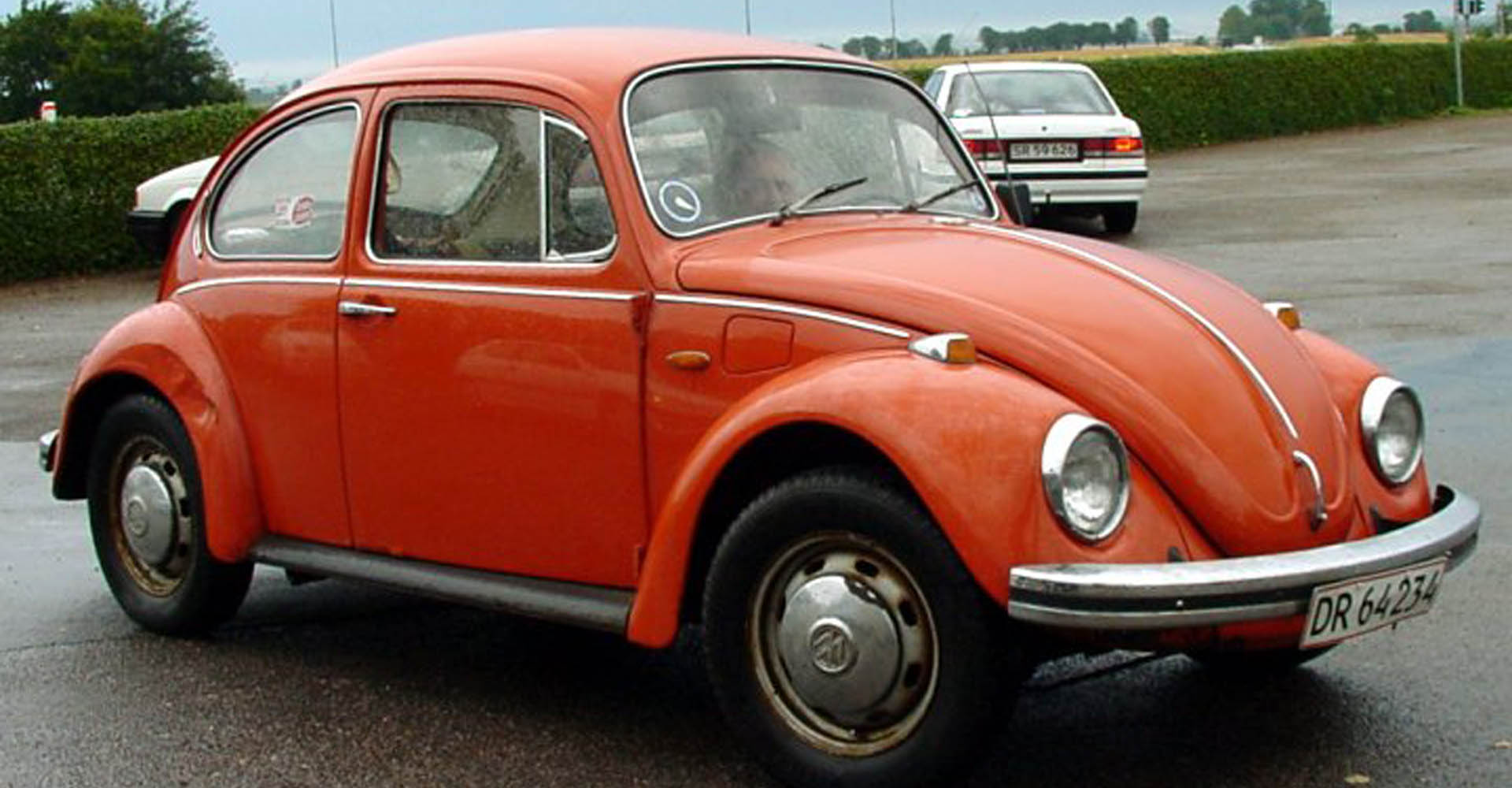
The good old Beetle became an international classic. Today nobody believes anything remotely classic is going to roll out of the Volkswagen factory.
TopPhoto: Hans Jørn Storgaard Andersen/CC BY-SA 3.0,Richard Bartz/motparten
Text: Atle David Torkildsen
Date: 7 October 2026
Translated from Norwegian with the help of AI · Read the original
Sixty thousand people still work at the factory in Wolfsburg. The German city is a pure car town and can easily be compared with conditions in the American city of Detroit in the 1950s to the 1970s. Back then, life around the car factory in Detroit flourished. Whether you worked at the petrol station or in the grocery shop, you knew the jobs existed because of one thing only: the car factory. But suddenly absolutely everything went wrong at once. It ended in catastrophe for Detroit.
Everything falls apart
In Wolfsburg, the same thing is now happening that the people of Detroit experienced when things began to fall apart. It did not happen overnight there either. The oil crisis and the encounter with Japanese competition in the 1970s became the final nail in the coffin. In the 1970s, the oil crisis crushed the living conditions of the American muscle cars with their big V8 engines. At the same time, a stream of small, fuel-efficient and more reliable cars arrived from Japan. Many older people remember the first Toyotas and Hondas well.
V8 engine
Exactly the same thing has happened in Wolfsburg, but here the oil crisis has been replaced by the introduction of electric cars. Just as the oil crisis wrecked things for the V8 generation, electric cars are now wrecking things for the German quality cars that run on petrol and diesel. Volkswagen, Mercedes and BMW have spent several decades developing the world's best fossil-fuel cars. Now they are soon worthless and something for the history books. And today the threat does not come from Japan in the form of Toyota and Honda. The threat comes from something much bigger and more powerful. It comes from China, which supplies a stream of different electric car brands with better motors and batteries than European car factories are able to make.
It is incomprehensible to most Germans that their own government cuts off cheap energy to the German factories in order to help a country with Cyrillic script and a language that sounds Russian.
Like Detroit
In Detroit, the workers were suddenly laid off. Exactly the same thing is now happening in Germany. It came as a veritable shock when Volkswagen recently announced global redundancies of as many as 100,000 people. In Detroit, people saw what they thought were safe jobs that would last a lifetime suddenly disappear. Exactly the same thing is now happening in Germany. The car companies start with layoffs. First people lose their jobs. Then they lose their houses. But even the bank loses out in a town where the houses are empty and falling in value. Nobody wants to live in a ghost town. This is a lose-lose situation.
Must have cheap energy
Germany is in a worse situation than Detroit was. In theory, Detroit could have switched to producing small cars like the Toyota Corolla much faster, but traditions, attitudes and an old stock of machinery made this difficult. For the Germans, it is worse today. They cannot simply switch to producing like the Chinese. The reason is that their own government, in cooperation with the leadership in Brussels, is taking part in a war in Ukraine, which has removed access to the cheap energy they used to get through Nord Stream. Without cheap energy they cannot compete with China. It simply cannot be done. That is why German car towns like Wolfsburg are heading for certain death unless something drastic happens in Europe. Unless they get cheap energy back – on a permanent basis.
Front pageThe only thing that can save Germany is getting the cheap energy back. For that, either Putin must fall, or the German government must fall to a party that is friends with Putin. As things stand, the latter looks most likely. Then both the EU and the EEA will collapse. People have sensed that things are about to go to hell. That is why they vote for the AfD, the only party that promises them cheap electricity from the socket and zero environmental charges.
Domino effect
As in Detroit, Germany is finding that the problems have serious ripple effects. No car factory, no shopping centre and finally no petrol station. This quickly means the municipality also loses tax revenue. When this happens at the same time as the need for social assistance rises, you have the perfect storm. It also means more poorly maintained roads and less public transport. As social unrest, crime and violence increase, there are fewer police officers. It really does not look good for towns like Wolfsburg.
Vain hope
Some hope that the car factories and Germany will reinvent themselves and the German miracle. That is not going to happen. According to Deutsches Economisches Institut, the Wolfsburg factory produced only half of what its capacity should have allowed in 2023. It could have made 870,000 cars but ended up making 490,000. All the car factories in Germany are running at half speed.
Election
When the German people vote on 23 February 2027, they will have these problems at the back of their minds. The car industry has always been a source of national pride. Nevertheless, it is all the jobs and the money that matter. It is also a significant driver of national wealth. It was precisely disagreement over energy and how to solve such problems that led to the collapse of the coalition government in November. Today everyone knows that the AfD wants to reopen Nord Stream and reopen the country's closed nuclear power plants. They want to do this to give advantages back to the car industry and to give people cheaper electricity from the socket.
Industry
If you want to win elections in Germany, you cannot forget industry, but that is exactly what the traditional parties do. That is to say, we love the car industry, but we prioritise helping Ukraine even if it means the car industry dies. This argument goes down badly with the German population. It has led to the AfD getting over forty per cent of the votes in the recent state elections.
The money vanished
Whether the governing politicians like it or not, car production makes up a fifth of Germany's total production. That is if you also include the supply chain. According to Capital Economics, car production alone accounts for roughly six per cent of Germany's gross domestic product. The car industry directly employs around 780,000 people, but millions of jobs depend on it for their existence. It is no exaggeration to say that sales of German cars are plummeting. Volkswagen itself admits that sales fell from 10.7 to 9.2 million cars between 2017 and 2023. BMW and Mercedes-Benz are seeing similar declines. A third of profits has been shaved off.
It will hurt
The development of electric cars has attracted enormous investment, but the market for them has not grown as fast as expected, while foreign competitors flex their muscles. The threat of tariffs from the USA and other governments is also great. The spokesperson for the German Association of the Automotive Industry (VDA), Simon Schütz, despairs that one crisis follows another. The problems never end.
MOTPARTEN
The other side of the story. An independent newspaper from Norway.
Contact
- Newsroomredaksjon@motparten.no
- Advertisingannonser@motparten.no
- General enquiriespost@motparten.no
Address
Motparten.noElevine Heedes vei 2
4839 Arendal
Norway Editor-in-chiefJesper Enerstvedt