Paid to say power prices are normal
Living off costly power and chaos
The media's regular experts explain high electricity prices as natural phenomena. It is seldom mentioned that the experts are not neutral. They are analysts who make their living from expensive power and chaos. Affordable electricity and predictability would put the analysts out of work.
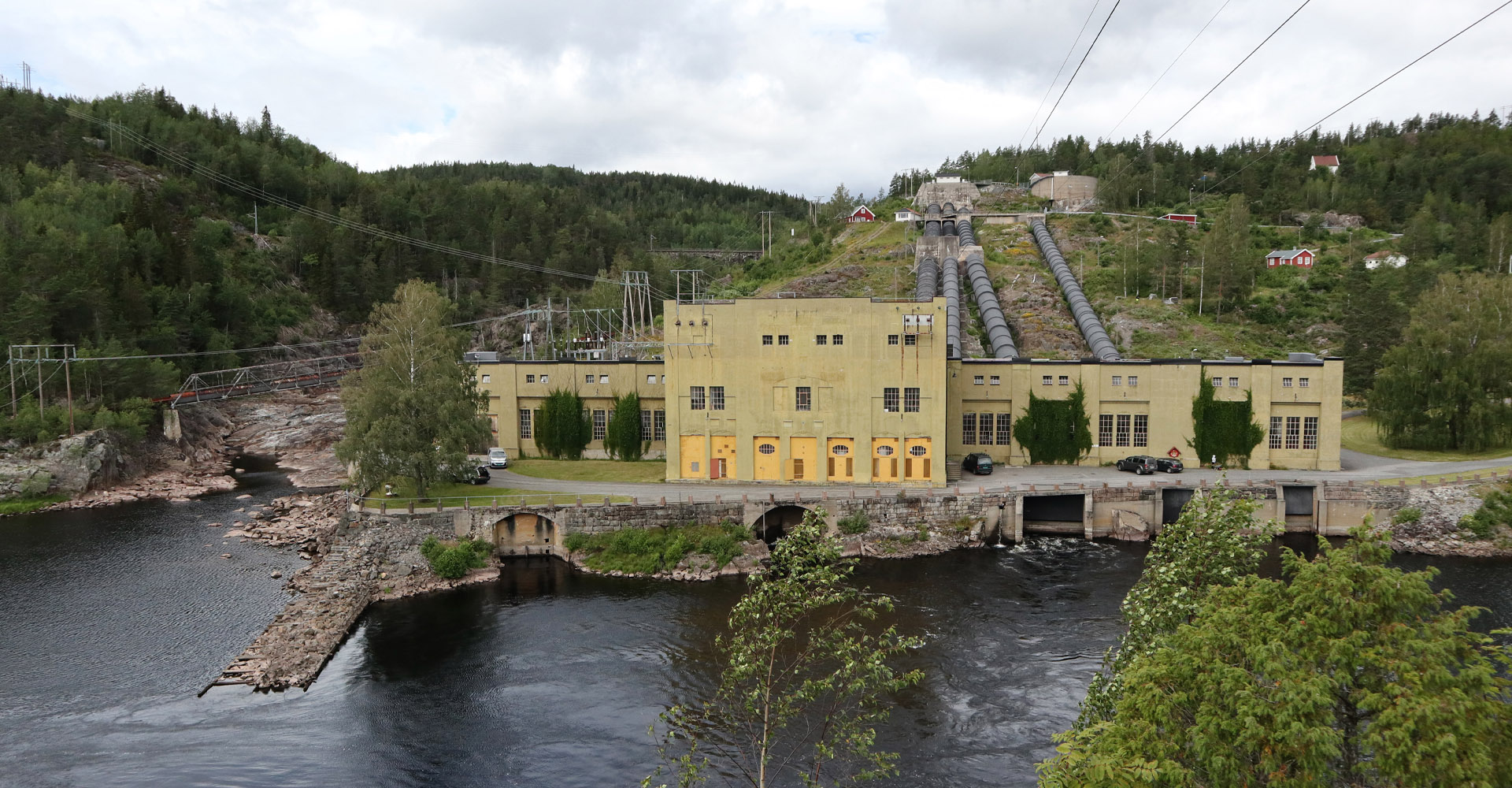
The Bøylefoss power station on the Nidelva river has been the core of Arendal Fossekompani's business.
TopPhoto: Karl Ragnar Gjertsen/motparten
Text: Rune Ollestad
Date: 18 October 2026
Translated from Norwegian with the help of AI · Read the original
Every time the electricity price sets a new record, press coverage follows a fixed pattern. Norway's national media call exactly the same sources. The answer is the same every time: the prices are the unavoidable result of little water, no wind in Germany, high gas prices and cables to other countries. The system works, we are told. The market is just doing its job.
Not neutral
Some of the most frequently used voices are, for example, analysts from Volue Insight. They are presented as neutral experts. They are not. Volue Insight is not an independent research institution and not a consumer organisation. The company supplies software, real-time data and algorithms to power producers, brokerage houses, power traders and international commodity traders. Its customers are players who make money from fluctuations, arbitrage between price areas and speculation in derivatives on Nord Pool and EEX.
Arendal
The story begins with Markedskraft in Arendal in the 1990s. Later, Arendals Fossekompani gathered Powel, Scanmatic, Markedskraft and Wattsight into a single company – Volue. Wattsight became Volue Insight. Arendals Fossekompani is a long-established power and industrial company that itself makes large profits from power production. In the summer of 2024, a consortium made up of Arendals Fossekompani, the American buyout fund Advent International and Generation Investment Management, co-founded by Al Gore, submitted a bid that valued Volue at more than NOK 6 billion. The company was delisted from the Oslo Stock Exchange (Oslo Børs). Arendals Fossekompani kept 40 per cent.
The experts would have been out of work the very second prices became affordable, stable and easy for ordinary people to follow.
Being fooled
When global buyout funds pay billions for analysis systems, they do not do it to educate Norwegian electricity customers. They do it because the deregulated European power market is highly lucrative for those who sit on the best trading data. The Code of Ethics of the Norwegian press (Vær Varsom-plakaten) is clear. Point 2.3 requires openness about underlying circumstances that may influence the public's perception. Point 2.2 requires newsrooms to safeguard their own independence and avoid dual roles.
Home pageMost people have no reason to doubt the experts they see over and over on TV or in the newspapers. They might, if they knew that the experts make their living from expensive power and chaos.
A false impression
When the media consistently refer to Volue analysts only as "chief analysts" or "experts", without mentioning that these so-called experts make their living serving power traders and speculators, a false impression is created. The public may think they are hearing a neutral oracle on a par with a researcher from Statistics Norway (SSB) or a university. In reality they are hearing a commercial player speaking on behalf of the trading community.
Chaos is good for analysts
For ordinary people and Norwegian small businesses, unpredictable electricity prices are a plague and a nuisance. Predictability is the foundation of healthy industrial activity. For power traders and analysis companies, it is exactly the opposite. Volatility, as the experts call it, which really means large, frequent and violent swings, is their very livelihood. The more chaotic the market, the more often the weather turns on the continent, and the more tightly Norway is linked to Europe's gas and emissions-quota markets, the more indispensable Volue's analyses become. I tt specifically for such findings.
Not independent
Figures from the Norwegian Water Resources and Energy Directorate (NVE) show that new hydropower plants can come in at around 40 øre per kWh. Operation and maintenance alone is around 4 øre. Hafslund gives 10–20 øre as its average production cost. Such prices would be a blessing for Norwegian society. For the commercial analysis houses and power traders, the same predictability would mean a market drained dry. When the Ministry of Energy, NVE or Statnett are to assess new foreign cables, the consequences of ACER or new market mechanisms, they produce their own analyses. The media could do the same. Instead, they often use the same commercial circles. That is to say Volue, Refinitiv and Volt Power Analytics. Almost all are commercial. Few are independent researchers or consumer bodies.
Stuck record
Politicians then use the consultancy reports as a professional alibi. When prices explode, the media call back exactly the same circles to have it confirmed that the market works. When a market analyst says the market works, it only means that the price cross on Nord Pool was established according to the algorithms and that the order books balanced. It says nothing about the minimum-pension recipient who has to switch off the panel heater in twenty degrees below zero, or the industrial firm with a hundred employees that has to lay off staff. This is the difference the media should have made clearer.
MOTPARTEN
The other side of the story. An independent newspaper from Norway.
Contact
- Newsroomredaksjon@motparten.no
- Advertisingannonser@motparten.no
- General enquiriespost@motparten.no
Address
Motparten.noElevine Heedes vei 2
4839 Arendal
Norway Editor-in-chiefJesper Enerstvedt