Turned coal dust into a green resource
Made 1 billion bricks
A mine in China is now making black bricks from dust that used to rain down on the neighbourhood and ruin the groundwater across large areas. Strict new rules have forced coal mines to think creatively.
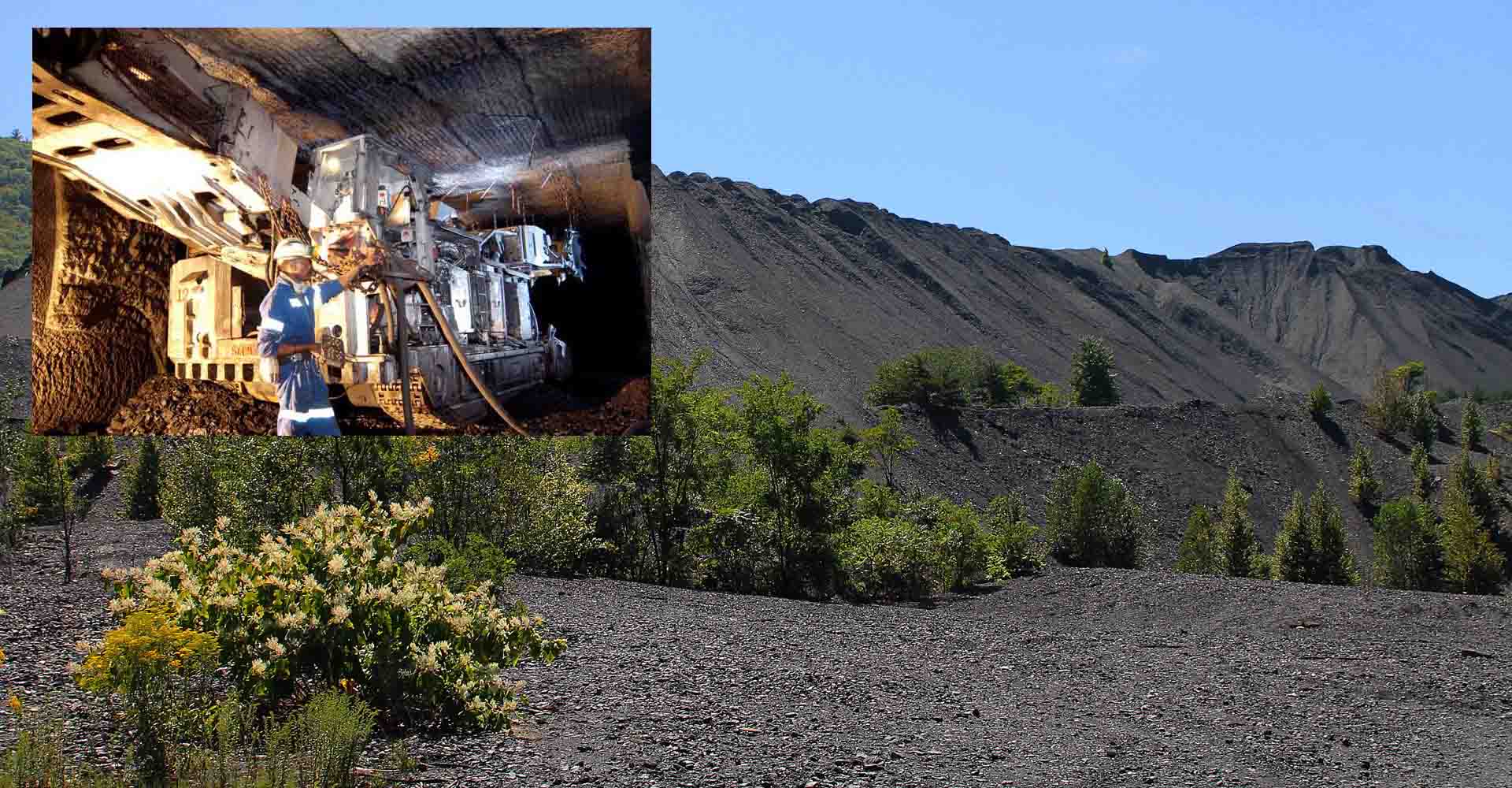
Coal dust has been a health-hazardous scourge and nuisance for local communities for many generations. Now it looks as though the Chinese are about to solve an old problem.
TopPhoto: Jakec CC BY-SA 4.0/Xlxgoggaxlx/CC BY-SA 3.0/theContrapart
Text: Rune Ollestad
Date: 3 September 2026
Translated from Norwegian with the help of AI · Read the original
Many Norwegians who used to cross the border into Russia and drive the old road towards Murmansk remember the little town of Nikel with dread. Although it took only a couple of minutes to drive through the town, the car's windows were covered in such a thick layer of coal dust that you had to stop and wipe it off with a cloth.
Extremely harmful
For those of us who were there only for minutes, sitting protected inside a car, it was no great problem, but for the children who grow up in such places, who go to school every day and come home black after a short spell on the playground, it is a huge problem. Their life expectancy is cut by as much as twenty years. In China, the most coal-rich regions have had such problems for years. In recent years, however, the authorities have taken action.
Filtering drinking water
For nearby areas, coal dust is, and has been, a huge problem. Black particulate matter is a daily nuisance. It settles on the windows of people's homes. Children's playgrounds get dirty, and groundwater quality declines. This forces millions of villagers to filter their drinking water. Li Huiquan, a researcher at the Institute of Process Engineering at the Chinese Academy of Sciences, believes that coal-based solid waste can be a resource rather than a burden. It now turns out that the researcher is absolutely right.
Making bricks
Because of the strict new rules from the Chinese authorities, there are almost no limits to how creative the gold mines have suddenly become. One of the more creative solutions for dealing with the coal dust is found at the Shanxi Coking Coal International mine. Here the waste is turned into bricks through crushing, moulding and sintering. Since the plant was established in 2008, it has turned 3 million tonnes of coal dust into 1 billion bricks. This recycling method not only makes use of stockpiles of solid waste but also replaces traditional clay bricks, which reduces the consumption of other resources. Win-win.
If you are not environmentally friendly exactly where the authorities tell you to be, you end up in the clink.
Front pageMaking black bricks proved to be a good idea, but the Chinese have also successfully turned the health-hazardous dust into other practical and valuable products.
Recycling
One mine that doesn't make bricks has come up with its own method of getting rid of the coal dust. Sanyuan Coal Mine has adopted a new mining technology that turns waste into filler material to support the ground where fill has been removed. The coal dust is mixed with rock and transported back. The mine recycles coal resources. In 2024 alone, Jinneng Group recycled more than seven million tonnes of dust with this technology, thereby turning the waste into a resource.
Black paste
At the Shanxi Lu'an Gaohe Energy mine, another original twist has been found for getting rid of the damn stuff. They have chosen a more technologically advanced method. Here coal dust is mixed with cement-based materials and other components to make a paste-like mass that is sprayed into underground mines. This model also controls surface subsidence.
Power generation
In Shuozhou City in Shanxi, power generation based on coal dust has also been attempted. The China Coal Pingshuo Antaibao Thermal Power Project uses coal dust and coal slurry as fuel. They have built a power plant. It consumes an annual amount of 1.5 million tonnes of waste. Coal dust has gone from being an ecological burden to becoming a valuable resource.
Green mines
The Chinese are now already talking about "green" mining, although that is perhaps a qualified truth, given that the product is coal. It is at any rate a gigantic step forward for the local community. The most important thing is that the new methods pollute neither neighbouring areas nor the groundwater. The children can be outside again. And there is no need to filter the water.
Prison
It must be said that the enormous progress has not come entirely voluntarily or entirely of its own accord. Behind it all lies the introduction of stricter environmental standards in China. Unlike in the West, where offenders risk only a fine and a company can be driven into bankruptcy, in China the culprits are punished with prison and enormous fines.
MOTPARTEN
The other side of the story. An independent newspaper from Norway.
Contact
- Newsroomredaksjon@motparten.no
- Advertisingannonser@motparten.no
- General enquiriespost@motparten.no
Address
Motparten.noElevine Heedes vei 2
4839 Arendal
Norway Editor-in-chiefJesper Enerstvedt