Curb inflation, lower interest rates and strengthen the krone
Wants Norwegian gas exchange
Instead of being a passive price-taker on the Dutch TTF exchange, the Norwegian state can demand that all gas from the Norwegian continental shelf exported through the Gassco pipelines be settled and cleared in Norwegian kroner.
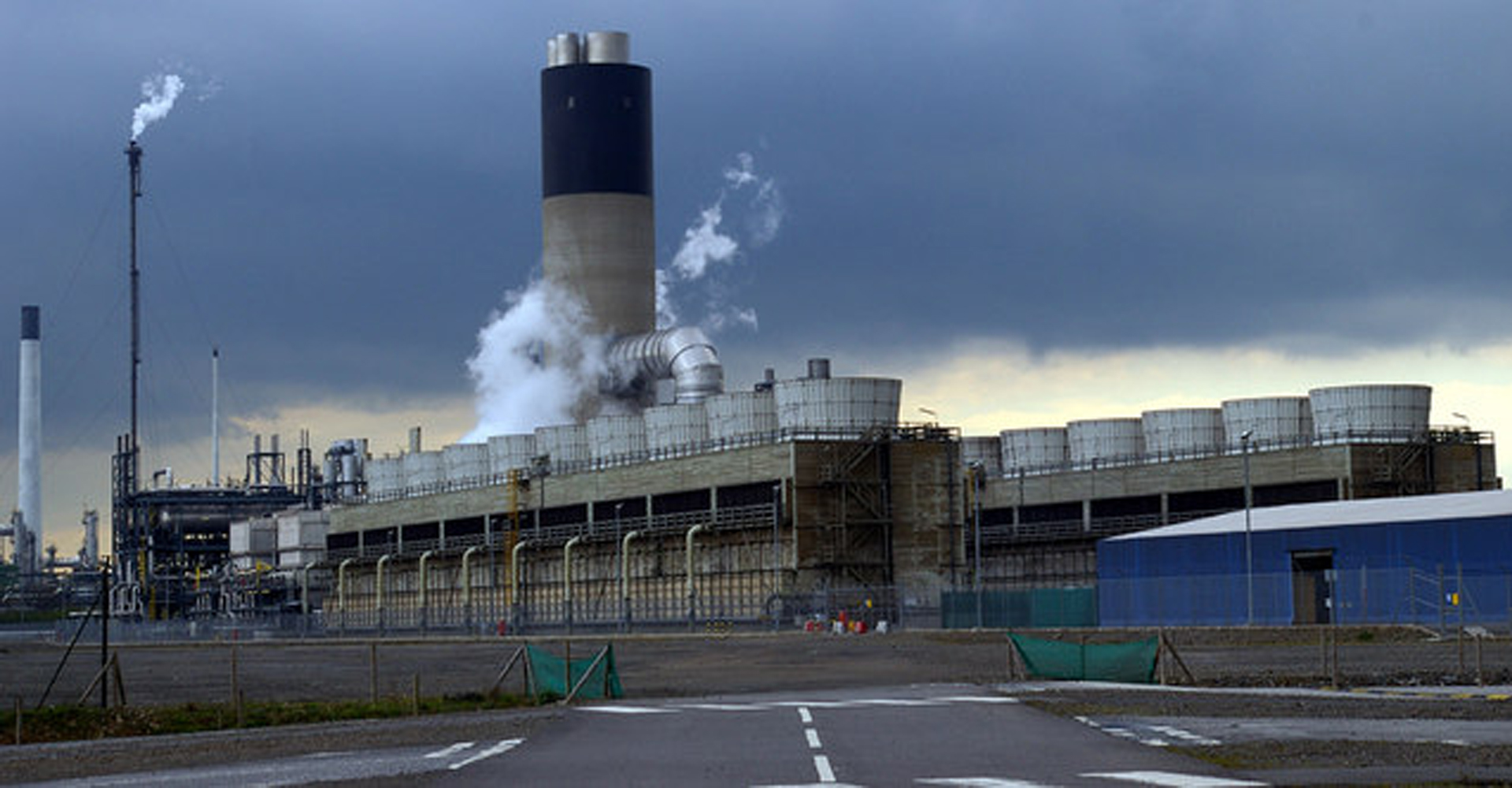
Norway supplies Europe with enormous quantities of gas that is turned into electricity, as here at a British gas-fired power station.
TopPhoto: Anne Burgess/David Wright/CC BY-SA 2.0/C/Stadler/Bwag/CC BY-SA 4.0/theContrapart
Text: Ludvig Storn
Date: 7 August 2026
Translated from Norwegian with the help of AI · Read the original
In recent years, several economists have called for the creation of a dedicated Nordic gas exchange. They argue that the fall of the krone in recent years has stripped people of large amounts of value in their homes and property, while inflating the krone value of the Oil Fund to a figure that has nothing to do with the real performance of the Oil Fund's shares and securities.
Giant
Norway is today Europe's undisputed gas giant, supplying nearly 30 per cent of the continent's total gas needs. Yet this vital commodity is routinely traded in euros and British pounds on financial exchanges in Amsterdam and London. Jan Ludvig Andreassen, chief economist at Eika Gruppen, is one of many economists, researchers and politicians who have repeatedly argued that Norway should make better use of its strong export position to strengthen the krone. Among other things, he has advocated that energy trading could be tied more closely to the Norwegian krone (NOK), although he has not put forward a detailed model for a Norwegian gas exchange.
Used more than planned
According to the White House, the US had struck more than 13,000 targets across Iran in the period before 8 April. American air defences intercepted more than 1,700 Iranian drones and ballistic missiles in the same period.
Dollar
The Oil Fund holds all its assets in euros and dollars in the form of shares and securities. Even on days with no notable rise or fall on the stock markets, the Oil Fund appears to enjoy huge growth, which is solely the result of a self-inflicted weakening of the krone.
Losing purchasing power
The problem with such a weakening is that ordinary people lose purchasing power on holiday, and that they would get less if they sold their house to buy an equivalent one abroad. For the state, it is the opposite. On a day when its shares in Amazon or Apple have not gone up by a single cent or dollar, it can still show on paper a gain of 80 billion in the Oil Fund, which makes it far easier to grant 80 billion to, say, Ukraine, or to a battery factory in Arendal for that matter.
Unproblematic
Now many economists want to solve this problem by establishing a Norwegian trading platform for physical gas delivery. European energy giants such as Uniper, Engie and Enel already buy Norwegian gas on long-term contracts in the spot market. Changing the settlement currency in these contract structures is a purely administrative step.
Home pageThe Oil Fund holds all its assets in euros and dollars in the form of shares and securities. Even on days with no notable rise or fall on the stock markets, the Oil Fund appears to enjoy huge growth, which is solely the result of a self-inflicted weakening of the krone.
Quick effect
For the Norwegian currency market, this would create immediate, structural and massive demand for Norwegian kroner. The mechanism is as relentless as it is effective. If European power companies must have Norwegian kroner to pay for the gas that keeps the continent warm through the winter, they will have to trade hundreds of billions of kroner on the currency market every week.
Slaves
The opposite would then happen of what Norwegian governments have deliberately done over the past ten years. They have poured too many kroner into a market that nobody wants. They have pushed the exchange rate down so they can boast of fairytale growth that has no basis in reality, to make it easier to eat into society's savings. They have made it so expensive to go on holiday that they have virtually enslaved their own population. By introducing a national gas exchange, this trend would be reversed.
Petrokrone
This is how a permanent "petrokrone" effect arises. Instead of Norges Bank engaging in piecemeal support purchases or interest rate rises that hit Norwegian mortgage holders, the global capital market would be forced to hold a permanent liquidity reserve in NOK.
The reason politicians do not like the idea is that people would get richer.
Cheaper trips abroad
An immediate and marked strengthening of the krone would cut imported inflation. Everything from imported food and cars to trips abroad would become cheaper overnight, without Norges Bank having to strangle Norwegian business with unnecessarily high policy rates. The oil companies would still get their revenues, but the flow of settlements would for the first time work for the domestic economy rather than against it.
Not forces of nature
Exchange rates are often portrayed as inescapable forces of nature that govern themselves. The truth is that currencies are shaped by underlying trade flows and political frameworks. They are tools in the toolbox, and Norway should use them. Demanding that the gas be paid for in the country's own currency is neither radical nor difficult. It is common sense, economic logic and a historic opportunity to let the national wealth tirelessly serve the whole population.
MOTPARTEN
The other side of the story. An independent newspaper from Norway.
Contact
- Newsroomredaksjon@motparten.no
- Advertisingannonser@motparten.no
- General enquiriespost@motparten.no
Address
Motparten.noElevine Heedes vei 2
4839 Arendal
Norway Editor-in-chiefJesper Enerstvedt