Norway has a poor energy strategy
Frp wants gas power stations
The party is not alone. More and more researchers and economists think Norway should build gas-fired power stations – and in time export electricity instead of gas. In this way it can be both environmentally friendly and earn more money.
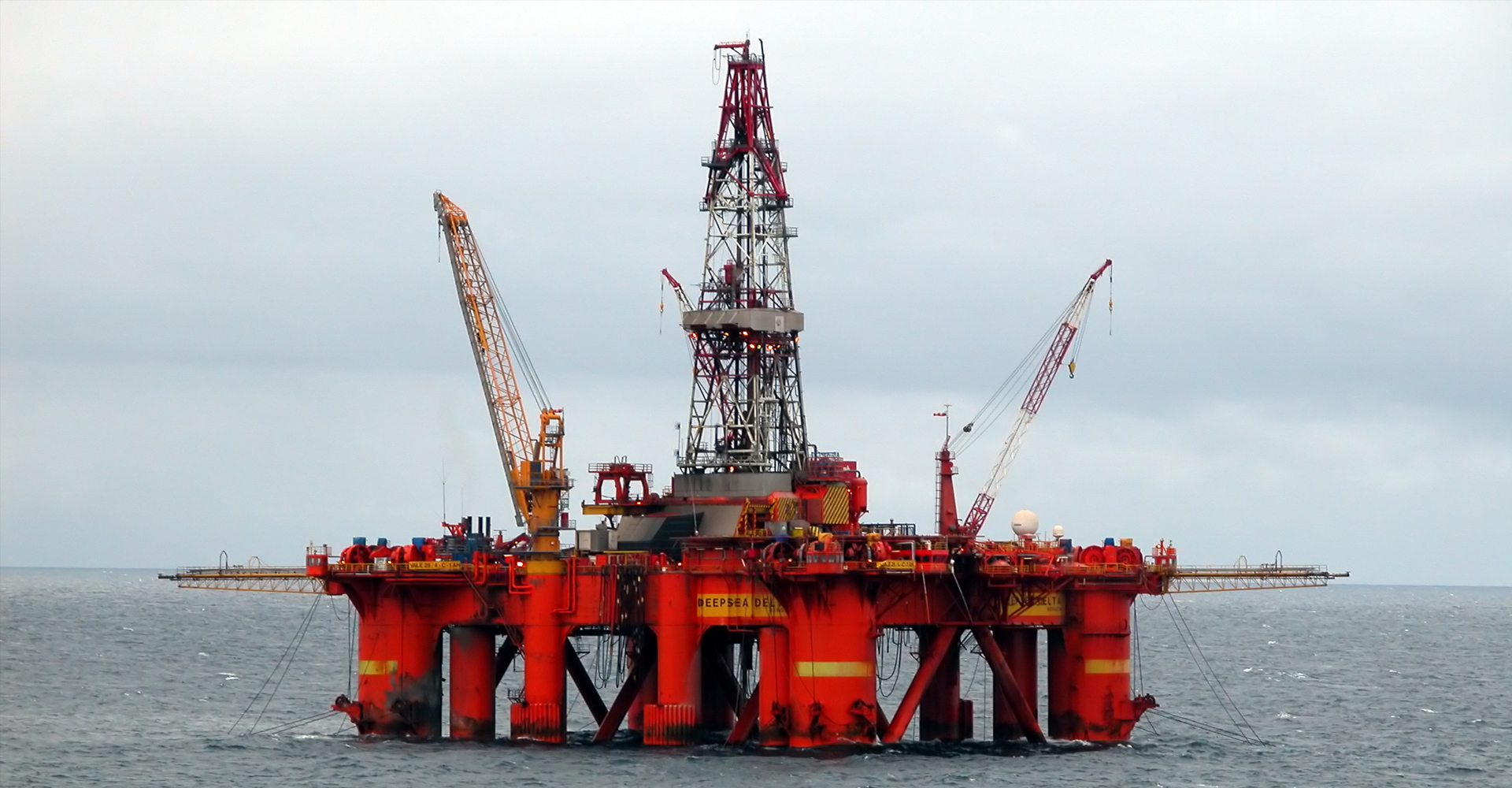
The oil platforms already have shore power. By reversing the flow in the cables, Norway could get a surplus of cheap, environmentally friendly electricity. In other words, do as Motparten says – do the opposite :-D
TopPhoto: Motparten/Desken/theContrapart
Text: Stein Olav Krosby
Date: 29 August 2026
Translated from Norwegian with the help of AI · Read the original
Norway should stop exporting unprocessed natural gas in pipelines and instead build high-efficiency gas power stations along the coast to sell finished electricity to Europe. The Progress Party (FRP) does not go that far in its criticism, but it could quickly become reality if one thinks of the environment and profit for Norway.
Starting small
During the Storting's (Norway's parliament) consideration of the energy white paper and relevant private members' proposals, FrP has regularly raised this. Most recently, in the debates on the power balance and grid expansion, Nilsen has argued that gas power can serve as stable reserve power when there is little wind or reservoir levels are low.
The Storting
FrP has tabled several concrete private members' proposals in the Storting to allow or investigate new gas power stations, including proposals for gas power on the continental shelf to supply electricity to offshore installations instead of using shore power. The reason is that shore power is expensive today and is mixed with both coal and Norwegian gas that has gone in a circle through Europe to return to the North Sea.
Mongstad and Kårstø
Norway has had gas power stations on the mainland before. The gas power station at Kårstø was in operation from 2007 until it was decided to close it in 2014, and it was dismantled in 2017. The test centre and the energy plant at Mongstad were shut down in 2020. Both now turn out to have been catastrophic blunders. FrP has also highlighted gas power as an alternative to using large amounts of electricity from the national grid to electrify the LNG plant at Melkøya. Marius Arion Nilsen and FrP have thus made this a recurring issue in the energy debate for a long time.
There is little doubt that things are going the Progress Party's way in Norway. That is perhaps why the plans for gas power stations are not entirely far-fetched. If the party manages to demonstrate to the environmental movement that it will mean lower emissions in Europe, the chances increase that it becomes reality.
Environmentally friendly
Because Norway, with its own gas power stations, could have helped reduce enormous CO2 emissions in Europe, the idea is not bad. Europe is struggling with old gas power stations that emit far too much CO2. Motparten has documented how modern Norwegian power stations would emit only half. This is a contributing reason why the demand is being raised in the Norwegian energy debate. There is no good reason why further processing, power production and industrial margins should remain on the continent, when it can be done in a more environmentally friendly way in Norway.
Main pageThe Progress Party wants to start small, but with energy chaos in Europe, which is also struggling with old power stations that use Norwegian gas to pollute, the plans for more environmentally friendly Norwegian power stations seem more sensible. That it also brings more money into the state coffers doesn't hurt either. Everyone in Norway knows we sell gas. Why not make it ourselves, more environmentally friendly?
Well documented
In the report «Et verdiskapende Norge» ("A Value-Creating Norway") from BI Norwegian Business School, professors Torger Reve and Amir Sasson documented how the Norwegian economy is caught in a classic commodity trap, where national natural resources such as oil, gas and whole fish are exported unprocessed at low margins, while the value creation, the technology communities and the jobs are established in the receiving countries. Now there is a chance to do something about this.
Selling cheap bananas
Figures from Gassco and Statistics Norway (SSB) show that Norway exports over 100 billion standard cubic metres of gas a year through the Gassled pipeline network to the United Kingdom, Germany, Belgium and France, which accounts for more than half of Norway's total goods export value, without the molecules being processed before export. – “We must capture more of the value creation from gas here in Norway instead of just sending it out in pipes,” union leader Frode Alfheim of the union Styrke has stated repeatedly in connection with the debate on national industrial development and access to power.
More environmentally friendly
Technology reports from the International Energy Agency (IEA) show that modern combined-cycle power stations with gas and steam turbines (CCGT) have an electrical efficiency of around 60 per cent, while large parts of the gas currently sent to Europe is burned for pure heating or in older power stations with lower efficiency. This means that Norwegian further processing would be very environmentally friendly compared with the European. FrP's energy policy spokesperson, Marius Arion Nilsen, has therefore highlighted in the Storting's energy debates the need to investigate modern gas power stations on the Norwegian continental shelf and the mainland, in order to strengthen the national power balance and secure affordable, environmentally friendly and predictable energy.
Taking back power
According to the Norwegian Water Resources and Energy Directorate (NVE), Norway normally produces around 155 TWh of electricity a year, primarily from regulable hydropower, but in periods of high consumption it has a shortage of new capacity. By producing the electricity directly from Norwegian gas and selling it via dedicated industrial cables to Europe, Norway can decouple its export power from the EU's energy agency ACER, since the processed gas power can be traded as a commercial industrial product independently of the domestic hydropower grid.
MOTPARTEN
The other side of the story. An independent newspaper from Norway.
Contact
- Newsroomredaksjon@motparten.no
- Advertisingannonser@motparten.no
- General enquiriespost@motparten.no
Address
Motparten.noElevine Heedes vei 2
4839 Arendal
Norway Editor-in-chiefJesper Enerstvedt