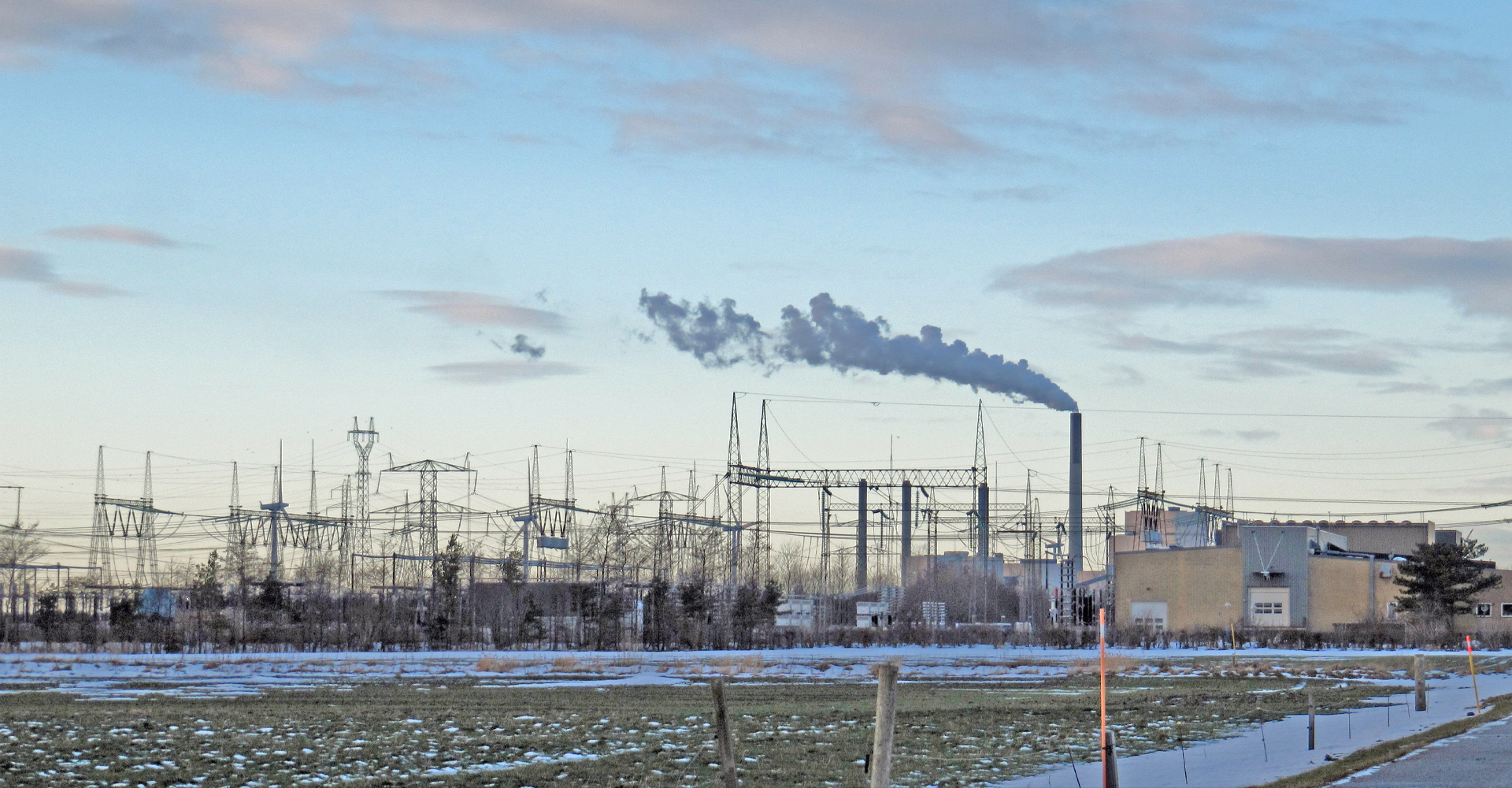
Photo: Jacob Hylling Poulsen/CC BY-SA 3.0/theContrapart
Text: Marius Kleppe Kolstad
Date: 17 June 2026
Translated from Norwegian with the help of AI · Read the original
That the Swedes, despite being EU members, are saying a flat NO to Brussels is embarrassing for the energy nation of Norway. Here, politicians have spent years trying to explain why a country outside the EU cannot say no to having its power revenues stolen. When the Swedes now flatly refuse, it shows a different reality from the one Norwegian politicians have presented to the people. The Acer agreement could have been different, or scrapped in favour of alternative solutions. Energy Minister Terje Aasland, unlike his Swedish counterparts, has merely sent objections to the European Commission and stressed that the bottleneck revenues should still be used nationally, among other things to reduce grid rents. The Swedes go one step further. They BLUEntly refuse.
Bottleneck
The background to Swedish fury at Brussels is that the EU leadership has decided it wants to seize the so-called bottleneck revenues and transfer the money to itself in Brussels. Outright daylight robbery. Norway has not protested the way the Swedes are doing. Norway traditionally accepts both old and new EU whims without a murmur. That, at least, is what the Swedes who have followed Norwegian power policy in recent years say.
Swedish NO
While the EEA country Norway trails along behind the EU through Acer and follows every rule dictated from Brussels, the EU country Sweden does the exact opposite. They say NO. Sweden's energy and business minister Ebba Busch announced last month that the Swedish government is halting the planned Konti-Skan Connect project between Sweden and Denmark. Norway is exposed to the same threats as Sweden, but has chosen to do nothing whatsoever.
Immediate stop
The Swedish decision marks an immediate halt to the renewal of the existing power cables connecting the two Nordic countries. The background to Sweden's decision is a conflict with the EU over the pan-European grid package regulations, also known as the Grids Package. The government in Stockholm refuses to accept the framework the European Commission is trying to introduce for national power revenues.
Orders from the very top
What is unfolding in Sweden is unique in recent Scandinavian power history. The Swedish authorities have ordered the Swedish system operator Svenska kraftnät to put a stop to the EU's robbery of Swedish power money. Svenska kraftnät has received a directive from the government to remove the cable project from its immediate plans. In practice, the Swedish decision means the infrastructure is to be kept on ice until the Union changes its mind.
Billion-kroner battle
The conflict between Stockholm and Brussels concerns the distribution of capacity charges that arise when power is transmitted between different price areas. The European Commission has put forward a proposal requiring member states to give up 25 per cent of these so-called bottleneck revenues. The funds are to be transferred centrally to Brussels to finance common European energy investments. The Swedish business ministry flatly rejects this model and calls the transfer of national funds to the EU unacceptable.
Brazen from Brussels
The EU doesn't just want to seize Swedish power money. The European rules also set up barriers to how Sweden can dispose of the remaining 75 per cent of the revenues. The Commission wants to forbid the Swedish authorities from channelling these charges directly into subsidies or funding for new national power production.
Top
Even though Norway is not an EU member, the country sends only polite objections against the EU as it tries to grab national power revenues. Sweden says a flat NO and terminates the whole agreement. The brother nation has ordered the power companies to halt the whole shebang until the EU gives in.
Embarrassing for Norway
Norway has also been told to give up 25 per cent, but in the country that voted NO to the EU, nobody is protesting. Norway merely sends an "objection" where it should rather have stood in solidarity with Sweden and terminated all activity until the EU gave in. The reason for the feeble Norwegian behaviour is that the majority in Norwegian ministries and governing bodies are EU supporters, who feel no responsibility to respect those who voted no and won twice. It is an enormous paradox that the Swedes, who are in the EU, have more courage and ability to speak up.
Hard against hard
Ebba Busch has made it crystal clear in official statements that the EU shall not gain control over Swedish power money. The minister stresses that the planning of new cables for exporting electricity is being halted because Brussels is currently not listening to Swedish objections. Sweden is now about to start a mini energy war with Brussels. They are sure they will win it. Brussels needs the energy. This is what Norway has not understood. Perhaps Norway can learn from Sweden, because it shows that even EU members can hit the brakes when something is too wrong.
National interests
The government of Sweden argues that the country must protect its own industrial competitive advantages and national security of supply. Ebba Busch states that it cannot be Sweden's job to solve the energy problems of every other member state in the Union. The system operator Svenska Kraftnät has therefore been given a legally binding order to revise its entire long-term investment plan. The updated plan must be ready by 31 July 2026, and Konti-Skan Connect is to be explicitly excluded from it.
Denmark must pause
The halt to Konti-Skan Connect hits Danish energy management directly. Jesper Nørskov Rasmussen, senior press officer at Denmark's Energinet, regrets that Konti-Skan Connect has been put on pause as a result of the Swedish government's decision. Energinet's report "Langsigtet Udviklingsplan 2025" stresses that cables to Sweden are crucial for maintaining a stable supply when domestic wind power production falls. The unexpected Swedish pause therefore creates uncertainty about Denmark's long-term import capacity in periods of low domestic production.
Subsidise
The EU doesn't just want to seize Swedish power money. The European rules also set up barriers to how Sweden can dispose of the remaining 75 per cent of the revenues. The Commission wants to forbid the Swedish authorities from channelling these charges directly into subsidies or funding for new national power production. The EU Commission's directorate-general argues that shared bottleneck revenues are a necessary tool for securing funding in countries that lack equity. The European Commission spokeswoman, Stephanie Yoon, defends the proposed rules and says they are crucial for building a common European energy grid that can withstand the green transition. In practice, this means that power countries are to subsidise countries without power.
Despite its sporting success, Norway still has much to learn from Sweden
Home page