Wants to produce environmentally friendly power on the platforms
Norway could multiply its income many times over
By producing power on the platforms and reversing existing shore-power cables, Norway can export energy to Europe at a sky-high market price. Such a system would cut Europe's CO₂ emissions and become a new source of income for Norway.
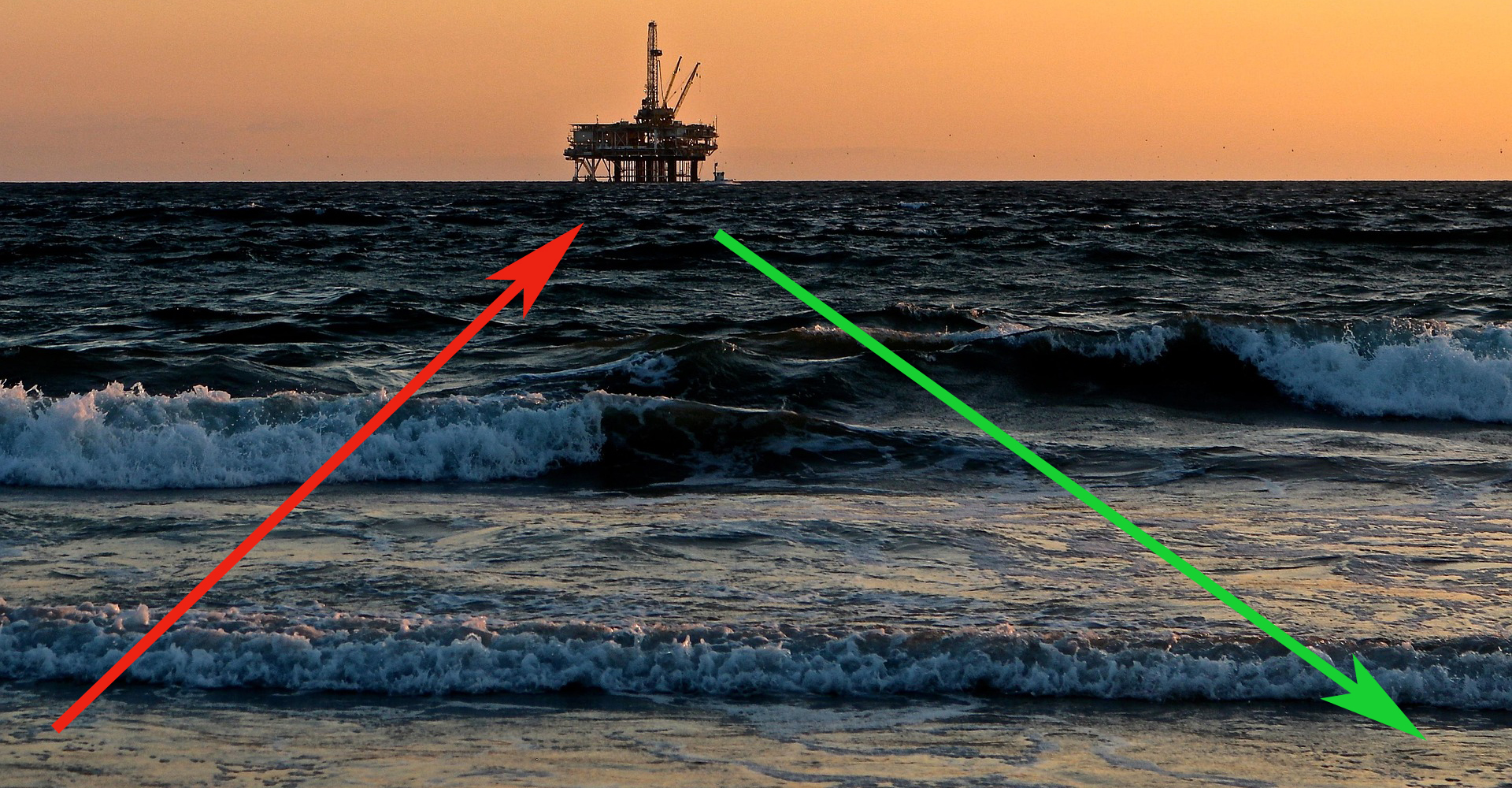
Instead of sending expensive and potentially dirty power from shore to the platforms, environmentally friendly gas-fired power can be sent back to land.
TopPhoto: Pixabay/Desken/motparten
Text: Christer Andre Mæland
Date: 16 September 2026
Translated from Norwegian with the help of AI · Read the original
The scarcely believable scenario emerges in a number of reports showing that older European gas-fired power plants pollute too much. As the supplier, Norway can be said to be complicit. Several independent reports point out that Norway could help halve CO₂ emissions by turning the gas into electricity itself using new technology.
When it dawns on Norwegian politicians that imported cable power will never be clean, and that Norway's import needs will grow after 2030, it is a short step to gas power plants of their own.
Low prices without Norgespris
If Norway reverses the power flow in the platform cables, so that electricity is fed into the Norwegian high-voltage grid instead of being drawn from it, a number of positive side effects will follow. When Norway only exports power, it will no longer need the Acer agreement. Norway could then have low domestic prices, while the export price would be the European market price.
When power flows only one way, the Acer agreement can be scrapped
Environmentally friendly
Many wonder how much less the new gas power plants will pollute compared with existing European infrastructure. If we are to believe the reports, we are talking about a paradigm shift. Olav Bolland, professor of energy and process engineering at the Norwegian University of Science and Technology (NTNU), has stressed in technical assessments that modern combined-cycle gas turbine (CCGT) plants achieve an efficiency of up to 60 per cent, as opposed to European plants, which manage only half of that. Producing the power in Norway will make more energy-efficient use of the gas resources than burning it in older European plants. The environment will win. So will Norwegian wallets.
Norwegian customers get the production price
That will please everyone – even the greens.
Home pageThe dream is cheap electricity for everyone in Norway, while the country earns more money and is environmentally friendly at the same time. With reversed power from the continental shelf and its own environmentally friendly gas power plants, the dream can come true.
Realistic
Swedish energy heavyweight Bengt Ekenstierna, former head of Eon and originator of the much-discussed “Beken model”, has called for a complete reorganisation of the Nordic power market. Ekenstierna has said that the Nordic region must decouple domestic supply from the continental pricing system, so that electricity for national consumption is traded at actual production costs in the national currency, while only the physical surplus is auctioned off to Europe
Importing dirty power
Under the current transmission regime, Norway at times imports power from countries where coal makes up a significant part of the production mix. The official electricity disclosure from the Norwegian Water Resources and Energy Directorate (NVE) confirms that the physical import flow to Norway in dry periods contains measurable volumes of German lignite and Polish hard coal via the links across Sweden and Germany. If Norway makes its own gas power that is more environmentally friendly than what today's recipients in Europe manage, while Norway can cut out imports of dirty power, the overall balance sheet will glow green, especially after 2030, when Norway is no longer self-sufficient.
Be a pioneer
Terminating and renegotiating the existing power and gas agreements, combined with the establishment of a purely Nordic power exchange with settlement in Norwegian and Swedish kroner, would shield the domestic market from European inflation, stop imports of the fossil residual mix and ensure that exports of Norwegian energy are settled on national terms, perhaps even in kroner.
Win-win situation
According to the International Energy Agency (IEA) and the energy sector's technical literature, the efficiency of older gas-fired power plants and conventional, simple turbines in Europe is typically around 35–40 per cent. The difference arises because older and simpler plants release the waste heat directly into the air, while a modern Norwegian combined-cycle plant will reuse the exhaust heat to drive an extra steam turbine, which lifts energy efficiency to close to 60 per cent. If a new system with reversed power from the platforms is chosen, the environment, Norway and households will all benefit.
MOTPARTEN
The other side of the story. An independent newspaper from Norway.
Contact
- Newsroomredaksjon@motparten.no
- Advertisingannonser@motparten.no
- General enquiriespost@motparten.no
Address
Motparten.noElevine Heedes vei 2
4839 Arendal
Norway Editor-in-chiefJesper Enerstvedt