Starbucks grows in China – shrinks in the US
8,000 coffee shops
Most people in the West associate China's Xinjiang Uygur Autonomous Region with rebellion, oppression and chaos. That is true, with qualifications. Either way, things are getting more peaceful now that residents can talk calmly over a cup of American Starbucks coffee.
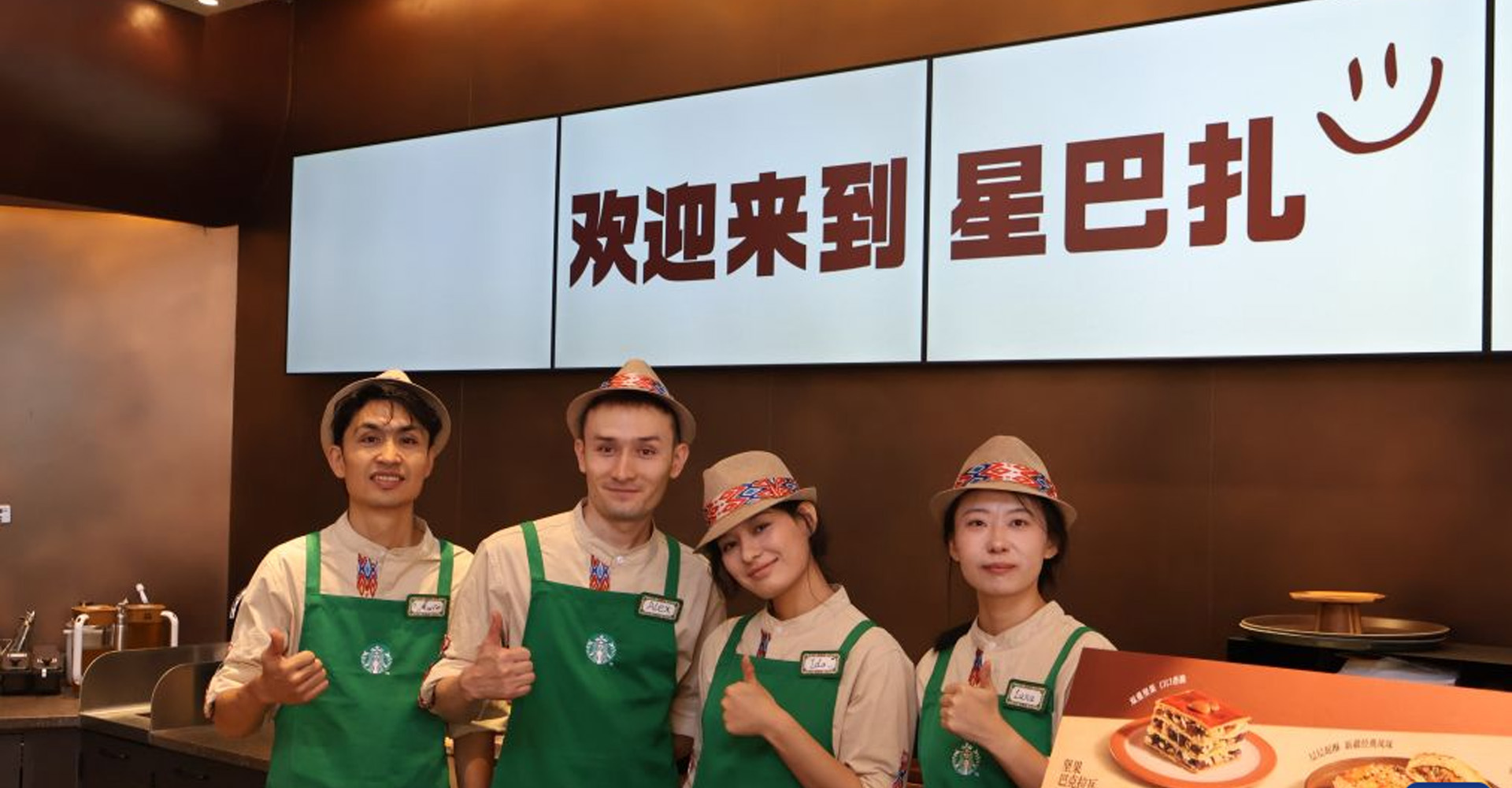
Coffee is just as popular in China, and unlike in the US, Starbucks is seeing enormous growth thanks to ever more affluent Chinese consumers.
TopPhoto: Xinhua/Tian Shuo/motparten
Text: Rune Ollestad
Date: 22 October 2026
Translated from Norwegian with the help of AI · Read the original
Most people in the West associate China's Xinjiang Uygur Autonomous Region with rebellion, oppression and chaos. That is true, with qualifications. Either way, things are getting more peaceful now that residents can talk calmly over a cup of American Starbucks coffee.
Enormous market
On 29 September 2026, the giant American coffee chain Starbucks opened two more coffee shops in China. This time in the far northwest of China's Xinjiang Uygur Autonomous Region. China is now Starbucks' biggest market after the US. Soon it will overtake it.
Salted milk tea
Both of the new branches are in Ürümqi, the regional capital. One café is opening inside the iconic Grand Bazaar and the other at Ürümqi Tianshan International Airport. The larger of the two will be in the Grand Bazaar. It will be decorated in a distinctive design inspired by traditional bazaar silhouettes. It will be a Starbucks with Xinjiang elements such as ethnic musical instruments and Atlas silk. In addition to the standard menu, both cafés will have locally inspired menus and exclusive drinks. Among other things, you will be able to buy the popular local salted milk tea with a milk-skin flavour!
China welcomes foreign companies with open arms. Many take the chance because it is an enormous market with billions in potential profit if you succeed.
More "countries" in China
Molly Liu is chief executive of Starbucks China. She is clear that entering Xinjiang marks a further expansion of the store network because it is an autonomous region. In a press release she said the focus now is on building lasting connections with customers there.
Platitude welcome
The public official responsible for market regulation in the regional administration of Xinjiang, Zhang Yu, welcomes urban commercial vitality to the countryside. Zhang came out with a string of standard platitudes that meant absolutely nothing when he recently spoke to the Chinese press about the matter. An endless stream of words that was almost impossible to report, because the sentences didn't really mean anything, poured out of the local government employee.
Home pageThe number of Starbucks shops in China will soon pass the US. It could happen faster than you think, because in the US Starbucks branches are being closed down.
Chinese too
What he did not talk about, for example, was that Starbucks is working with the Chinese venture capital firm Boyu Capital. Together they will run the business in China. Motparten is aware of an agreement that was signed last November. It shows that Boyu and Starbucks will run a joint venture, in which Boyu holds a stake of up to 60 per cent in Starbucks' business in China. Starbucks will continue to own the Starbucks brand, the licensed brand and the intellectual property of the new business in the region.
Downhill in the US
What is happening in China stands in glaring contrast to what is happening at home in the US. There, Starbucks is restructuring its North American business. That is what the official statements say. Unofficially, it means everything is going to hell. As recently as last week, the company announced plans to close 250 coffee shops in the US. Starbucks established itself in China as early as January 1999, when it opened its first shop in Beijing. Coffee culture quickly became popular, not least because Chinese people already liked coffee. Since then it has expanded the chain steadily with branches all over China. Hold on to your hats for the figures.
Explosive growth
The latest count from 2026 shows that Starbucks operated 8,342 shops on the Chinese mainland. That is an increase of 331 from the end of the 2025 financial year. Here it just goes up – up – up. The US is still the biggest, with 16,933 shops as of 28 June 2026. With the trend we see now, where Starbucks closes roughly as many branches in the US each year as it opens new ones in China, it will not be long before China overtakes the US with the most branches.
Purchasing power
More and more foreign brands are establishing themselves in China's growing consumer market. They do so because average Chinese purchasing power is good and constantly rising. It is an enormously large and good market with predictable prospects. The country has little crime, little drug abuse and little unemployment. A perfect country in which to establish big chains like Starbucks.
Many foreigners
The State Administration for Market Regulation says that 35,000 foreign companies invested in China in the first half of 2026. This is an increase of 7 per cent from the year before. Data from the Ministry of Commerce showed that almost 4,800 foreign-funded companies increased their investments in China in the first half of 2026.
MOTPARTEN
The other side of the story. An independent newspaper from Norway.
Contact
- Newsroomredaksjon@motparten.no
- Advertisingannonser@motparten.no
- General enquiriespost@motparten.no
Address
Motparten.noElevine Heedes vei 2
4839 Arendal
Norway Editor-in-chiefJesper Enerstvedt