Technology a bigger threat than climate change
Being outside isn't dangerous
Many claim that climate change is ruining children's outdoor play. Those who say so point out that intense heat, floods and bad weather cause trouble for our kids. Research refutes this and shows that children like warmer weather – and rain, as long as they have good clothes.
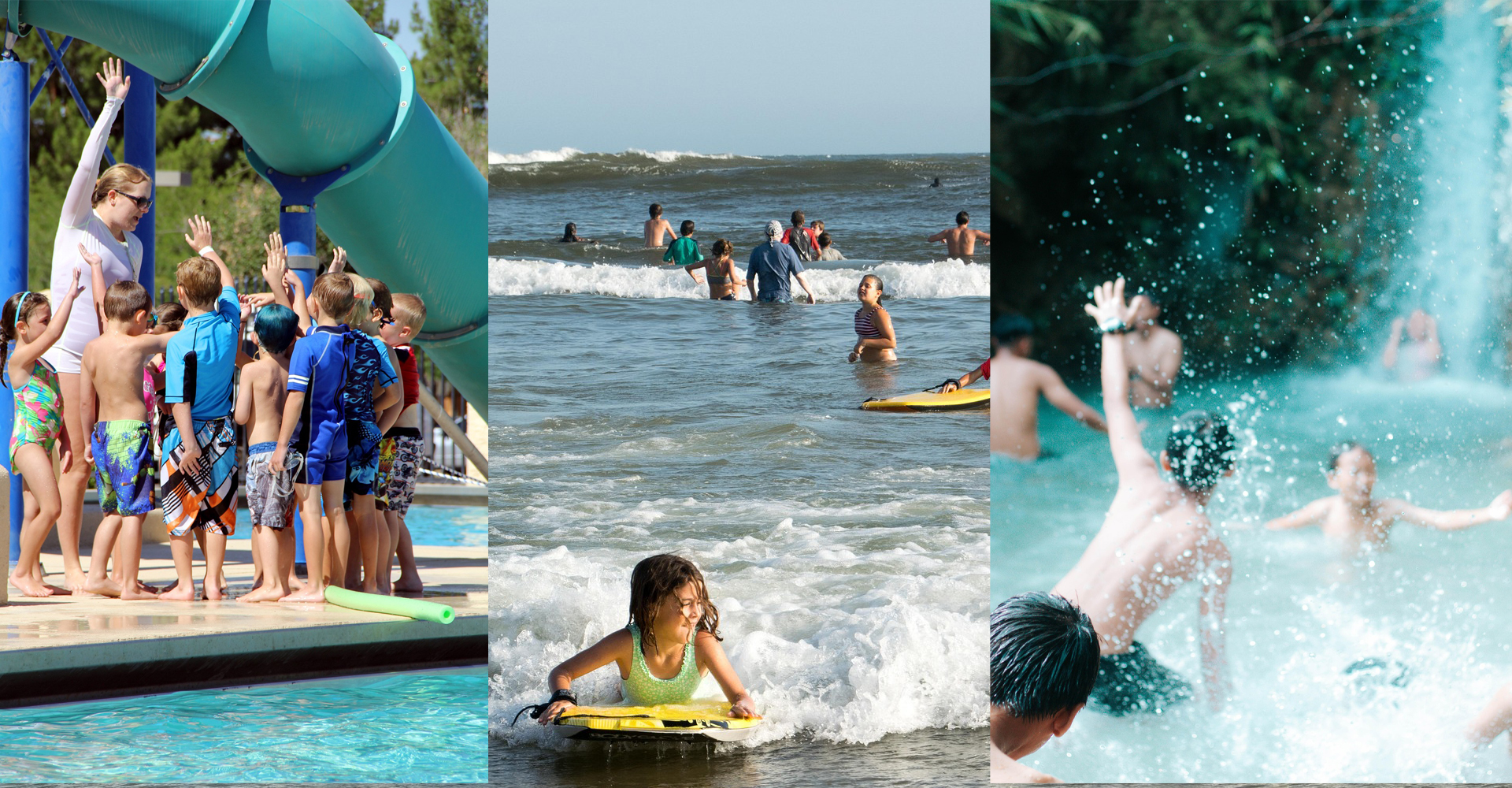
Children have no problem with hot weather as long as the adults are good at organising.
TopPhoto: Pixabay/theContrapart
Text: Ludvig Storn
Date: 16 August 2026
Translated from Norwegian with the help of AI · Read the original
Increasingly, you can read articles penned by climate hysterics showing disappointed children with cancelled pool days and lots of time stuck indoors because of the heat. The so-called journalists present this as proof that today's children are growing up in a more dangerous world. Most serious researchers strongly disagree.
Thin ice
Outdoor life in Norway has always carried a certain risk, but that has nothing to do with carbon dioxide. On the contrary, Norwegian children have traditionally been well taught. They stay indoors when there is thunder and lightning. On hot days they drink enough water. Everyone knows to keep away from flooded rivers and not to walk on thin ice in winter. In general, Norwegian children are quite good at respecting the dangers of the wilderness. We still get the mountain safety rules repeated on TV every Easter.
Climate fanatics claim global warming is taking outdoor time away from kids. Researchers say they are wrong. They point to mobile phones as a far bigger threat.
Phones are ruining it
Over the past couple of decades, however, mobile phones have helped make many children passive. They don't get outside enough, and so they don't learn enough about life in the risky Norwegian wilderness, which isn't that dangerous if you know it. All things considered, the mobile phone is a much bigger threat to our kids than climate change.
Football
On the European continent, people talk about children not getting to play enough football and not getting enough training sessions because of weather that is too hot. It is almost an absurd argument. In South America, Africa and Asia, people have played football for years at average temperatures far above anything Europe has experienced, even in record-hot summers. The debate about sport in high temperatures has also reached international football. At the World Cup, the problem was solved easily with an extra water break in each half. Suddenly it was safe.
Poor planning
Many teams and coaches must also take their share of the blame for poor planning. In Spain they have always had what they call the siesta, a little break in the middle of the day when the sun is at its hottest. Coaches and team leaders must make sure training sessions are scheduled for cooler times of day. Blaming carbon dioxide and climate change is on a par with kids claiming their bad grades are down to the tides and the influence of the full moon.
Norway a good example
Children growing up in Kristiansand experience a completely different summer from children growing up in Bodø or Kirkenes. A child used to Sørlandet (southern Norway) may struggle in northern Norway in July, but Norway has long traditions of coping with different weather. There is even a saying for it: "There's no such thing as bad weather – only bad clothes."
Safer
Today's children are without doubt safer than any previous generation when they are outdoors. That is thanks to modern weather forecasts that give several days' warning of dangerous conditions. Overprotective parents make sure they pack sunscreen and mosquito repellent even on rainy days. Earlier generations were not so particular about this. Outdoor life is not that dangerous, but the lack of people going outside because of laziness and technology may make it more dangerous in the long run.
Home pageSmartphones are the dominant reason children spend less time outdoors than previous generations.
Adults must pull their socks up
Children deserve outdoor life – not frightening stories about how dangerous it is because of global warming. Unfortunately, in recent years there has been a growing public debate about whether extreme weather, heatwaves and rainfall affect children's and young people's ability to take part in outdoor activities in summer. In reality, the challenges are about inadequate adaptation, a lack of practical outdoor skills and increased screen use among young people.
Adults must pull their socks up
In 2023 the World Health Organization published the report "Protecting maternal, newborn and child health from climate change". It states that infants and small children have a lower capacity for temperature regulation than adults, which makes them more vulnerable to heatwaves. The report stresses that rising global average temperatures create challenges for children's public health and physical outdoor life on hot summer days, especially in urban areas with plenty of asphalt and little shade.
Paradox
Even so, Norwegians have always taken their toddlers on holiday to the sun. People have flocked to Spain and Thailand with their little ones, fully aware that it is hot. That is why they go there. But suddenly the heat is no longer a problem. The adults are true experts at giving the little ones shade and making sure there are fans, cool air-conditioned areas in hotels and shopping centres, parasols on the beach and refreshing, cool dips on beaches with chalk-white sand.
Children adapt quickly
Serious researchers therefore believe we must distinguish between genuine health risks and general adaptation to warmer weather. In a research article published in the scientific journal International Journal of Biometeorology, written by environmental psychologist Professor Peter H. Kahn, he shows that children are behaviourally adaptable to different temperatures. The research shows that as long as basic needs such as fluid intake and shade are met, children experience outdoor activities in warmer weather as positive. High temperatures do not limit their desire to play.
Norwegians can if they want to
In the Norwegian public debate, the traditional outdoor-life culture is often emphasised. Bente Lier, the former secretary general of Norsk Friluftsliv, said in a press release that knowledge of safety and clothing is strong among the Norwegian population. Lier said that Norwegian tradition is built on experience of handling demanding nature, where training in mountain safety, respect for river currents and adapting to conditions have enabled children to move safely outdoors regardless of fluctuations in the weather.
Adults must help keep knowledge of safe outdoor play alive.
Technology a bigger threat
Recent surveys show that changes in children's leisure habits are influenced more by technology than by climate conditions. In 2022 the Norwegian Institute of Public Health (Folkehelseinstituttet) published the report "Livskvalitet og fysisk aktivitet blant barn og unge i Norge" ("Quality of life and physical activity among children and young people in Norway"), which states that the sharp rise in screen time and smartphone use is the dominant reason children spend less time outdoors than previous generations. The report concludes that inactivity in everyday life is mainly linked to digital leisure activities rather than physical obstacles in the outdoor environment. Global warming is not mentioned at all.
MOTPARTEN
The other side of the story. An independent newspaper from Norway.
Contact
- Newsroomredaksjon@motparten.no
- Advertisingannonser@motparten.no
- General enquiriespost@motparten.no
Address
Motparten.noElevine Heedes vei 2
4839 Arendal
Norway Editor-in-chiefJesper Enerstvedt