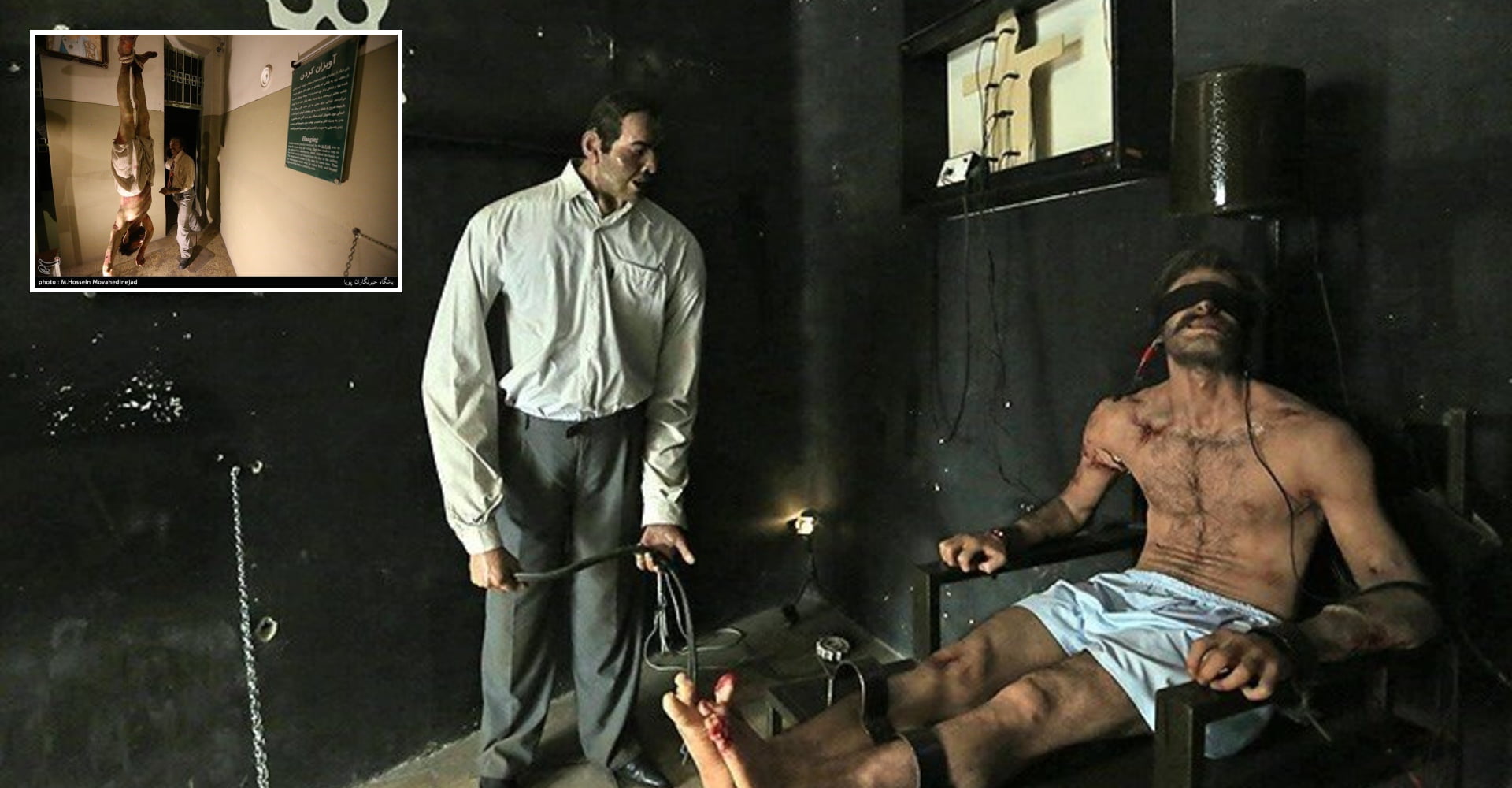
Iran's secret police were so pleased with their own invention that they named the torture chair Apollo, after the American spacecraft. Now the torturers must answer for old sins in a trial in the USA
At the Ebrat Museum in Iran, models have been made of how the secret police under the Shah tortured people with help from the CIA.
Things were not all better in Iran before. Under the Western-backed rule of the Shah of Iran, the secret police were both feared and notorious for their cruel methods of torture. One of them was a kind of chair in which prisoners had a metal bucket placed over their heads so that they would hear their own screams better. The chair was called Apollo.
Time-barred
A trial is now under way in Florida in which three Iranian torture victims have won the right to sue the former SAVAK official Parviz Sabeti. In a court ruling, the judge allows the victims to sue even though it is five decades since the abuses took place. The case is legally interesting because it highlights the challenges posed by the fact that it often takes a long time before people are even in a position where a lawsuit is possible.
Built up with help from the CIA and MossadSAVAK was not something the Shah came up with alone. The secret police of Iran's last shah operated from 1957 to 1979. The organisation was set up on the Shah's orders, but with the approval of the Iranian parliament, the Majlis. The American FBI and CIA, and Israel's Mossad, helped build it up. In other words, the West had a hand in the game from day one. In time SAVAK did not stay within Iran's borders. Its agents also infiltrated countries such as Iraq and Lebanon, and SAVAK cooperated with Mossad and the CIA to gather intelligence.
Sour torturer
The former senior SAVAK official Parviz Sabeti is, naturally enough, not happy with the court's decision. He believes too much time has passed. Sabeti tried to have the case dismissed because of the statute of limitations. He pointed to the ten-year limit in the Torture Victim Protection Act (TVPA). Even though the defendant was right that the complaint was filed too late, this was nevertheless overruled by District Judge Gregory A. Presnell as late as October 2026.
Extended
All three plaintiffs claimed they feared for their safety. None of them knew where Sabeti was until 2023. On the basis of this information, the American judge extended the TVPA deadline. Claret Vargas, senior attorney at the Center for Justice and Accountability (CJA), is the plaintiffs' lawyer. She believes torturers should not be allowed to escape accountability, as survivors have been forced to live for decades with uncertainty and fear. The victims have had neither the ability nor the opportunity to reach those responsible.
Hung up
Shocking details emerge in the trial from all three plaintiffs. They say they were tortured with beatings. All were whipped and held in stress positions for hours. They were given electric shocks and were hung by their wrists for days at a time. The worst was perhaps when they had weights hung from their genitals. It was indescribably painful.
In light of the American war against Iran, it is embarrassing that the CIA is now being drawn in as complicit in the torture of Iranian prisoners under the Western-backed regime that was in place earlier.
Apollo
What has nevertheless made the greatest impression on hardened lawyers and listeners in the courtroom is the story of the special Iranian SAVAK torture chair that was called Apollo, after the American spacecraft. The chair resembles an electric chair. The victim had a heavy metal bucket pulled down over their head. In the chair they experienced torture so bad that several of the listeners in the American courtroom chose to leave the room.
The childhood friend who became torture masterThe head of SAVAK at the time when it was at its worst was one of the Shah's closest associates. The Shah gave the job of rebuilding SAVAK to General Nematollah Nassiri, a childhood friend and classmate. Nassiri led the secret police for over 13 years, from January 1965 to June 1978. Things did not end well for him. He was one of the 438 people who were arrested and executed in 1979 after the Iranian revolution.
Electric shocks and a red-hot grillIt was no secret in the West what was going on in the basements of Tehran. In the 1970s, Amnesty International described methods of torture such as electric shocks and burning on a heated metal grill. The American magazine TIME stated that there was no longer any doubt that SAVAK was engaged in systematic torture. It got even worse. An Amnesty researcher, Anne Burley, was shown a SAVAK file by the authorities which she believed was genuine. It contained pictures of victims who had been tortured to death.
From judge to deputy head of the secret policeParviz Sabeti was originally the man who was supposed to ensure law and order. He was born in 1936, took his law degree at the University of Tehran and was first employed as a judge in the Ministry of Justice. Then his career took a completely different turn. According to the plaintiffs, from 1972 to 1978 Sabeti was deputy head of SAVAK and head of its third department, which was responsible for Iran's internal security. It is this department that the victims believe was behind the torture.
Living in luxury in FloridaToday the former SAVAK chief lives a quiet life in the Sunshine State. The lawsuit was served on Sabeti at his home in Windermere, Florida. According to the court documents, he was wearing a blue polo shirt and black shorts. After settling in Florida, he made his name more Western and called himself Peter. His wife is called Nancy. The lawsuit demands 225 million dollars in damages. The frightening thing is that the case has not made the victims any safer. Their lawyer says the plaintiffs have received death threats and been subjected to harassment since the lawsuit was filed.
Gave himself away in a protest marchIt was Sabeti who in the end gave the victims the chance to sue him. After decades in the shadows he reappeared in public during the major protests in Iran in 2022. In February 2023 he was photographed with his wife and daughter in a march against the Islamic Republic in California. Only then did the victims know where he was. The irony is great. The present regime in Tehran has turned the torture chambers into a museum.