Authorities killed off age-old tradition

Brilliant logistics system

In 1890, thousands of families in Mumbai, India's financial capital, organised themselves. Their job was to deliver food to businesses and passing public transport. The system eventually became famous for its logistics, which were "ahead of their time"

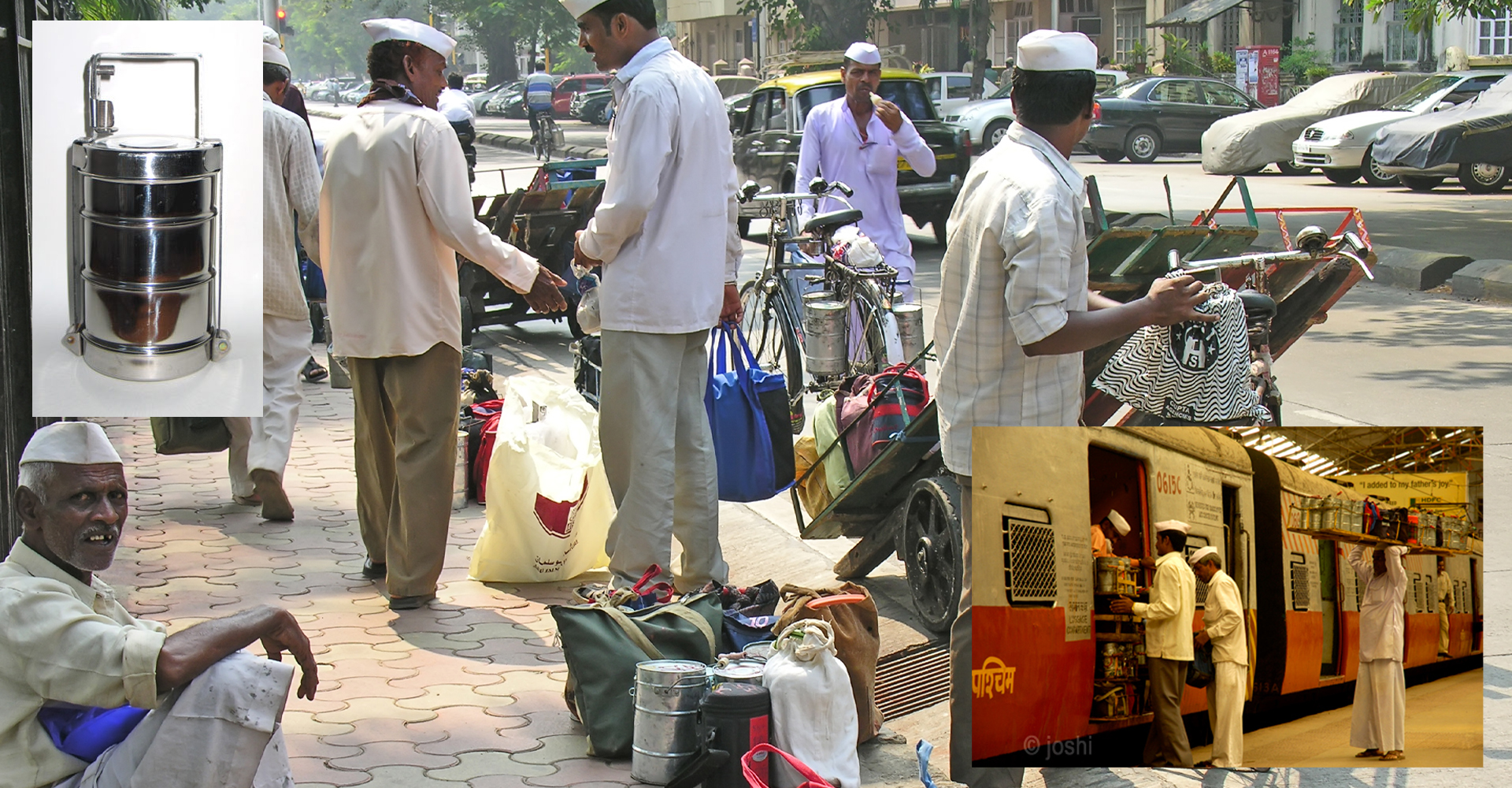
This is what they look like, the men who hand out tin pails of food, then later pick them up and return them to the families who make the food.
Photo: joshidaniel.com/CC BY 2.0/Utilisateur:Nataraja/Dennis G. Jarvis/theContrapart
Text: Rune Ollestad
Date: 7 June 2026
Translated from Norwegian with the help of AI · Read the original

In Shobha Bondre's book Mumbai's Dabbawala: The Uncommon Story of the Common Man, you can read about an impressive food delivery system in the world's largest city, with about thirty million people. Without GPS or technology, illiterate workers managed to deliver food to millions of people, with no margin of error and no delays. The system is winning international recognition.

At the crack of dawn

Every single morning, before the rush hour has begun, several hundred men in white shirts and white caps turn up. They bring with them big carts of metal tins marked with an old alphanumeric system. The tins are filled with the tastiest Indian dishes: curries, rice and classic Indian bread.

The train station

The specially marked metal tins are handed out, almost imperceptibly, to office workers all over the city. A tourist who wants to catch this fascinating system in action has the best chance at the city's train and bus stations. Here the white caps stand out clearly on the empty platforms early in the morning. The army works with military precision as it hands out hot home-cooked meals.

Home-cooked

One of the Dawalla army's secret weapons is that all the food is home-cooked. It is made in thousands of homes by perfectly ordinary Indian men and women. To keep track of who has made the food and where it is going, there is an intricate and world-famous alphanumeric system, but it has not always been that way.

Gigantic scale

According to Bondre's book, it started with coloured threads on the big metal tins, but as the system grew to almost epic proportions, people came to see that letters and numbers were more practical. Because in the afternoon the whole system is reversed. The army of men collects the tins again and returns them to where they came from.

Zero technology

What makes the system so unique is the absence of computers. There are no fancy apps at work here, as we are used to, whether you are in Norway ordering food via Foodora or in Thailand ordering from Food Panda. India's Dabbawala system is completely free of modern technology, yet it is one of the best-functioning logistics systems in the world.

Passed down

A military general, or a rebel leader for that matter, would turn green with envy at seeing how the system works without technology that can be exposed or intercepted. In Mumbai the system has been passed down through generations. It has fascinated researchers and economists in a number of countries around the globe.
Top

The incredible dabbawala system for distributing food in Mumbai held out for 130 years before the authorities crushed it with the shutdown during the covid pandemic. The system used to deliver food to millions of travellers and office workers. It worked perfectly without either GPS or apps. An impressive system in which illiterate workers delivered food using symbols and colour codes.


Soldiers

For example, Harvard Business School studied the system and came to the conclusion that it was a world-leading example of low-cost logistics. They are absolutely right. Not a single one of the "soldiers" in the food army uses GPS. That is impressive when you consider that they deliver food to millions of people every day.

Tiffin

The genuine, traditional boxes, known as a dabba or tiffin, are made of rock-solid aluminium or stainless steel. In the old days they also used tin plate, but steel is now the undisputed king. The boxes have to withstand an extremely rough life on train platforms, bicycle handlebars and in thundering three-wheelers through Mumbai's monsoon rain.

Museum

After more than 130 years of faithful service, this unique culture has got its own official home. The organisation Mumbai Tiffin Box Suppliers Association recently opened the doors of a brand-new Dabbawala museum in Mumbai. This is not a dusty art gallery but a living tribute to the thousands of men in the distinctive white cotton clothes and Gandhi caps.

Illiterate workers

At the dabbawala museum in Mumbai, tourists and logistics nerds can dive deep into the brilliant, colour-coded numbering system that lets illiterate couriers get the food to the right desk, with almost not a single wrong delivery in history. The museum displays everything from ancient wooden bicycles and historic logistics maps to signed greetings from King Charles himself, who was so fascinated by the system that he invited the Dabbawalas to his wedding in London!


The system survived new technology but succumbed because of the authorities' policies during the pandemic.


Zwiggy

Perhaps it was about time the system was honoured with a museum. Today they are struggling, not because of a threat from technology, but because of the way the authorities reacted during the covid pandemic. For a long time it was believed that the dabbawalas would survive the modern age, and all went well until paranoid authorities shut down society. Because of empty offices and cancelled trains, deliveries of the big, characteristic metal tins fell from about five thousand to a third by the time the pandemic finally loosened its grip. But by then it was too late. Indians had got used to apps like Zomato and Swiggy.

Home page

MOTPARTEN

The other side of the story. An independent newspaper from Norway.

Contact

Address

Motparten.no
Elevine Heedes vei 2
4839 Arendal
Norway
Editor-in-chiefJesper Enerstvedt

About

Follow

© Motparten.no · All rights reserved. Independent since 2021 · Published in Arendal, Norway