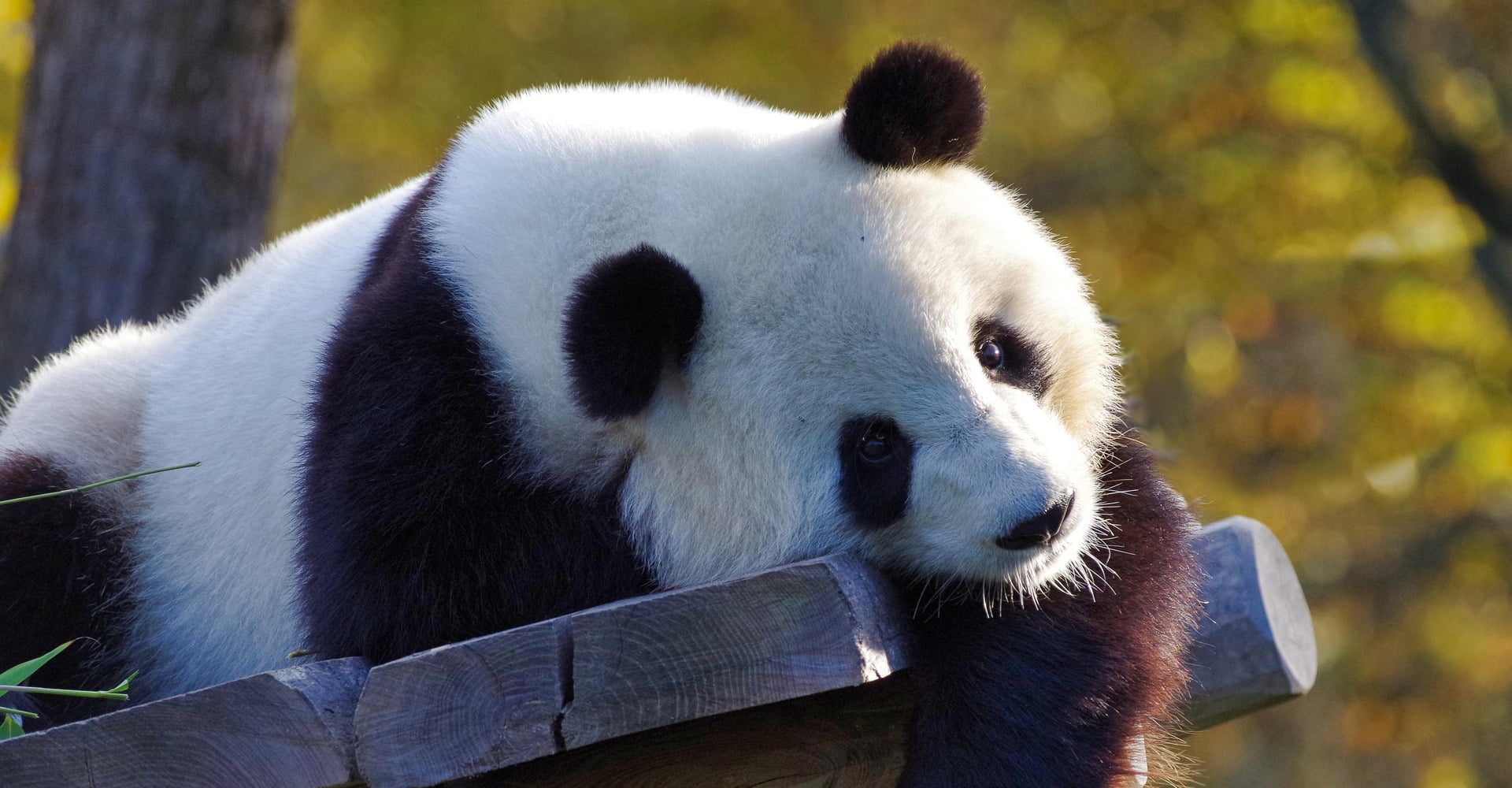
The Chinese giant pandas Ping Ping and Fu Shuang have arrived at Zoo Atlanta in the USA. Anyone who thinks the animals' arrival is just a minor matter for animal lovers had better think again. Pandas on loan are deadly serious politics.
This is what it looked like when pandas were called home from Japan. No expelled ambassador can hope for such emotion. Panda politics is serious!
China's use of pandas internationally is serious business. The bears are an example of soft power from a strong state. Instead of threatening with weapons, the Chinese try to influence other countries through culture and symbols, and that means pandas. This time it is the USA's turn. After Xi Jinping's visit to the USA and talks with Trump, pandas were delivered! But only on loan. As soon as the situation heats up, the pandas will be called home!
Important diplomats
Ping Ping and Fu Shuang arrived on a direct flight from Chengdu Shuangliu International Airport in Sichuan province. They are meant to live in the USA for ten years, but whether that happens remains to be seen. If the trade war between the two mighty countries does not end, or the USA interferes in the conflict over Taiwan, the pandas risk having to make a return trip to China. The Americans have been granted the favour of borrowing the animals for 10 years. Now the world is keeping its fingers crossed that it will last that long.
Deadly serious
It sounds like something you would say as a joke, but China uses pandas as serious symbolic power. The pandas are hugely popular in the zoos where they live. Every time a zoo gets pandas, it attracts both national and international attention. We recently saw a good proof of how strong the pandas' power is in Japan, where China suddenly called its pandas home! China asked for the loaned pandas back because of an ongoing conflict with Japan and the country's statements in connection with the Taiwan conflict.
Tragic end
The return led to harrowing scenes of weeping and gnashing of teeth at the zoo in Japan. Thousands of Japanese stood in long queues at Ueno Zoo in Tokyo to see the pandas Xiao Xiao and Lei Lei one last time. Children and elderly people wept openly. Even the pandas looked as if they understood that something was wrong. When the pandas left Japan there was also a queue at the airport, where large crowds had gathered with panda flags. There was tumult as the animals were wheeled into a specially chartered plane. No expelled human diplomats or ambassadors have ever received this kind of attention.
Panda hysteria
The reason for the absurd scenes in Japan is that China is furious over Japan's statements about Taiwan. The island is part of the so-called "one China" that the UN has also recognised – but the authorities in Taiwan themselves claim that they are the rightful rulers of mainland China! To this day Taiwan's government refuses to remove the name China from official documents. This is why Taiwan has no embassies in European countries. Had they refrained from claiming all of China, they would long ago have established genuine diplomatic relations. That Japan now openly supports Taiwan is a red rag to a bull for China. So bad that it is hitting the pandas' lives.
The loan of the pandas to the USA is a symbol of a thaw in the conflict between the USA and China. As soon as the problems flare up again, the pandas will be called home. If they are, everyone knows the situation is serious. China never gives away pandas – they are used solely for political loans.
Former colony
That Japan is so bold as to take Taiwan's side in the conflict might perhaps have been overlooked in Beijing had the island not once been a Japanese colony. Now China is calling back the two much-loved animals that have lived in the zoo for a full fifty years! Usually countries call home embassy staff when the level of conflict is high, but this time China is calling home two animals. That has never happened before.
Dangerous times
China's decision to bring home the last giant pandas from Japan comes at a time of generally growing political mistrust between the two Asian great powers. The animals, which for over fifty years have served as living symbols of friendship, have now become living signs of how chilly the relationship has become. That Japan dares to talk about Taiwan right now is unacceptable to the Chinese. It has not been forgotten that Japan once colonised the island.
Deep wounds
Japan's colonial rule over Taiwan began as early as 1895 and lasted until the defeat in the Second World War in 1945. During those years Japan ruled the island with a heavy hand. There was extensive use of armed repression and aggressive assimilation of the population, which tried to wipe out the local identity. According to historical estimates, more than 600,000 people in Taiwan lost their lives in the struggle against colonial rule and in the broader effort to return the Taiwan region to China.
End of the peace
The departure of the pandas Xiao Xiao and Lei Lei means that Japan is without pandas for the first time since 1972. It is especially traumatic because the animals were given as a gift to mark the normalisation of diplomatic relations between the countries. Now relations between Tokyo and Beijing have soured, and the pandas' return may be the beginning of a conflict that makes the war in Ukraine look like children throwing stones in a nursery.
Panda diplomacy
A panda is not just a panda to the Chinese. China in practice owns all the giant pandas in the world and lends them out to foreign zoos through special agreements. The arrangement has even been given its own name – "panda diplomacy". The practice goes back several decades and the animals serve as goodwill ambassadors for Beijing. Now the goodwill towards Japan is over. Four pandas were already sent back in 2025 from the Adventure World park in Wakayama. This reduced the population in Japan to just two animals in Tokyo. Now Japan is left without pandas, and the authorities must explain to people why this is happening. It is not easy to tell someone who has visited the zoo every week for fifty years.