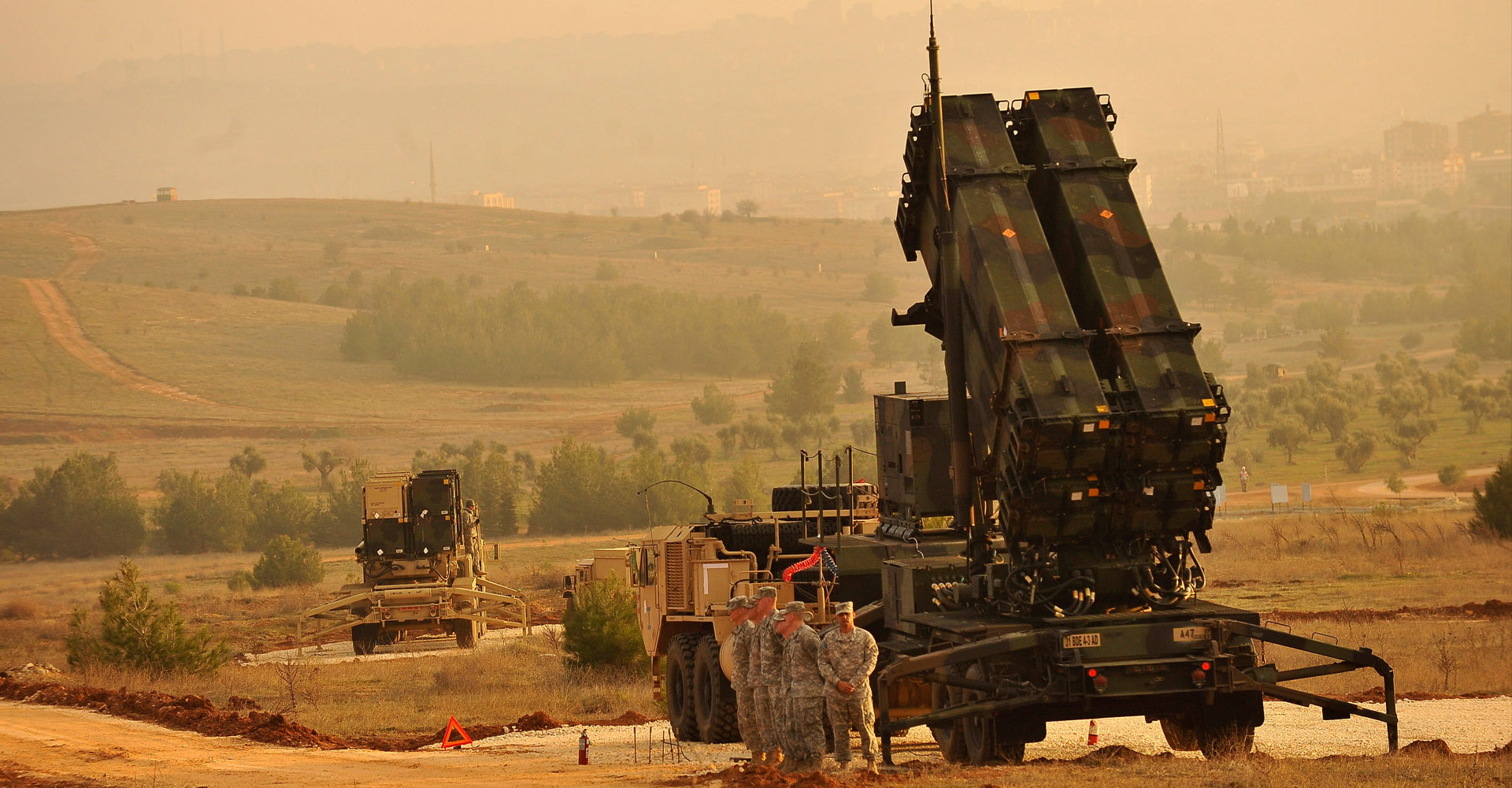
The very brain in the missile's nose, the millimetre-wave radar that enables direct hits on incoming ballistic missiles, is produced exclusively at a single Boeing factory in Huntsville, Alabama.
Norwegian media uncritically relay claims that Ukraine is to produce the world's most advanced air-defence missiles. At the same time, the country's remaining heavy industry is fighting a desperate battle for survival against an energy crisis and a drought of raw materials. The contrast between physical reality and the editorial headlines has rarely been more striking.
Donald Trump has given Ukraine a licence to produce American Patriot missiles on Ukrainian soil.
Boeing trouble
The "brain" in the missile's nose, the millimetre-wave radar that enables direct hits on incoming ballistic missiles, is produced exclusively at a single Boeing factory in Huntsville, Alabama. The United States will under no circumstances transfer source codes, production lines or secret blueprints for this radar to a war zone where Russian intelligence and missiles are a permanent threat. Even the United States' most industrialised allies in peacetime have spent years on minimal agreements. Germany's licence agreement through the joint venture COMLOG is about building a factory in Bavaria to supply the older PAC-2 version, a process that requires billions and several years of preparation under safe factory conditions.
Fiction
Licensed production in an active war zone is pure fiction once you look at what a modern Patriot PAC-3 MSE missile actually consists of. Defence analysis reports from the renowned American Center for Strategic and International Studies (CSIS) document why the United States is struggling to scale up the pace. The lead time for building a missile in the US is now between 24 and 30 months, heavily affected by bottlenecks in rocket motors, hardening processes and strict quality control.
It was not as easy as many had hoped to produce Patriot missiles locally in Ukraine. Many of the raw materials are not in stock, and parts of the missiles are defence secrets, where the components must be imported regardless.
Not in stock
On top of this comes the global raw-materials monopoly. Advanced missile technology depends on critical minerals such as antimony, in particular military-grade antimony trisulphide used in primers, hardened alloys and infrared sensors. According to official data from the United States Geological Survey, almost 90 per cent of the world's extraction and refining is controlled by countries such as China, Russia and Tajikistan. After China's Ministry of Commerce introduced strict export restrictions on antimony for Western military purposes, the whole of NATO is scrambling for limited stocks. Ukraine has no active refining and no access to such material.
Sham licence
Norwegian newspapers systematically serve up microphone-stand journalism, detached from any material reality check. For the leadership in Kyiv, this is about narrative control and survival. By presenting conversations with Donald Trump as final decisions, they are trying to tie American leaders to the mast and keep up the illusion that victory is a question of Western technology transfer. For American politicians, the term "licence" is a handy tool for shifting responsibility away from themselves, under the slogan that they will no longer pay the bill but leave production to others.
Worthless
A paper licence without access to antimony, Boeing radars, hardened rocket motors and gigantic amounts of power is completely worthless. War has never been decided by symbolic press conferences or paper agreements. War is decided by logistics, energy, raw materials and industrial capacity. Even if the Western press is awash with comfortable political declarations and promises of miracle weapons, that does not remove the material realities. You can decree whatever you like in a TV studio, but you can never decree away the shortage of parts in the supply chain.