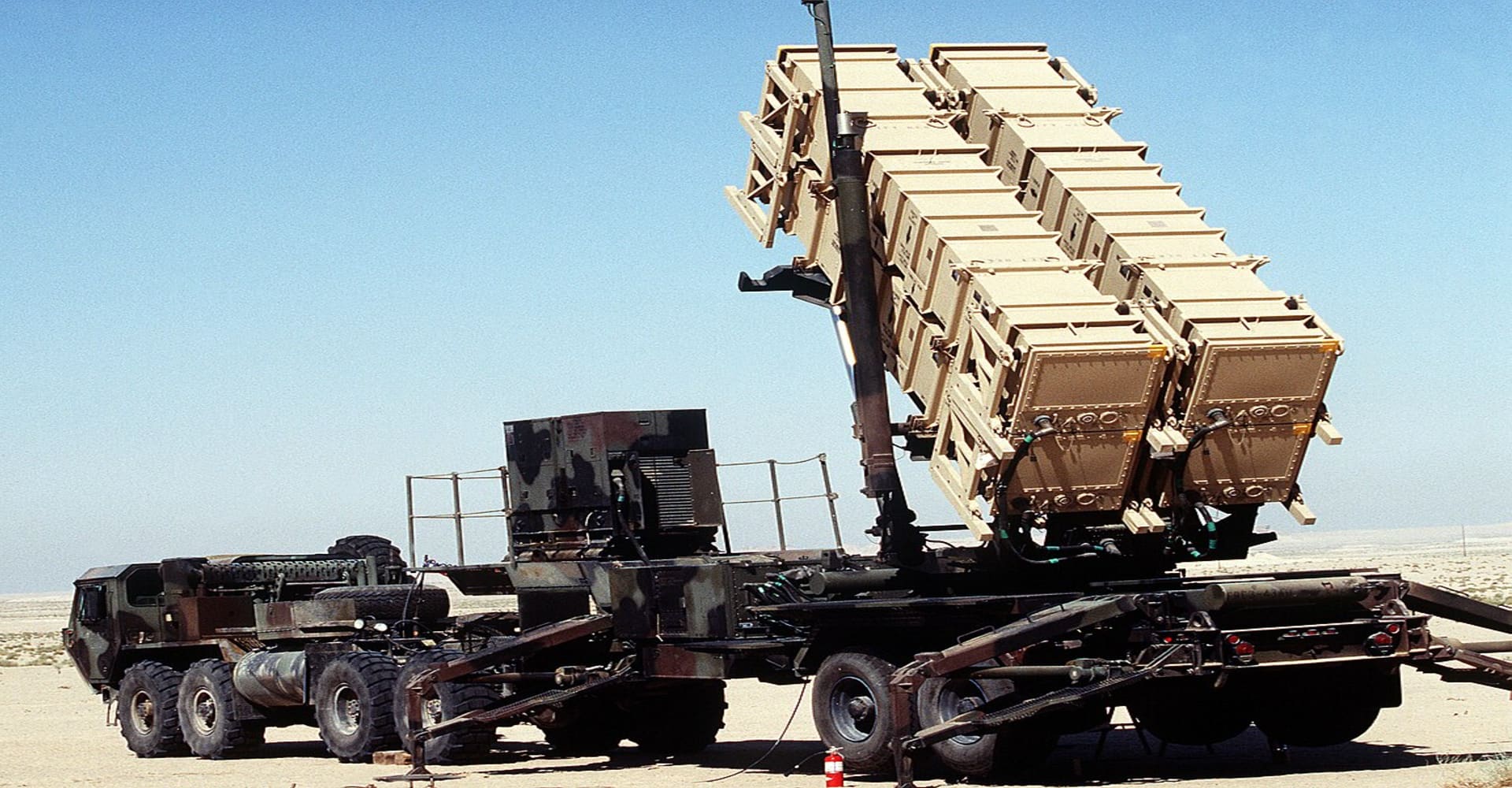
Norway is the largest contributor to the West's missile fund for Ukraine. When 500 new Patriot interceptors were bought in October – partly with Norwegian money – the message from industry was nonetheless the same: The missiles have not been built. They are not coming this year. They are not coming next year. They are coming in the 2030s.
Fine launchers are of little use if you have no missiles.
Photo: US Army/DVIDS/Samuel_Fletcher/Henry/public_domain
On 8 July this year, the Norwegian government granted a further three billion kroner to Ukraine's air defence. Two days earlier, ballistic missiles had struck Kyiv and killed at least 28 people. Not a single ballistic missile was stopped. Norway's contribution now stands at more than 12.5 billion kroner through NATO's procurement scheme PURL – more than any other country. On top of that comes around 30 billion in air defence support since 2023. There is, in other words, nothing wrong with the will or the money. The problem is physics.
Huntsville
As Motparten documented in "Nose Thieves from Boeing", the seeker head – the missile's "brain" – is made at a single Boeing factory in Huntsville, Alabama. In 2025 the factory delivered 650–700 seekers. That is the entire allied world's supply: 1.7 "brains" a day. In April the Pentagon had to sign a separate agreement with Boeing to triple precisely this production. It is an admission: One factory in Alabama sets the pace for the whole of the West's air defence. The analysis Motparten presented is now the official American understanding of reality.
39 days
The Iran war showed what war costs in missiles. According to the think tank CSIS, the US and its allies fired between 1,060 and 1,430 Patriot interceptors – 60 to 65 per cent of the entire American stockpile – during the first 39 days of the war. In the first four days: 225 firings a day. Against 1.7 produced. One interceptor costs four million dollars. The drones it was fired at cost 35,000. The exchange ratio was 114 to 1.
By the time the Patriot missiles Norway has paid for are delivered, the war may have been over for years. The West has proved that it can mobilise money. The PURL fund has gathered 6.7 billion dollars from 29 countries. But the missiles that will decide Ukraine's air defence over the next three years have already been produced – or already fired.
The queue
Allied countries are now queuing with a backlog of more than 4,300 missiles – seven years of production at the current pace. The big contract from April delivers mid-2028 at the earliest. The Army's order in the 2027 budget gets its first deliveries in May 2029. It was in this queue that Ukraine on 30 October bought 500 interceptors for 2.1 billion dollars, partly financed by Canada, Germany and Norway. Industry sources tell Reuters that delivery cannot be expected before the 2030s. – It is going slower than the Russian missiles fly, Zelensky summed up.
The raw material
The bottleneck does not stop at the factories either. Nearly 90 per cent of the world's antimony – critical for primers and sensors – is controlled by China, Russia and Tajikistan, according to the US Geological Survey. Beijing has shut off exports for Western military purposes. The rocket motor requires 30 months of production time, and the curing time for solid fuel cannot be legislated away.
Resolutions
The West has proved that it can mobilise money. The PURL fund has gathered 6.7 billion dollars from 29 countries. But the missiles that will decide Ukraine's air defence over the next three years have already been produced – or already fired. Kyiv understands this too: Ukraine is now betting on its own European air defence with German seeker heads – precisely to get away from Huntsville. It is the quiet confirmation of what Motparten wrote: Paper licences and press conferences produce no missiles. You can grant money at a meeting. You cannot grant production lines.