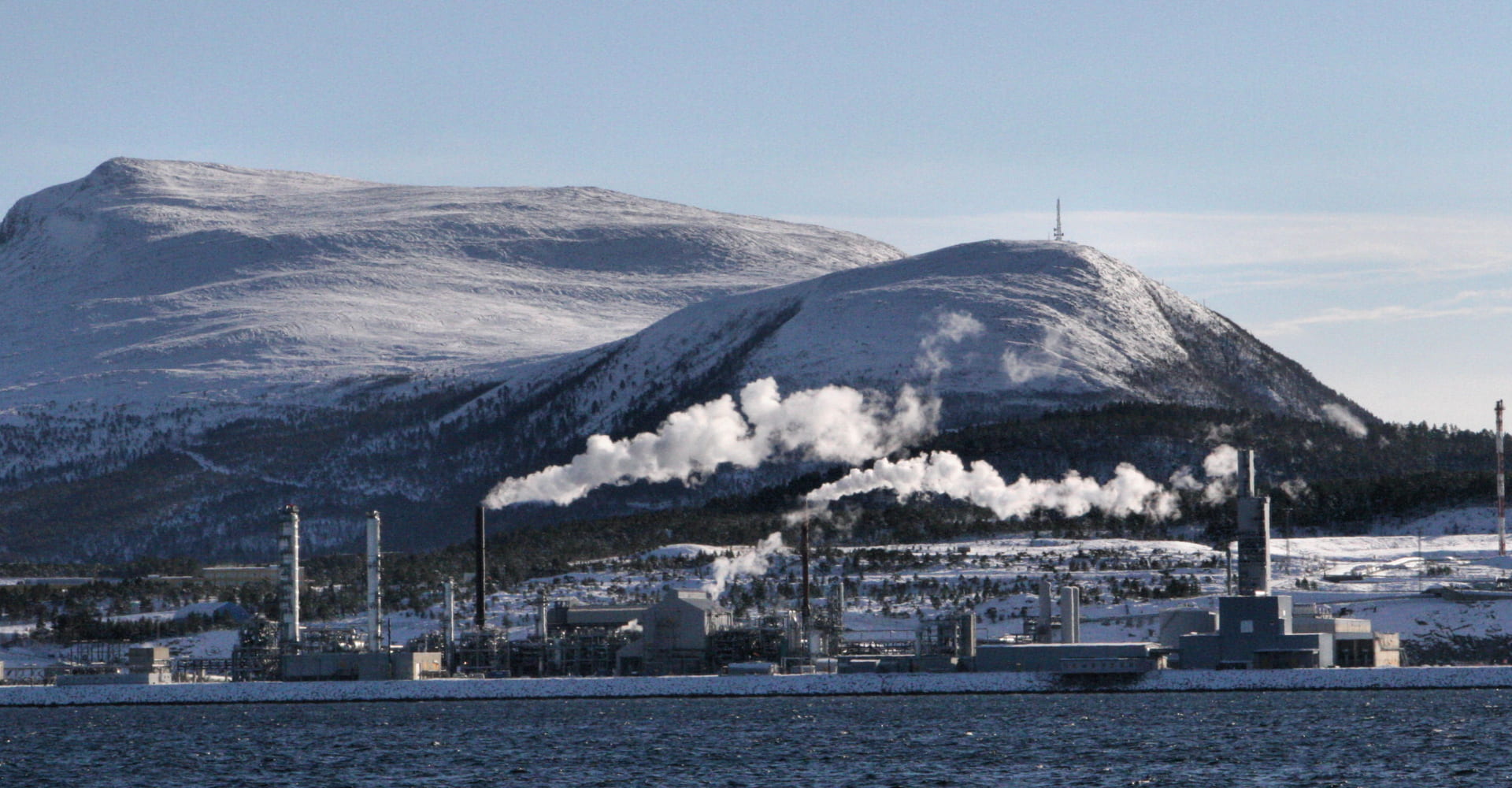
Motparten can today reveal that Norway already had a fully fledged backup system that could have handled the dry periods when it decided to build foreign interconnectors for that very reason.
The mobile gas-fired power plant at Tjeldbergodden was completed in 2008 and has a capacity of 150 MW. It was only to be used in an acute power shortage. The picture is from 2015 – now the plant has been dismantled and sold.
The backup system was already paid for, built and fully operational, but for political reasons it was never put into use. Read the shocking revelation in Motparten.
Security of supply
The cables were officially built to ensure that Norway had enough electricity in dry periods. That was what ordinary people were told. That it was about security of supply. What went unsaid was that Norway already had a system that handled the dry periods with ease. The system was even brand new and had cost billions.
Just nonsense
The people of Norway were served a story that the cables would pay off for everyone and be environmentally friendly. Money would be made on exports in wet periods, and only a little would be imported in dry periods. Now it turns out that it was all based on a lie.
Had a power reserve
Today few people in Norway have even heard of Norway's power reserve and the gas power at Tjeldbergodden. That is a pity, because it was a system Norway had already paid for, and it could have spared people from feeling European prices spill over onto their bills. It was completely unnecessary to build the cables to safeguard security of supply. Norway had already secured it, but for political reasons it did not want to use it.
Tjeldbergodden
When politicians in the 2000s began to worry about the power balance, they looked around for smart solutions. Central Norway in particular was exposed to shortfalls in dry years. The politicians found a very smart solution. It was decided to establish a state-regulated power reserve based on fossil gas power. The plants were placed strategically at Tjeldbergodden in Aure municipality in Møre og Romsdal and at Nyhamna in Aukra. Each of these gas-fired power plants had a capacity of around 150 MW and was intended as insurance in crisis situations. That is exactly what the cables are meant for, but activating the power reserves in dry periods would not have brought price contagion from Europe.
Expensive plants
Building the backup solution was far from free. The price tag for Tjeldbergodden and Nyhamna was at the time roughly 2.1 billion kroner. The plants were completed as late as 2009, but in practice they were never put into ordinary operation to relieve actual power crises. The reason is that a green wave had crept into Norway in which anything fossil was a big no-no. Norway was on the verge of entering the Tesla age, and even talking about gas-fired power plants was taboo.
Norway had paid billions for a national power reserve that stood ready in 2008. The system was never used because the politicians of the country that lives off selling gas were afraid of using a tiny bit of gas in dry periods.
Had readiness
Today almost nobody knows that Statnett spent tens of millions of kroner every year just keeping the plants on standby. Green politicians pushed through solutions to import expensive European power through cables instead of using the backup solution that had already been paid for. Many Norwegians will probably choke on their coffee when they read that Statnett was therefore forced to wind down and sell the backup gas-fired power plant at Tjeldbergodden. That was decided as late as 2015.
People were deceived
Most Norwegians believe that the cables were needed to ensure there was electricity in the socket even in very dry periods. That was, after all, the explanation people were given for why everyone had to pay high electricity prices because of the foreign cables. But Norway did in fact have a fully fledged backup solution.
Could have been avoided
All the problems caused by the foreign cables could have been avoided. Instead of using the reserve power for short periods, they chose to sell off the whole solution. Statnett's mobile backup gas-fired power plants at Tjeldbergodden and Nyhamna were dismantled and sold out of Norway. A Turkish company could hardly believe its eyes when the crazy rich Norwegians sold off an operational backup power solution at a bargain price, just because the eco-friendly Vikings wanted to hook up to European prices. Everyone in Norway knew full well that there was coal power in the imported electricity too, but as long as it wasn't Norwegians doing the sinning, that was fine. In Norway, the receiver is not as bad as the thief.
Gone for good
Today the splendid backup solution is gone from Norwegian soil. The turbines and all the equipment have been physically removed from the sites. What remains are the ruins of what could have ensured that all Norwegians got their electricity at 20 øre per kilowatt hour without the Norgespris scheme.